Chris
http://www.breachbangclear.com/war-crimes-hard-choices-and-harder-consequences-part-viii/
http://www.breachbangclear.com/war-crimes-hard-choices-and-harder-consequences-part-ix/
http://www.breachbangclear.com/war-crimes-hard-choices-and-harder-consequences-the-aftermath/
http://www.breachbangclear.com/hard-choices-and-harder-consequences-lessons-learned/
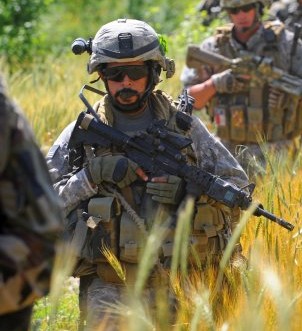
Chris Hernandez is a 20 year police officer, former Marine and currently serving National Guard soldier with over 25 years of military service. He is a combat veteran of Iraq and Afghanistan and also served 18 months as a United Nations police officer in Kosovo. He writes for BreachBangClear.com, Iron Mike magazine and has published two military fiction novels, Proof of Our Resolve and Line in the Valley, through Tactical16 Publishing. He can be reached at [email protected].


 ]]>
]]>Not long after they were pulled from the field and assigned to FOB Mahmudiyah, the chaplain invited first platoon to gather at his tent. The chaplain tried to give the men some encouragement, to help them deal with everything they had been through. Then Colonel Kunk and the operations sergeant major came in and joined the conversation. Lauzier remembers Kunk being friendly at first, asking the soldiers how they liked life at the FOB. And a soldier made the mistake of giving a totally benign, honest answer.
“It’s pretty good, sir. We have a gym and everything.”
“The gym?” Kunk roared. “You guys already fucked up the gym! It’s a mess!”
The colonel’s friendly talk turned into a profane, hostile tirade. He told the soldiers they were undisciplined pieces of crap who failed at their jobs. Soldiers made seething, near-insubordinate remarks back at him. The sergeant major stood by and said nothing. When their lieutenant tried to protest, Kunk screamed “You shut the fuck up!”, humiliating him in front of his subordinates. The lieutenant shut up. John Diem wound up being the voice of the platoon, professionally telling Kunk that he was wrong. Kunk wasn’t impressed.
After Kunk stormed off, the chaplain quietly said, “Well, that wasn’t what I expected from this meeting.”
Lauzier walked into the battalion Tactical Operations Center one day while a group of officers were having a discussion. One of the officers saw him and said, “Look, there’s one of them now,” which caused the others to burst out laughing. Furious, Lauzier left the building.
At the FOB the company held a “command climate survey”, where soldiers were asked how they felt about their leadership. After the results came back, the first platoon sergeant gathered the squad leaders. “I came out looking pretty good,” he said. Then he looked directly at Lauzier. “But according to this, some of you should face criminal charges.” Lauzier didn’t know what the hell the platoon sergeant was talking about, but the veiled threat shook him.
Lauzier felt abandoned, then started getting paranoid. One day he left a piece of paper with his Social Security Number, address and wife’s information on his cot, then briefly left the room. When he came back the paper was gone. He confronted the other soldiers in the room, demanding to know who took his paper. One of the men made a smartass comment. Lauzier drew his pistol, chambered a round, and pointed it at the man.
After a brief standoff, Lauzier holstered his pistol and walked out. When he returned, the paper was back on his cot. He won. But he knew he had lost control, and almost killed someone for no good reason.
The day he got back to the United States, Lauzier had a nice welcome home surprise: an FBI agent with a subpoena. He remembers thinking, Damn, guys, at least let me go home and see my wife first.
Lauzier’s career continued in a slow downward spiral. The effects left by his past combat experiences, threats of jail time over his head, and feelings of isolation combined to suck the drive out of him. He was removed from his position as squad leader and moved to division staff. Lauzier hated staff work. He wasn’t built for PowerPoints and operations orders. As time went on, he felt less and less like a soldier. And in effect, he was no longer treated like one.
In our first conversation, Lauzier summed it up: “They took my honor.”

Eric Lauzier today
Despite the fact that I barely knew him, those words stung me. Honor comes from inside, not from others. There are people who truly believe all of us war veterans are deluded fools who were tricked into murdering innocent foreigners so rich people could get richer. Our sense of honor doesn’t depend on their opinion of us. And Lauzier’s sense of honor shouldn’t depend on the opinions of senior leaders who badly failed his entire platoon.
I told Lauzier that. I don’t know if he bought it.
As months went by, Lauzier slid into a deeper and deeper depression. He drank heavily every day. He lashed out at anyone who annoyed him. One day at a division formation, he heard a support company call out “Assassins!”, their company nickname, when they came to attention. Lauzier blew up at them. “Who the fuck do you guys think you are? Assassins? What the fuck ever. Not a single one of you has ever killed anyone!”
In another instance, Lauzier heard an officer talking about the attack on the Alamo. This officer hadn’t been in Bravo in Iraq. The officer told someone “That platoon was all screwed up, they had no idea what they were doing. That’s why the enemy was able to capture those two soldiers.”
Lauzier almost lost it. He angrily approached the officer and yelled, “You don’t know what the fuck you’re talking about! Sometimes I was at that outpost with just one other guy, because we were stretched so fucking thin that we couldn’t spare anyone else! Don’t tell me we were fucked up, you weren’t there and you don’t know what the hell was going on!”
Someone pulled Lauzier away, and later apparently explained to the officer what had really happened. The officer apologized to Lauzier. Lauzier doesn’t know how he wasn’t Article 15ed for what he did.
With the depression, anger, alcohol abuse and threats of jail time came the almost inevitable thoughts of suicide. Lauzier started setting parameters: he wouldn’t do it unless he personally was court-martialed, he wouldn’t do it unless he was sure he was going to prison. “I can deal with a lot, but I wasn’t going to prison for something I didn’t do. I would have taken myself out first.”
More than once Lauzier sat at home, alone and drunk, with the muzzle of his .45 in his mouth. One tiny motion of one finger would have ended it all. And more than once, the thought of his wife’s horror at finding him with his head blown off stopped him.
Yet he still resisted seeking help. He didn’t relent until a civilian contractor he worked with, a man he barely knew, took him aside one day. The contractor was a combat vet from the 75th Ranger Regiment. He bluntly told Lauzier, “I’m worried about you. You’re fucked up. You can be an absolute killer at work, but still be a total wreck at home. Right now, you’re a total wreck. And you need help.”
Lauzier finally went to a psychiatrist. About twenty minutes into the conversation, the psychiatrist told Lauzier he needed to be chaptered out. Lauzier’s career was almost over.
Months after he came home from Iraq, Lauzier ran into Justin Watt on post. Lauzier was at this point barely hanging on. “By this time, I didn’t give a fuck. I just didn’t care.” And he had heard rumors of soldiers from his old platoon plotting to retaliate against Watt.
If Watt had never turned in the murderers, Lauzier wouldn’t have suffered the loss of his honor. He would probably still have been leading troops, preparing them for their next deployment, instead of fighting alcoholism, depression, anger and suicidal impulses. Lauzier might be forgiven for feeling anger at Watt.
But he wasn’t angry at Watt then, and isn’t now. When he saw Watt that day, he told him he’d watch his back. He offered to let Watt move into his house if he didn’t feel safe on post.
Lauzier is rightfully proud of standing up for Watt, But, oddly enough, he continually blames himself for what he feels are leadership failures. When Lauzier and I talked about the firefight where he directed supporting arms onto the enemy and got his men out without casualties, Lauzier didn’t brag about it. Instead, he berated himself for going on that patrol too light, without enough men or firepower. He gets angry at himself for forgetting details of certain events, an inevitable byproduct of a traumatic brain injury. When we talked about how others in the platoon praised him for always being outside the wire, how they said he always led from the front and never made his troops take risks he wouldn’t take, he didn’t respond with pride. Instead, after several conversations and maybe a few beers, he revealed a not-so-hidden emotion:
Eric Lauzier thinks he didn’t do enough. He thinks he allowed his platoon sergeant to walk all over him and strip his squad of manpower. Because they were stripped so bare, not enough supervisors were around to keep tabs on the men. That lack of supervision at least contributed to the Yusufiyah murders. If he had just stood up for his squad, they wouldn’t have been so shorthanded, supervisors could have done their jobs and the murders would never have happened. Long story short, Lauzier thinks the murders were at least partly his fault.
Lauzier told me that about two hours into a phone conversation. When he discussed other aspects of his story, he was calm. There was nothing exciting in his description of the invasion of Iraq. He mentioned his hand-to-hand kill in passing. The ambush outside Rushdie Mullah where Lauzier and his troops barely escaped death could have been a ping-pong game, for the utter lack of passion Lauzier displayed when he talked about it. But when he talked about his perceived failure to stand up to his platoon sergeant, the tone of our conversation changed. Lauzier became serious, passionate and angry. And guilt poured forth from wounds I never thought he’d have.
Read the rest at http://www.breachbangclear.com/war-crimes-hard-choices-and-harder-consequences-part-vii/

 ]]>
]]>
First platoon soldier on guard at the Alamo
Staff Sergeant Eric Lauzier heard the gunfire at the Alamo. Sudden and heavy, multiple weapons opening up on full auto at once. And Private First Class Tucker screaming on the radio that they were being overrun.
Lauzier was at a patrol base maybe 1300 meters away when it happened. He and several other soldiers scrambled to load up and haul ass toward the gunfire. When they arrived a few minutes later, Lauzier didn’t see a soul. Just a Humvee with two M4s on the hood, and spent AK shells. Dozens of them.
Less than half an hour before the attack, Lauzier had driven past the single Humvee pulling security at the bridge they called the Alamo. PFC Kristian Menchaca and Specialist David Babineau had been standing on opposite sides of the hood, while PFC Thomas Tucker manned the turret machine gun. Lauzier and the others ran around trying to find their soldiers. The only thing Lauzier saw was a huge pool of blood where he had last seen Menchaca.
Someone spotted a trail of AK shells leading away from the Humvee, along the road. They followed it to a spot a short distance away. And there was Babineau in a canal, helmet off and weaponless, half submerged in muddy water, dead from multiple gunshot wounds.
Lauzier was on his second tour of Iraq. He knew the enemy. He knew what was happening to the captured soldiers. He thought Tucker had been taken alive, but actually hoped that Menchaca had died at the Alamo.
Lauzier kept it together. Like everyone else in the platoon, he had been through a lot already. The constant stream of casualties, incessant IED and small arms attacks, and near-total loss of faith in senior leadership had taken their toll. Their company had lost all three platoon leaders in less than three months, something that probably hadn’t happened to an American infantry company since Vietnam. Five helicopters were shot down in their area of operations during their deployment, and helicopters stopped supporting them except in the direst of emergencies. Medical evacuation requests for wounded Americans were sometimes denied, sometimes birds wouldn’t provide air support during firefights. But they’d always come out for a wounded Iraqi civilian. It would be difficult to describe how bitterly angry this made first platoon.
Lauzier had been dealing with all this for eight months, usually getting no more than four hours sleep a night. He was worn out. And he felt he was being singled out by the platoon sergeant, who overloaded his squad with tasks while simultaneously stripping the little bit of manpower he had left. But he hadn’t shut down, hadn’t backed off his responsibilities.
Just weeks earlier, Lauzier had led a small team on a patrol near the town of Rushdie Mullah and was ambushed by insurgents firing from multiple positions. The team was pinned down and in trouble. Lauzier kept his calm, directed mortar fire onto one group of enemy, had his men suppress the remaining insurgents, and managed to pull everyone out without a single casualty.

Eric Lauzier in Iraq
Lauzier was widely regarded as a dedicated and proficient squad leader. He had served an enlistment as a Marine Corps infantryman before joining the Army, and planned on retiring from the military. Before Iraq he had tried and failed Special Forces selection, and was planning on going back after the deployment. He liked combat, and was one of very few soldiers in the Army who had a confirmed hand-to-hand kill. He knew war, and expected pain and tragedy from it. The loss of three more first platoon soldiers at the Alamo was a hard blow, but Lauzier could take it.
A few days later, just after their missing soldiers were found, Lauzier heard the platoon sergeant call the company commander on the radio. The platoon sergeant told the commander he needed to come to the patrol base, but wouldn’t tell the company commander why. Then he dropped the hint, “Haditha.”
Word started floating around that something bad had happened. This obviously wasn’t something like a lost sensitive item, and as far as Lauzier knew there had been no serious incidents between any soldiers in the platoon. It couldn’t be any of the normal things that the Army says are bad, it had to be something far worse. He went over the possibilities in his head. Nothing stuck out. Nothing, except for the murder of the family near Checkpoint 2 back in March.
Lauzier had been home on leave when the family was murdered. When he came back to Iraq, the platoon sergeant showed him photos from the scene. Lauzier had never seen anything like it. He had been to Iraqi homes where the father and oldest son had been murdered, but had never seen women and children targeted. And the young girl had been left on the floor with legs spread, her body burned. Lauzier thought she had probably been raped.
Lauzier hadn’t connected his soldiers at Checkpoint 2 with the crime. But when the battalion commander came around asking questions, it suddenly hit him. After Tony Yribe came out of his interrogation, Lauzier asked him what it had been about. Yribe said, “I can’t tell you.” Lauzier held up two fingers and mouthed, “Checkpoint 2?” Yribe nodded. And Lauzier thought, Those motherfuckers.
Read the rest at http://www.breachbangclear.com/war-crimes-hard-choices-and-harder-consequences-part-vi/

 ]]>
]]>
Sergeant John Diem in Iraq
Sergeant John Diem had four hours to think about his decision.
After Justin Watt told Diem about the war crime, Diem had guard duty. He had decided, within seconds of hearing Watt’s story, to report it. But then he sat in a guard tower, with hours to change his mind.
He didn’t know Watt had already reported the crime. As far as he knew, he would be the whistleblower. He knew the turmoil that would result from reporting it. Heads would roll, and not just the heads of those responsible. He initially brushed off Watt’s fears of retaliation, because he “just couldn’t see a firefight happening between American soldiers.” But he eventually realized Watt was right; the soldiers he reported might try to kill him. Diem was in the same platoon, and logically would face the same danger of retaliation.
And Diem could have just washed his hands of the whole thing. He thought Watt was going to report it anyway. Diem didn’t have to get involved at all.
But Diem never considered staying quiet.
When Watt told Diem about the murders, Diem saw only one course of action. He had to notify his chain of command. The probable second- and third-order effects of reporting the crime were obvious, and substantial. He never let those concerns affect his decision.
As soon as his guard shift was over, he went straight to his platoon sergeant and platoon leader and relayed Watt’s story. He intentionally went around his squad leader. He made the platoon leader tell him when he was going to report it higher. The report went up the chain exactly the way it was supposed to. Diem never doubted for a second that he had done the right thing. And he never worried about retaliation, either. He did what he had to do, and didn’t look back.
Watt and Diem shared traits which suggest Watt’s decision should have been as “simple” as Diem’s. In 2006 they were only twenty-three years old. Both are smart guys. Both had substantial combat experience. So why, I wondered, was Watt so terrified about reporting the crime, but Diem so calm about it?
Diem was calm partly because his circumstances were different. While Watt and Diem were both young, Diem was far more experienced and established. He was a veteran of the Iraq invasion and had been promoted to sergeant shortly before the 2006 deployment. Watt was a peer to the men who committed the rape and murders, but Diem, as a sergeant, was above and intentionally distant from them. He was there to lead soldiers, not to be their friends. And despite all the problems with discipline and failed leadership in first platoon, Diem still had a solid NCO network behind him. Watt only had the few people he trusted for support.
Strangely enough, nobody seemed angry at Diem for reporting the crime. Nobody I spoke to mentioned threats against Diem, and Diem says he was never threatened or rebuked. Apparently, nobody in the platoon expected him to do anything other than report it. Watt has been the target of much anger for his decision, but Diem seems to have been given a pass. Maybe that’s because Watt, as a lower-enlisted soldier, is viewed as having had a choice.
But Diem was, well, Diem. Nobody thought he would do anything but report it. Watt is seen as the whistleblower, Diem simply the conduit.
But I don’t think differences in their status or situation are all that made Diem so confident in his decision. I think Diem just believed so strongly in the mission and in what being a soldier means, he simply didn’t feel fear over doing the right thing. I suspect he wouldn’t have been scared even if he had been in PFC Watt’s shoes, rather than being a sergeant in another squad. Which doesn’t mean Watt shouldn’t have been scared, or that Diem would have been right not to be. It just means his confidence in his beliefs somehow transcends fear.

In Blackhearts, Diem is described as a Dungeons and Dragons-playing nerd. Diem bristles at that depiction. So does Watt. Watt says, “Yeah, John plays computer games. And he’s an absolute killer in combat. The rock-steady tone he uses in phone conversations is the same tone he uses when someone’s shooting at him. He’s just a solid, unshakeable guy.”
None of the soldiers I interviewed about this incident are stupid. All are well above average intelligence, but Diem is brilliant. As a former armorer, range coach, tanker, scout and current intelligence soldier, I’ve made many good-natured jabs toward my “dumb infantry” friends. But nobody who spends ten seconds talking to Diem could even joke about him being stupid (during the recent FIFA championship he posted on Facebook, “I think the current uptick in soccer’s popularity is a fairly strong case for a considerable amount of slumbering nationalism present in the US population. We are just looking for an acceptable opportunity,” to which I replied, “Are you sure you’re infantry?”). Diem could be, and probably will be, a college professor someday, despite the fact that he doesn’t yet have a college education.
Some of the nonveteran public likes to view soldiers as poor, stupid, mostly minority kids who only joined the military because they couldn’t find a job. If they meet Diem, a profoundly intelligent man who willingly chose an infantryman’s life and four combat deployments, they’ll likely never buy that stereotype again. He truly believes in the Army and in soldiering. Like me, he’s not a blind idealist; he sees the problems that plague the Army, and recognizes institutional shortcomings that contributed to the Yusufiyah murders. Unlike me, he believes the solutions to those problems lie within Army doctrine, training and education. He’s self-assured, introspective, and brutally candid about leadership failures.
About his 2006 deployment, he says, “We did not deploy to win, we deployed to bring everyone home at the company level. Some junior leaders wanted to conduct combat operations but did not tie these operations to a coherent tactical vision. It was too reactive. For the most part we only did what we had to.”
Alone among the men I interviewed for this story, Diem chose to stay in the Army. And he’s not just staying for a paycheck, or biding his time until he can retire with benefits. He’s actively trying to make institutional changes that will prevent another incident like the one that destroyed an innocent Iraqi family and nearly tore his unit apart in 2006. He’s one of the few “true believers” I’ve met during my military and law enforcement careers.
I know a little about true believers. As a cop I helped train many officers how to respond to mass shooting incidents like Sandy Hook or Columbine. One thing we stressed to our students was belief in the mission; if you truly believed in what you were doing, you were less likely to hesitate when circumstances demanded action. An officer who thinks “I’m not dying for someone else’s kids” or “My only job is to get home at the end of my shift” isn’t who you want to show up when someone opens fire inside a school. You need an officer who believes in his heart that the lives of strangers’ children are just as precious as his own. You need someone who doesn’t view survival as the only indicator of success, you need cops who know that dying to defend the innocent is better than staying safe while innocents are slaughtered. You need true believers.
Many of us look back with envy at the warriors of World War II because, in our idealized view of that war, they epitomize the true believer. Yes, they faced horrible combat and staggering losses, much worse than what most of us Iraq and Afghanistan vets faced. But unlike our generation’s dubious struggles to create democracy for people who don’t want it, the causes during WWII seem pure. Hitler’s evil and the Imperial Japanese Army’s inhuman brutality were worth dying to defeat. As a child I often heard my parents, grandparents, aunts and uncles discuss family and friends who died in Europe or the Pacific. They never discussed those losses with bitterness or resentment. Yes, the deaths were painful and tragic. No, those young lives weren’t wasted. They died for a just cause.
In Iraq, I struggled to believe in the mission. My company had the unglamorous job of escorting supply convoys to various bases. We didn’t often escort material vital to the war effort, instead we usually guarded food and creature comforts. The objective truth was that we were risking our lives to ensure “fobbits” had weekly steak and lobster, the latest gangsta rap CDs and every XBox game known to man. And I was bitterly resentful about that. That made convoy missions harder for me, because I just didn’t think they were worth my life. I never tried to weasel out of one, but I never truly believed in their importance.
Afghanistan was, to a point, very different. I did believe in the mission. For most of my deployment I felt, should I have died there, it would have been worth it. The belief helped me through difficult times. During one fight, a captain simply suggested I help him do something vitally important. I knew, without question, this thing had to be done. We all would have died rather than leave it undone, and there was a very good chance we would die doing it. Because I believed so strongly in this task, I did it without hesitation. Looking back now, five years later, I don’t remember feeling any fear at all. I had accepted its importance. I understood that my life was worth less than this task. I was, for that short time, a true believer.
John Diem leads his life as a true believer.
Read the rest at http://www.breachbangclear.com/war-crimes-hard-choices-and-harder-consequences-part-v/

 ]]>
]]>