I just confirmed an appearance at the Barnes and Noble in The Woodlands, Texas on April 4th from 2-4 pm. I’ll be signing and selling copies of Line in the Valley. If you’re in the area please stop by and visit, even if you don’t buy anything.
Conspiracy theorists and open carriers, feel free to come out and confront me about being a government shill or anti-gun “butter”. :)
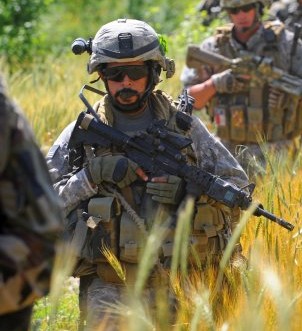
Chris Hernandez is a 20 year police officer, former Marine and currently serving National Guard soldier with over 25 years of military service. He is a combat veteran of Iraq and Afghanistan and also served 18 months as a United Nations police officer in Kosovo. He writes for BreachBangClear.com and Iron Mike magazine and has published two military fiction novels, Proof of Our Resolve and Line in the Valley, through Tactical16 Publishing. He can be reached at [email protected] or on his Facebook page (https://www.facebook.com/ProofofOurResolve).
http://www.amazon.com/Line-Valley-Chris-Hernandez-ebook/dp/B00HW1MA2G/ref=pd_sim_kstore_1?ie=UTF8&refRID=09XSSHABSWPC3FM8K6P4
http://www.amazon.com/Proof-Our-Resolve-Chris-Hernandez-ebook/dp/B0099XMR1E/ref=pd_sim_kstore_1?ie=UTF8&refRID=0S6AGHBTJZ6JH99D56X7

 ]]>
]]>Chris Hernandez
http://www.amazon.com/Line-Valley-Chris-Hernandez-ebook/dp/B00HW1MA2G/ref=cm_cr_pr_product_top

 ]]>
]]>Neither of us found an agent, but we both found small independent publishers who liked our work. As of last week, we’re both published authors. And while we recognize we’re not going to kick Stephen King off his throne anytime soon, we’re still pretty stoked at our success. Lots of good, hardworking writers never even get this far.
So this week I thought I’d share her interview with me, just in case anyone’s interested. Hope you guys enjoy it, and please drop by Lilas’ blog.
—————————————-
http://lilastaha.blogspot.com/
FROM LILAS’ BLOG:
Chatting with Author Chris Hernandez
Now that my book is published, and part of my dream came true, it’s time to bring down the jubilation and reflect on my writing journey.
For over two years, I have struggled with this task, fumbled with prose and did away with most adjectives, swallowed my pride in face of honest critique – brutal at times, and somewhat isolated myself professionally and socially to get to this point. I relied heavily on the unwavering support of my family and friends, and the genuine feedback from fellow writers. Among them, author Chris Hernandez, who allowed me to dig deeper into the mindset of an American veteran. Despite the fact that we don’t agree on many issues, and are actually at opposite ends on some, we shared a common ground when it came to writing.
Chris Hernandez’s books are military fiction, and although that’s not usually my cup-of-tea when it comes to choosing a book to read, I learned a lot from his first novel Proof of Our Resolve, and had the opportunity to read ahead of time his recently released novel Line in the Valley. Chris’s books shed a light on the world of war I am not familiar with, or let’s say the world across the isle to the side I know. I had the chance to chat with Chris about his new book release and his writing.
Please introduce us to Chris Hernandez, the author: Background and a little history.
I’m a husband, daddy, granddaddy, former Marine and U.S. Army combat veteran of Iraq and Afghanistan. I’m also an almost 20 year cop. I’ve got no degrees and no formal writing training. When I was in Afghanistan I got an idea for a story, and once I started writing it I was obsessed with finishing it. That story has now turned into three novels. Proof of Our Resolve was the first part, Line in the Valley is actually part 3, but has been published second.

Give us a short synopsis or a blurb about Line In The Valley.
Line In The Valley is about a battle on the Texas border. Unknown attackers take over eight small towns, infantry sergeant Jerry Nunez and his soldiers are ordered to take one of the towns back. And everything goes wrong. Nunez and his men find themselves in a worse situation than any of them ever imagined.

Line In The Valley is your second published novel. Why did you write this story? And in your heart, how does it compare to your first novel Proof Of Our Resolve?
I wrote this story to answer a question: what’s the worst thing a soldier can face in combat? And I came up with an idea. It was inspired by the no-win wars we’ve fought since 9/11, and the endless moral quagmires they generate. Proof is very close to my heart because it so closely mirrors my wartime experience, but Line In The Valley is a better book.
How would you describe your journey into the publishing world?
Oh, geez. In a word? Frustration, anger, determination, fury, resignation, compulsion, and finally, limited success. I pitched to many agents at conferences, sent queries, and kept looking into literary agencies. I had several close calls with success, but nothing worked out. Then one day I was watching Fox News with my wife, and Tactical16 CEO Erik Shaw was being interviewed about their search for veteran writers. I immediately looked them up and sent an email. Less than a month later I had a contract for Proof. I still tried to get LITV published through the mainstream literary world, but a conversation at my last writers conference convinced me it’s not even worth trying. A very honest agent talked to me about LITV, told me it sounded extremely interesting and that he’d love to read it, but he was sure his agency wouldn’t be interested. Because literary agencies are looking for stories that appeal to the average book buyer: a liberal, educated woman. My subject matter wasn’t right for the target audience.
At a conference I met an agent who expressed a lot of interest in my story and background, praised my writing sample, gave me their personal email addresses, asked for my full manuscript, promised they’d be in touch as soon as possible, and then I never heard from them again. I had another agent tell me the dialogue in LITV was wrong; cops and soldiers don’t talk like that. I’m a longtime street cop, a two-time war vet, and this agent tells me I don’t know how cop and soldiers talk. She also told me to remove the entire first third of the story. Another agent told me LITV was too unrealistic, and that I should make Jerry Nunez more like James Bond. Because James Bond is such a realistic character.
After that, I quit wasting time with the publishing industry. If I have any success, it will come from independent publishers like Tactical16, and word of mouth.
What advice can you give a writer who wants to get his or her work published?
If they just want to get published, write about zombies, vampires, young adult fantasy or a combination of all three. Or self-publish. But if they have principles, if they have a story in their heart that they want to stay true to, then they need to dig in and prepare for a long, painful road. Give up any stupid fantasies about overnight success, go to critique circles, go to conferences, get as many test readers as possible, and dedicate years to getting it right. And even then, there’s no guarantee of success.
How do you handle negative criticism, feedback and peer critique?
I welcome all of it. For a short time after I started writing, I had the “my writing is great and if you don’t think so then you’re wrong” attitude, which I think most new writers have. Fortunately, I’m a pretty humble guy, so that attitude didn’t last long. Plenty of peer readers, volunteer test readers and critique circle members have torn my writing apart, and I’ve made lots of changes based on their (and your) feedback. I’ve had some criticism I didn’t agree with, but when I see four out of five readers saying the same thing, they’re right and I’m wrong. I’ve also had some great critique from my blog readers, and my stories are better because of everyone who has taken the time to help me become a better writer. Thanks to all of them, and to you.
Thank you, Chris for sharing your thoughts.
——————————
Just as a side note, I was surprised to hear Lilas got some hate mail for posting her interview with me. Apparently, some people don’t like soldiers. :)
Guys, please check out Lilas’ book Shadows of Damascus. It’s a romance novel, but even an old soldier like me will enjoy it. I’ve read it twice.

 ]]>
]]>
I think you’ll like this book. It’s about a war on the Texas border. And what else does a story need? If you need convincing, please check out the sample chapters listed in the “Line in the Valley” category. If you do buy and read it, please feel free to leave a brutally honest review.
On Amazon: http://www.amazon.com/dp/B00HW1MA2G
B&N: http://www.barnesandnoble.com/w/line-in-the-valley-chris-hernandez/1118067269?ean=2940148316169
ITunes/eBooks: https://itunes.apple.com/us/book/line-in-the-valley/id797958019?mt=11
AND…
On Saturday January 18th I’ll be at Barnes and Noble at The Woodlands mall in The Woodlands, Texas from 2 p.m. to 4 p.m. I’ll be signing copies of Proof of Our Resolve, shaking hands, kissing babies, telling war and cop stories that may or may not be true, and just generally winning friends and influencing people. If you’re in the area come on out and say hello, even if you don’t buy a copy of my novel.
http://store-locator.barnesandnoble.com/event/4653334
This is my first appearance in a major bookstore, and I really hope I don’t wind up standing there all alone for two hours. The blow to my self esteem would be fatal. And trust me, you don’t want to be responsible for the lonely, embarrassing death I’ll suffer if nobody shows up.

To everyone who has supported my writing, read and commented on my blog, or engaged me in vicious, hand to hand debates over my opinions, thank you! I hope you guys read and enjoy my book.
Chris

 ]]>
]]>
The follow-up to Proof of Our Resolve is back on track for publication. Due to unforeseen circumstances, the original September launch date didn’t work. New time frame is late January.
Plot summary: Jerry Nunez and his soldiers fight back against a limited cartel incursion across the Texas border. Please read my Line in the Valley blog posts for a sneak preview.
Thanks, and I hope you guys don’t get impatient and ditch me!
Chris
p.s. There’s a pretty cool story behind the cover photo.

Available in print and as an ebook from Amazon.com and Tactical16.com. Available electronically from iTunes/iBooks and Barnesandnoble.com.

 ]]>
]]>Links to all other chapters and excerpts are below:
http://chrishernandezauthor.com/2013/03/22/novel-excerpt-first-chapter-of-book-3/
http://chrishernandezauthor.com/2013/04/05/line-in-the-valley-chapter-2/
http://chrishernandezauthor.com/2013/04/08/line-in-the-valley-chapter-3/
http://chrishernandezauthor.com/2013/04/18/line-in-the-valley-chapter-4/
http://chrishernandezauthor.com/2013/06/10/line-in-the-valley-part-of-chapter-6/
———————————————————–
Chapter 5
First platoon huddled around the hood of Lieutenant Quincy’s humvee, staring at a map. Captain Harcrow and First Sergeant Grant stood with them. Nobody spoke as they waited for Colonel Lidell, the 56th Brigade Combat Team commander, to read a note a runner had passed to him. He frowned as he read it, making Nunez wonder what bad news he had just received.
Lidell folded the note, put it in a map case hung over his shoulder and told the runner, “Go back and tell Colonel Burress he’s just going to have to make do until more troops get here. We’ll talk about it later.”
The runner gave a “Roger that, sir,” and headed through the dark toward the mall. Nunez figured Colonel Burress, whoever he was, was bitching about having his units split up just like Nunez’s battalion had been. Nunez’s company received the warning order about the Arriago mission over an hour after Bravo and Charlie companies moved out from the Edinburgh mall. Bravo was sent to reinforce checkpoints around the eight affected towns, Charlie given to a scout squadron that was sending dozens of small teams to ring the towns with observation posts. At least they weren’t getting some bullshit mission like guarding a police station or evacuee center, like other units were. Some mayors and police chiefs in unaffected towns near the border were making ridiculous demands of the Guard, even going so far as to insist soldiers be assigned as their personal bodyguards. The Guard’s commander and the Governor weren’t having any of that, but mobilized units were still being spread thin.
Arriago should have been a full battalion’s mission. Instead, each of Alpha’s three platoons would do the work of a company. Quincy’s and Nunez’s first platoon would secure the convoy, second platoon would push past them and secure the area immediately around it, third platoon would stand by outside the town as the Quick Reaction Force. If something went wrong, Captain Harcrow could find himself running out of troops real fast.
Colonel Lidell put both hands on the humvee’s hood. He looked tired and frustrated. Lidell gave a loud “Good evening, warriors,” and received a chorus of “Good evening sir,” in response. He looked around and gave nods to several men. The younger ones nervously nodded back.
Lidell’s voice didn’t reflect the fatigue Nunez knew he was feeling. They were all feeling it. Since first being mobilized two days earlier, the soldiers had only slept in brief naps of less than an hour at a time, whenever they had a chance. Nunez knew they weren’t at the stage where fatigue would cripple their ability to do their jobs, but another day without sleep and they’d be there.
“Men, you have received the most important mission I’ve ever given any soldiers under my command,” Lidell said. “And you didn’t receive it at random. I chose this battalion for the mission, your battalion commander Lieutenant Colonel Ybarra chose this company, and Captain Harcrow chose this platoon.” He smiled, then added, “Well, this was the only company left in the battalion, so it wasn’t hard to decide who to send.”
The gathered soldiers laughed, just a subdued wave of chuckles. Nunez got the feeling that it was an expression of the platoon’s appreciation for Lidell’s willingness to speak the truth.
“Now that I know a little about this platoon, I know we’ve made the right choice,” Lidell said, then pointed toward Quincy. “I know it’s the right choice because this platoon is led by a man who took two rounds charging through a door in Afghanistan after an IED attack and ambush, and was awarded a Bronze Star with a V and a Purple Heart for it. The platoon sergeant,” he said, pointing at Nunez, “picked up Quincy’s SAW, dumped a drum through the doorway and then led two soldiers inside to clear it. And you all know what Sergeant Nunez did during the terrorist attack in Houston two years ago.”
A few soldiers new to the platoon looked at Nunez. They knew the basic story, but no details. Nunez kept his eyes on Lidell. He hated any mention of the attack, and refused to discuss that day with anyone but his wife and a few trusted friends. He still had nightmares about it, still went to regular appointments at the department’s psychological services division to talk about guilt he still felt. A lot of people had been killed while he was trying to figure out what to do. His soldiers had heard about what he had done, but not from him. He never talked about it.
Colonel Lidell pointed at another soldier. “And Sergeant Allenby ignored a serious arm wound during a firefight in Iraq so he could try to stop his squad leader from bleeding out. All your squad leaders have seen combat, almost all your NCO’s have been tested in Iraq or Afghanistan, or both. So have quite a few of the specialists and corporals, and even one of the privates. And those who haven’t been tested under fire aren’t slackers, they’re ready for what you’re about to do. Other units are staging tonight to push into other towns tomorrow morning, but your mission into Arriago has priority. Remember that.”
Lidell looked around again. “Men, it’s up to you to recover an entire company of American soldiers who we think have been lost, and to rescue any survivors. I stress that we just think they’ve been lost, we don’t know for sure. I know a million rumors blew through here last night after the ambush. Forget all that bullshit and just listen to what I’m going to tell you, because I got this straight from the command post. Here’s what happened. . .”
As Lidell ran down the details of the ambush, Sergeant Carillo lit a cigarette. Nunez took in the sight of geared-up soldiers crowded around a map and smelled the butane scent of a lighter mixed with tobacco smoke. He was reminded of other briefings, on other nights before other missions in other, less important places. The gathering of tense soldiers communing with their leaders before battle had become normal in Nunez’s life. The mission and place, however, were anything but.
Lidell continued, “After the gunfire tapered off, a soldier who claimed to be from the company got on the radio and started putting out information. He said the convoy had been hit by a near ambush that killed almost everyone. He saw over twenty enemy fighters dressed in black with black military gear, armed with M4 type weapons, AK’s and one RPG that they didn’t use during the ambush. He said he heard RPK fire, but as far as the command post could tell he didn’t see one. He saw one soldier captured. According to this soldier, the fire initially came from shops on the east side of the street. They also took fire from an elevated position on the west side. He didn’t give any more information after that. He had to get off the radio and we don’t know what happened to him.”
Lidell made eye contact with several of the soldiers again. “If this person’s reporting is true, this was a well-prepared, well-executed ambush, better than anything the Iraqis or Taliban ever did. The enemy prepared a kill zone, blocked the road and took the entire company out in seconds. The soldiers at the checkpoints reported that heavy gunfire lasted less than a minute, then was followed by short bursts or single shots for a few minutes. We don’t know what the gunfire after the initial ambush was for. Men, I hope to god they weren’t executing our wounded, but I don’t know. It’s up to you to find out.
“Now, the soldier who was reporting. He said his name was Corporal D’Angelo. We got someone to the maintenance company’s armory in Cuidad Irigoyen and found out there was in fact a Corporal D’Angelo on the convoy. He’s a former regular Army infantryman who did one tour of Iraq and one of Afghanistan with the 1st Infantry Division. According to the soldiers still at that armory, this guy D’Angelo was pretty sharp. We collected all the information about him that we could, and one of the Joes in my CP wrote up detail sheets on 3×5 cards. I’m told those cards have been issued out, Captain Harcrow?”
“Yes sir,” Harcrow answered. “The key leaders have them.”
“Good. Keep in mind that we don’t know if the person who was on the radio was really D’Angelo. Worst case scenario, one of these fucking guys just looked at a dead soldier’s nametape, got on the radio, used his name and gave us false information. If you find someone claiming to be D’Angelo, be real damn careful about trusting what he tells you. We don’t have a picture of him, just the information you have on your cards.”
Lidell leaned in toward the platoon a bit. “Men, I’m going to tell you something that doesn’t go any further than this parking lot. The truth is, that maintenance company was fucked up. Their commander was a disorganized dipshit, and there are still a bunch of soldiers at their armory who weaseled their way out of that mission. One of them even said he faked an illness to get out of it, because the company commander and First Sergeant were such shitheads. That doesn’t mean we won’t make every effort to recover them. But it does mean we go in there ready for a fight, not blind and stupid like they did.”
Nunez raised his hand. “Sir, how does this convoy ambush affect the big picture? General Landers’ bullshit about only one mag per soldier and nothing larger than a 5.56 went away, but what else has changed? What about the rumors that the President finally committed regular Army units?”
Lidell grimaced and rubbed his face. “Sergeant Nunez, the short answer is that a lot has changed. First, as you probably heard, General Landers has accepted responsibility for the ambush and stepped down from his position. I know some of you think that’s good, but I don’t. General Landers has been a friend of mine for over twenty years. I was one of his platoon leaders back when he had an infantry company, a long time ago. He’s a good leader and he cares about his troops. When he gave the orders restricting ammo load and heavier weapons, he was trying to prevent us from using too much suppressive fire, causing unnecessary collateral damage and killing American citizens. The order to not use armored vehicles was partly because we don’t have many, and partly because he was under pressure from the Pentagon to avoid the perception that we’re militarizing the border. He knew how serious those orders were, and he agonized over them. And he’s agonizing over the consequences. I know you men don’t care about that, you have more important things to worry about than how General Landers is feeling. The important thing for you is that the acting commander of the Guard, General Koba, and Governor Mathieu have both authorized the use of stronger measures they believe necessary to destroy the hostile forces in the affected area. And the word they used was ‘destroy’, not ‘neutralize’, not ‘arrest’, no weak bullshit like that. The mission now is to destroy them.
“And to answer your question about the regular Army rumor, it’s not a rumor. They’re coming. Once the President was informed of the ambush he authorized the use of federal troops. As of four hours ago you’re all under federal orders. This is no longer a criminal action, gentlemen. It’s a war, or something damn close to it. Elements of the 1st Cavalry and 4th Infantry Divisions have received warning orders to head south from Fort Hood, but it’s going to take some time. And remember, most of those divisions are deployed, so they only have about a brigade total strength between the two of them. All of their organic Apache battalions are overseas. Some of their troops will be airlifted in, but then they’re dependent on us for sustained support. The regular Army units can’t just jump in their armored vehicles and drive down here, they have to load them up on heavy equipment transporters and organize a convoy over a five hundred mile route. I’d like to think they had plans in place before they got the order, but the bottom line is that they’re not going to be here for at least a day. Then they have to figure out what units are being committed where, what the orders and rules of engagement are, how to integrate with the Guard units already operating in the affected area, everything. It’s going to be a couple of days before regular Army ground units move into any of the towns. Marine Reserve infantry units from San Antonio, Houston and Austin have also been mobilized, but they’ll take a little time to get here. Our National Guard 19th Special Forces Group soldiers might be tasked to recover any troops captured during the convoy ambush. Apaches from the Guard unit north of Houston will be here in about a day. Tonight we’ll have observation from two Navy Sea Hawk rescue helicopters from Naval Air Station Kingsville. They don’t have guns or thermal sights, but the pilots have night vision and can watch the area for you.
“For now, there will be no fixed wing support. Neither the President, the Governor nor General Koba are willing to authorize air strikes inside American towns. Same thing with the use of explosives. No hand or M203 grenades, no Mark 19 grenade launchers. That could change, depending on what happens when you and other units push into the towns. For the missions about to happen, the largest weapon you’ll have is an M240 machine gun.”
Nunez looked at his watch. Forty minutes after midnight. They were supposed to hit their start point at one. The Sea Hawks Colonel Lidell was talking about wouldn’t be on station until 0130. A unit could have been pushed into Arriago sooner, but the senior leadership wasn’t rushing anything this time. Sending another company pell-mell into Arriago could compound the problem instead of fixing it.
Nunez glanced up from his watch and saw Lidell looking at him. Lidell checked his own watch and said, “Alright men, I know you don’t have much time for your last minute checks, so I’ll cut this off now. I’ll be with your company leadership on the highway behind you, but I want you guys to know I’m not going into Arriago with you. That’s not because I’m not willing to take the risks I’m asking you to take, it’s because I don’t want to be a distraction to you. I don’t want anyone worrying about protecting me when you should be worrying about your platoon, the maintenance company, and any Americans that need help inside Arriago. If things go bad, I’ll go in with the Quick Reaction Force, either as the commander or just as an extra rifle. But don’t think about me while you’re in there. Just do your job, accomplish your mission and make our country proud. I know you can do it, warriors. Do you have any questions for me?”
Nobody spoke. Lidell put his hand on Captain Harcrow’s shoulder and said, “Alright men, that’s it. Get ready to move out, and I’ll be right behind you. Good luck to you.”
Lidell and his entourage walked away. Harcrow gestured to Quincy and Nunez, and they gathered near him as the rest of the platoon went to their vehicles. Harcrow said, “Rodger, Jerry, I know you’ve checked the plan more than enough, but I’ll ask anyway. Is there anything you don’t understand about what we’re supposed to do?”
“No sir,” Quincy said. “Second platoon secures the area, we recover the casualties, third stays on the highway as the quick reaction force. Too easy, sir.”
“Alright, you’ve got it then. Guys, I don’t have to tell you that we’re not about to let ourselves get taken out the way the 336th did. I trust you both to do this right. Good luck.”
Harcrow walked away. Quincy turned to Nunez and said, “I told him we’re ready, but are all the squad leaders really clear on the plan?”
“The squad leaders are as ready as we are. We’ve briefed and back-briefed them. We’re all set to go.”
“Okay, good.” Quincy looked at his watch. “Jerry, I already know the answer to this, but any luck getting more night vision?”
Nunez gave a dejected shrug. “I begged everyone I could and looked for any that weren’t tied down and under guard. There aren’t any extras. We’ve got our two for the whole company, and we’re lucky Captain Harcrow gave both of them to us for this mission. I don’t think we’re going to get more.”
“Yeah, I know. Fuck, I wish we could. It’s amazing how overseas everyone down to the lowest private gets a set, but here at home we got nothing.” He rubbed his chin. “Well, fuck it. The driver of the lead vehicle gets one set and the dismounted element’s point man gets the other.” He looked up at the lights and said, “Uh. . . any word on whether or not the lights are still on in Arriago?”
Nunez’s eyebrows rose. That question hadn’t come up. “Well, shit,” he said. “Nobody thought about that. If the lights are on, I guess our stealthy approach might be a little harder to pull off than we planned.”
“Yeah,” Quincy said, shaking his head. “Whatever, who cares. We’ll deal with it when we get there.” He rubbed his temples and said, “Jerry, if anyone, and I mean anyone, isn’t clear on what they’re supposed to do, tell me. We’ll do a radio rehearsal on the way in.”
“Got it, Rod. I’ll pass the word.” Nunez started to walk toward the rest of the platoon.
“Jerry, hold up.”
Nunez turned back to see Quincy staring at him, eyes intense.
“Don’t let me fuck this up,” he said quietly, so nobody else would hear. “If I’m doing something wrong, tell me. I trusted you in Afghanistan and I trust you now. Watch my back.”
Nunez grabbed Quincy’s hand in a handshake. “Rodger, we all have each other’s backs. Relax a little. You’re doing everything a good infantry platoon leader should do. I trust you with my life. I mean that.”
Quincy swallowed. “Right back at you, brother. Let’s do this shit.”
Nunez hesitated. He was taken back to another early morning, with another platoon in another place, where another lieutenant had shaken his hand and said Let’s do this shit. Nunez had rolled into a Taliban-held valley in Afghanistan with that platoon leader. The disaster they expected that morning failed to materialize. But odds were a different disaster was out there, hiding on a dark street in Arriago, waiting to pounce.
Nunez gave Quincy’s hand a squeeze. “Let’s do this shit, Rodger.”
Quincy smiled, let go of Nunez’s hand and moved off toward his vehicle. Nunez walked to his humvee and climbed in. His soldiers were already there, passing a can of Copenhagen back and forth. Nunez liked the smell of chewing tobacco but couldn’t imagine sticking any of that crap into his mouth.
Engines started up and down the convoy. Nunez told his driver, Private First Class Conway, to crank their humvee. Conway flipped the start switch to standby, waited for the “wait” light to go out, then flipped the switch further right and let it go. The diesel engine rumbled to life.
Within two minutes the platoon was mounted in their vehicles with engines running. Radio and weapons checks had already been completed, drivers had inspected and re-inspected the fluid levels of their vehicles, personal gear tested to ensure it wouldn’t generate noise, radio frequencies set and communications checks completed. The platoon was ready.
Quincy got back on the radio. “Red 4 this is Red 1, check with 6 and see if everyone’s ready to move.”
Nunez answered, “1 this is 4, roger.” He hung the platoon radio handset back on its mount and grabbed the handset for the company net. “Rapido 6 this is Red 4.”
“Red 4 this is Rapido 6.”
“6, Red platoon is ready to go, request Start Point.”
“Red 4, standby one.”
A few seconds passed. Nunez turned back to see Sergeant Corley, the platoon’s medic, check his aid bag for what had to be the tenth time that night. Corley, twenty-eight years old, was tall, thin, pasty white and professional enough to hide the fear Nunez knew he felt. Three deployments to Iraq as a combat medic had taught him a lot. He had tourniquets on the outside of the bag ready to go, needles and tubing duct-taped to IV bags inside. His red helmet light was on so he could look into his bag. He closed the bag, turned his light off and gave Nunez two thumbs up. He was ready.
“Red 4 this is Rapido 6, all Rapido elements are ready to roll. Start your move.”
Nunez acknowledged and switched back to the platoon net. “Red 1 this is Red 4, Rapido is ready.”
“Roger,” Quincy said. “Red platoon this is Red 1, follow me.”
From his position in the convoy, three vehicles from the rear, Nunez saw Quincy’s humvee at the front move out. The platoon’s eight vehicles crept from their spots and followed in line as their platoon leader weaved through the parking lot and onto the highway. Nunez keyed the company radio.
“Rapido 6 this is Red 4, SP time 0058. How copy, over.”
“Red 4 this is Rapido 6, I copy your SP and I’m behind you. Godspeed.”
Dozens of soldiers from other units stood at the parking lot’s exit, watching Nunez’s platoon roll past. Nunez looked one of them in the eye. A tall and heavily muscled buck sergeant, with the demeanor and gear of an infantryman. The sergeant stared hard at Nunez and lifted his M4 over his head, a sign of one soldier’s respect for another.
Other soldiers joined him. The last thing Nunez saw as they left the parking lot was a cluster of soldiers raising M4 carbines and Squad Automatic Weapons in the air as a silent salute.

 ]]>
]]>http://chrishernandezauthor.com/2013/03/22/novel-excerpt-first-chapter-of-book-3/
http://chrishernandezauthor.com/2013/04/05/line-in-the-valley-chapter-2/
http://chrishernandezauthor.com/2013/04/08/line-in-the-valley-chapter-3/
http://chrishernandezauthor.com/2013/05/13/line-in-the-valley-chapter-5/
http://chrishernandezauthor.com/2013/06/10/line-in-the-valley-part-of-chapter-6/
******************************
Corporal Marc D’Angelo crouched below the edge of the low steel wall encircling the five-ton truck’s bed, keeping as still as possible. His breath was ragged and his heart pounded so hard it hurt. Of the seven soldiers in the bed with him, two were still making noise. One was gurgling, the other doing something that sounded like a hiccup every few seconds. One more had fallen out of the truck when he was hit. The others were silent and ripped to shreds.
The enemy had stopped shooting into the truck bed, but D’Angelo knew any movement could draw more fire. He stayed still, hoping whoever had ambushed them wouldn’t advance on the convoy and shoot into the vehicles. If the ambushers’ plan was to hit them and leave, D’Angelo could stay where he was, get on the radio and wait for help. If the ambushers went into the vehicles, he was fucked.
D’Angelo knew what was going to happen as soon as that fucking moron Olivares talked on the radio about the burning vehicle blocking their path. A blind and deaf tribesman from the Amazon rain forest could have seen it. DeLeon should have ordered Olivares to punch it and get past the spot they should have recognized as an ambush kill zone. But Olivares had the tactical awareness of an Alzheimer’s patient and DeLeon the leadership ability of a preteen girl. Those flaming dipshits hadn’t done anything but sit still and let the company get butchered.
The entire mission had been fucked from the start. The company had less than seventy soldiers to begin with, and when DeLeon told them they had the recon into Arriago a dozen suddenly developed severe medical issues. The remaining soldiers in the company had gone nuts trying to get the company’s piece of shit vehicles and rusty old M16 rifles ready.
D’Angelo had been in the unit eight months, and he still couldn’t believe how shitty their vehicles were. He and the other mechanics kept them running well, but they had no turrets, no gun shields, no bulletproof glass, no armored doors, nothing. A blind insurgent with a .22 rifle could put a round right through them. In Iraq that type of vehicle hadn’t been allowed off the bases. And their weapons were almost worse. Ancient, poorly maintained M16A2 rifles with no optics that rattled like tin cans full of rocks when you shook them. They were practically muskets. The Army might as well issue ramrods and powder horns with them.
The order to carry only one magazine was bullshit. So was the order to leave the Squad Automatic Weapons. D’Angelo knew he couldn’t sneak a SAW out of the armory, but he could sure as hell steal enough ammo to fill a few more magazines. A combat load was seven mags and D’Angelo had rolled into Arriago with only four, but he had four times the amount of ammo as everyone else.
When they mounted up in the trucks to move out, Top Olivares’ brown-nosing little buddy Lerma reminded everyone they couldn’t insert magazines into their rifles without permission. D’Angelo hadn’t said a word. He looked Lerma in the eye, slapped a magazine into his rifle and loaded a round into the chamber. Lerma hadn’t even tried to assert any of his supposed authority. He just sort of folded up, got into the front passenger seat and didn’t look at D’Angelo anymore.
D’Angelo knew the company leadership was going to fuck this up. Their plan for the mission would work great, as long as nothing went wrong. Olivares assumed they’d make it to the school with no problems, Lieutenant DeLeon didn’t argue. Nobody made contingency plans. Nobody went over actions on contact. Nobody rehearsed what to do in case of an ambush, or if a vehicle was disabled. There was no casualty evacuation plan. D’Angelo got yelled at by Olivares every time he brought up the possibility of a firefight.
When they climbed into the vehicles D’Angelo asked the soldiers in his truck for a mission brief-back. He wasn’t surprised to learn that some of them didn’t even know where in Arriago they were supposed to go, or what the communication plan was. When D’Angelo asked Lerma for the company and command post call signs, Lerma gave him a blank look and stammered in Spanish that he hadn’t asked. Lerma probably hadn’t expected him to understand, but D’Angelo had grown up in Cuidad Irigoyen, married a Mexican girl he met in high school and spoke fluent Spanish.
D’Angelo wrote down the radio frequency and stayed near the cab of the truck so he could listen to the radio. He figured out their company was Wrench and the command post was Thunderbolt. He knew he had better remember their call signs, because when the shit hit the fan Lerma sure as hell wouldn’t know what to say on the radio.
All the way into town D’Angelo talked the guys in the back of the truck through possible scenarios. He set up a casualty evacuation team, made sure everyone knew where everyone else’s first aid gear was, did everything he could to prepare his vehicle for combat. He positioned himself at the front of the truck bed, at the space between the bed and cab, where he could look out the windshield and listen to the radio. He made the soldiers lock and load their rifles. His planning wasn’t perfect, but he figured he had done all he could to prepare for an ambush. It almost worked.
When the ambush started, their truck and the one in front of it hadn’t been hit. All the fire came from the shop windows up ahead, on the left side of the road. D’Angelo saw windows explode and rounds tear through vehicles in front of them. The convoy didn’t move at all when the gunfire started, there was no attempt to push through the kill zone.
His truck’s driver, an eighteen year old just-out-of-basic-training private named Kallinen, shouted to Lerma in terror, “What do we do?” Lerma didn’t say shit to Kallinen, didn’t say anything on the radio, nothing.
“God damn it Lerma, tell them to push through!” D’Angelo screamed. “Do something!”
Lerma froze. D’Angelo shouted at his men to stay low and cover 360 degrees, and made sure the rear guard was in place. In front of them, gunners made short but valiant last stands before being shot to pieces. M16 rifles jutting from windows recoiled from three round bursts as soldiers fought back. They and their one magazine of ammunition didn’t last long. The volume of fire from the convoy died, humvee doors opened and soldiers struggled out. D’Angelo watched most of them pour dead onto the street.
D’Angelo’s friend Specialist Vicente Marroquin was the gunner on the humvee in front of D’Angelo’s truck. Marroquin wasn’t fired on at first. He milled around in confusion, yelled down into his humvee and then looked back to D’Angelo for guidance. They locked eyes through the windshield, and D’Angelo screamed, “Shoot, Vicente! Shoot!”
Marroquin’s face tensed, he nodded to D’Angelo. Then he turned and opened fired into the shop windows ahead. Disciplined, aimed shots, one every two seconds.
D’Angelo watched a stream of bullets smash through the humvee’s windshield. A round punched through Marroquin’s abdomen, just under his armor plate. Marroquin screamed, clutched his stomach and wavered like he was about to fall. Then he put both hands back on his weapon and emptied the rest of the magazine. More rounds hit the humvee, Marroquin’s head snapped back and he dropped into his vehicle.
D’Angelo screamed at Kallinen, “Back up, god damn it! Back the fuck up!” When Kallinen threw the truck into reverse D’Angelo turned and yelled, “Get ready to dismount!”
That pulled Lerma out of his trance. He looked back and yelled, “Top said you’re not allowed to get out!”
D’Angelo was about to tell Lerma to shut the fuck up when the rounds hit, from a roof on the right side of the street. The canvas sides on the truck bed were rolled up, the gunner on the roof had a perfect view into the truck and a perfect downward shot. D’Angelo recognized the sound of the RPK machine gun as the soldiers behind him shrieked and returned fire. He turned to see one man trying to hold the blood inside his throat and others rising to their feet, climbing over each other to get away.
“Get the fuck down!” he screamed. “Get below the walls!”
Bullets knocked the soldiers around the bed of the truck like bowling pins. The rear guard tried to go over the tailgate and got hung up on the nylon “troop strap” stretched sideways above it. D’Angelo saw his head jerk from a round’s impact before he dropped out of sight. D’Angelo rolled to the metal wall around the bed, threw his muzzle over it and laid down a magazine on burst. The truck started to back up. Lerma’s window exploded. D’Angelo jerked his head up to see Lerma flop forward until his helmet hit the dash.
Kallinen screamed, “Oh God! Oh fuck!” and spun the wheel. D’Angelo changed magazines as bullets punched through the front right door and windshield. Kallinen shrieked like his nuts were on fire.
D’Angelo dumped a second mag, pulled his rifle back into the truck bed to reload and slid up to the cab. Another burst of RPK fire smashed into the truck bed. D’Angelo heard rounds impact the bodies around him. The radio squawked a frenzied message, DeLeon begging Olivares for orders.
The command post cut in, a voice yelling, “Wrench this is Thunderbolt, give me a god damn situation report! What’s going on?”
The truck jerked to a stop. D’Angelo flattened his body on the floor of the truck bed, found a dead torso with his foot and used it to push himself until his head stuck into the truck’s cab. He was about to slide all the way into the cab when the RPK fire from across the street stopped, and the gunfire from the left side of the street dropped to almost nothing. The ambush had lasted all of about a minute.
He looked up. Lerma was still folded over with the top of his helmet resting against the dash. He didn’t look like he was breathing, and D’Angelo didn’t have time to check. He turned left to talk to Kallinen.
Kallinen slumped in the seat with his back resting against the driver’s door. His eyes were open, and he cradled what looked like a small pile of grey sausage in his lap. The area around his midsection was soaked with dark red blood. D’Angelo wasn’t sure if he was alive at first, until he saw Kallinen blink and his hands shake.
D’Angelo almost said, “Oh shit,” but stopped himself. He looked at the radio in the center console and saw that the handset was hooked on the dash on Kallinen’s side. It should have been on Lerma’s, but that fat loser had probably thought he couldn’t talk on it the right way.
“Kallinen,” D’Angelo said. Kallinen blinked again, and looked at D’Angelo. “Hey bro, you’re good, alright? You hear me?”
Kallinen swallowed and gave a weak nod. He had a look of pure, out of control fear on his face. D’Angelo couldn’t reach the handset and couldn’t climb into the cab without drawing fire. He’d need Kallinen’s help.
He said, “Hey Kallinen, I need you to do something for me. I need you to grab that handset and give it to me. But keep low and quiet, don’t move a lot, okay?”
Kallinen barely moved his head. His jaw shivered. He rasped, “I’m gonna die.”
D’Angelo looked down the length of the convoy. All the gunners were down, dead soldiers lay scattered along the length of the convoy. One torn and bloody driver had dropped out of his open driver’s door. The firing had slowed to a random shot every now and then. Loud voices conversed in Spanish somewhere ahead. They didn’t sound panicked, so they weren’t from his company. The voices weren’t leaving.
D’Angelo’s heart rate skyrocketed. He wasn’t going to be able to sit tight and wait for help. If the enemy had planned on a hit-and-run ambush, it didn’t make sense for them to hang around and have a calm conversation.
He took a deep breath to steady himself. He still had to get on the radio and tell the command post about the ambush.
“Kallinen, you’re not going to die. Chill out, I’ll take care of you. Now give me the god damn handset.”
Kallinen didn’t move. He looked at D’Angelo with tears running down his cheeks.
“Lean forward a little bit, reach out with your right hand and grab the handset,” D’Angelo urged. “Hurry up, man.”
Kallinen let go of the pile of intestines but barely reached his knee before his arm fell. Toward the front of the convoy a shrill scream rang out, followed by a short, sharp burst of fire. Someone laughed, and a gruff voice called out, “These idiots are American soldiers? Why the fuck were we so scared of them?”
“Kal, grab the fucking handset and give it to me. Now.”
Kallinen mumbled, “I can’t.”
“Kal, If you don’t give me the handset, I can’t call you a fucking medevac. Gimme the handset.”
Kallinen’s eyes widened. He struggled to force himself a little higher in the seat, then grimaced in pain as he reached to the dash. His arm shook like he had Parkinson’s. He made an “uuhhhnn” noise as he forced his arm the last couple of inches. D’Angelo flattened himself against the floor, hoping the movement inside the cab wouldn’t draw more fire. It didn’t.
Kallinen got his bloody fingers around the handset and just managed to lift it off the green nylon cord it was hooked onto. He collapsed back into the driver’s seat, then held his shaking right arm toward D’Angelo.
D’Angelo grabbed the handset. “Thanks, Kal. Lay back and rest, alright? We’re gonna be okay. Just stay quiet and don’t move, okay?”
Kallinen nodded, laid his hand gently back onto his intestines and closed his eyes. D’Angelo put the handset to his ear and felt the earpiece slip around from the blood on it. He keyed the mike and said, “Thunderbolt, this is Wrench.”
Thunderbolt shot back a reply. “Wrench this is Thunderbolt, what the fuck is going on? Give me a sitrep!”
“Thunderbolt this is Wrench, we got ambushed and wiped out. We need some reinforcements, like now. How fast can you get someone to us? Over.”
The response was delayed this time. “Wrench, we’re working that issue. What do you mean, you got wiped out? What happened? Over.”
“Fuck,” D’Angelo muttered. “We were hit in a near ambush. The enemy blocked the road in front of us with a burning vehicle and when we stopped they opened up from concealed positions in the stores on our left. They also had at least one automatic weapon in an elevated position on the right. All our vehicles are stopped and I think almost everyone’s dead. How copy, over.”
Seven vehicles ahead, two men in black fatigues with black masks and gear sauntered into view on the right side of the convoy. They didn’t seem the least bit concerned about any danger. They kicked a few corpses in the head, then opened the door of a humvee. One of them stuck the muzzle of his AK into the doorway and jabbed something with it. Then they both reached in, braced themselves against the vehicle and yanked the body of the state trooper onto the street. The man’s brown uniform was ripped and stained red.
One of the men reached to the trooper’s belt and took his duty radio. The men moved on to the next vehicle. Three other men in black appeared behind them, grabbing rifles from dead soldiers.
D’Angelo’s breath caught in his throat. Adrenaline spiked his veins. There was no question now, they were coming for him.
“Wrench, did you see any of the enemy? Can you give a description? Over.”
“Thunderbolt, I see five of them now. Wearing all black BDU uniforms, black masks, black chest rigs and carrying AKs and M4 type weapons. Over.”
There was another delay from Thunderbolt. Up ahead, someone yelled in Spanish, “Hey! One of these assholes is talking on the radio!”
The five enemy D’Angelo could see rushed to yank humvee doors open and look inside. He blurted “Oh fuck!” and jerked his head down. He waited a moment, then eased his head up until he could barely see over the dash. More than a dozen men in black were visible now, on both sides of the convoy. They were pulling all the bodies out onto the street.
“Wrench, I need more information. Are you Wrench 6? Who are you? Over.”
“Thunderbolt, I’m not 6. I’m not one of the company leaders, I’m just a mechanic. Over.”
“What’s your name, Wrench?”
D’Angelo didn’t want to say his name over the radio. Instead, he gave the generic response, “Echo 4 Delta.” Echo 4 for his rank, E-4, and Delta for the first letter of his last name.
“Wrench, give me your name in the clear. Over.”
“God damn it,” D’Angelo mumbled. He heard a wheeze and turned to see Kallinen staring at him, blue eyes full of fear. He keyed the radio and said, “Corporal D’Angelo.”
“The guy talking on the radio is named D’Angelo!” a voice announced. D’Angelo thought, Shit.
“D’Angelo, are you secure right now? Are you safe?”
D’Angelo spat back, “No I’m not fucking safe right now, Thunderbolt! I just told you I’m looking at the enemy. And they’re listening to this radio traffic.”
“What’s your location?”
Fuck you, D’Angelo thought. There’s no way in hell I’m going to put my location over the radio with the enemy listening. “I’m in the area of the ambush, Thunderbolt. That’s all I can say.”
Shop doors flew open on the left side of the street. Men in black fatigues walked out, joined by others stepping through broken windows. Over twenty men milled around the convoy, peered into vehicles and yanked dead soldiers onto the street.
D’Angelo watched one soldier’s head bounce off the concrete. The soldier cried out in pain. The men who pulled him out jerked back in surprise, then one of them grabbed the soldier’s rifle away. They dug through the soldier’s gear and pockets, pulled his helmet off and forced him to his feet. One yelled in Spanish, “Jefe! We found a live one!”
Jefe. Boss. D’Angelo wondered, Who the fuck is in charge of these assholes? “Thunderbolt this is Wrench, they just took one of our guys prisoner. Do you copy?”
“Thunderbolt copies! Do you know who it is? What are they doing with him?”
The prisoner’s back was to D’Angelo, he couldn’t see the man’s face. A masked man jabbed his AK into the soldier’s stomach and yelled something D’Angelo didn’t understand. The soldier raised his hands. Then another man with a short, paratrooper-style AK hanging on his chest walked around the front of the humvee. This man had an entourage of four other men in black. He said something to the soldier, who shook his head furiously. Then the soldier tore open his body armor and let it slip off his shoulders. The man with the short AK looked at the man’s chest, then turned to his entourage and shook his head. He turned back to the soldier and rubbed his hair, like he was a cherished son. The soldier recoiled in terror. The man took him by the arm and led him between the vehicles, out of D’Angelo’s sight. His entourage followed. D’Angelo knew he had just seen their jefe.
Aw, fuck, D’Angelo thought. The boss checked his fucking nametape. They’re looking for me.
“Thunderbolt this is Wrench, I don’t know who it was. They took his weapon and walked him away somewhere. Over.”
“Roger. Wrench, can you stay where you are and keep reporting?”
“He’s still talking on the radio,” a voice yelled. “He’s fucking watching us!”
The masked men swarmed around the vehicles, moving faster down the line toward D’Angelo’s truck. As he watched, three men popped all the doors of the humvee two vehicles ahead and pulled bodies out. He saw them tear open body armor to read name tapes.
“Thunderbolt, I don’t think so. I don’t have a lot of time. I see over twenty of them now, all armed with AK’s and M4 type weapons. Black fatigues with no markings. One of them fired an RPK during the ambush, I recognized the sound. They’re checking all the vehicles in the convoy.”
As soon as he let go of the transmit key, he saw something he hadn’t expected. A man stepped into view with a Rocket Propelled Grenade launcher slung over his shoulder. His partner walked behind him, carrying a vinyl pack designed to carry three RPG rounds.
“Thunderbolt, one of these guys is carrying an RPG. They didn’t use it during the ambush. You copy?”
“Thunderbolt copies. Listen to me, Wrench. Don’t hang around if it’s not safe. You do whatever you have to to stay alive. You copy? Do anything you think you have to. We’re behind you and we’ll get you as soon as we can.”
D’Angelo’s exhaled and closed his eyes. They were telling him goodbye. He was on his own. He keyed up and said, “Roger, Thunderbolt, see you later. Out,” and dropped the handset.
He considered his options: there were only three, and two were suicide. He could get out and run, knowing he’d be chased down and shot in the back. He could fight back and kill a few of them before being killed. Or play dead and hope they didn’t check him too closely, or read his name tape. He opened his eyes to see Kallinen still staring at him with wide eyes. He said, “Kallinen, when they come to you, don’t say anything about me. Just surrender, okay?”
Kallinen started mumbling something. As D’Angelo rolled onto his back and slid into the truck bed he recognized a few of Kallinen’s words. “. . . thou among women and blessed is the fruit of thy womb, Jesus. Holy Mary, mother of God. . . ” D’Angelo felt with his feet for a gap, then forced his lower legs under an anonymous corpse’s legs. The truck bed was slick with what felt like warm oil, but D’Angelo knew what it was.
He forced his rifle under a jumble of limbs until it pointed at the tailgate. Then he rolled halfway left, listening for the men to reach his truck. Their voices were still a little ways off. He reached to the sleeve of the dead soldier beside him, pulled as hard as he could. He hoped to God that the RPK gunner wasn’t still watching, there was no way in hell that he wouldn’t spot the movement.
Nobody fired into the truck. The voices outside came closer. Kallinen still rasped a prayer, the same prayer, from the cab. D’Angelo got the body of the soldier closer and lifted one shoulder. Jesus, the guy was heavy. He got the soldier’s shoulder just high enough that he could jiggle his way underneath, one tiny bounce at a time.
The truck’s passenger door opened. D’Angelo froze. Someone outside laughed and said, “Shit, I thought you had to be in shape to be in the American Army. Look how fat this bastard is.”
He heard a scraping noise, then a wet thud as something heavy hit the ground. A voice giggled, “Hey asshole, watch out. You hit my foot.”
D’Angelo let go of the dead soldier’s shoulder and as slow as he could, laid his own left arm across his face. He turned his head a little, enough so that he didn’t look like he was watching the tailgate but not so far that he couldn’t see it. He quietly flipped the safety off his rifle. Outside, someone exclaimed, “Hey look, the driver’s alive, and there’s a fucking radio in here! I bet that’s the cocksucker who was talking about us.”
Kallinen kept repeating a Hail Mary. Orders were yelled outside, and the driver’s door opened. Kallinen shrieked. D’Angelo grimaced despite his efforts to keep every muscle still. Kallinen’s back had been resting on the driver’s door, and D’Angelo knew he had fallen backward when the door opened. The pain in his torn abdomen must have been excruciating.
D’Angelo forced the thought of Kallinen’s agony out of his mind, let his lips part, left his eyes halfway open and tried to slow his breathing so the movement of his chest would be invisible under his body armor. He hoped he had a corpse’s expression on his face.
Spanish shouts mixed with Kallinen’s screams. Someone yelled in accented English, “Whas jour fucking name, boy?”
Kallinen didn’t answer. D’Angelo’s heart tried to smash a hole in his chest. His midsection heated, and he realized he had just pissed himself. It didn’t matter, the bodies in the back had pissed themselves too. Nobody would notice.
A stern voice outside said in Spanish, “Check his name tag.”
Oh, fuck, D’Angelo thought. Kal, let them think you’re me. If you don’t, I’m done. He cursed himself for his selfishness, but it was true. He hoped they would think Kallinen was him.
Kallinen had new body armor, the kind that had a complicated fastening system and went on over your head instead of closing in front like the old vest D’Angelo was wearing. He tried to remember if Kallinen had a name tape on his body armor. He didn’t think anyone in the company had one. As far as he could remember, name tapes were only on their uniform tops.
Kallinen screamed, “No, stop! That hurts!”
Someone yelled back, “Chut thee fuck up, pendejo! How you open thees fucking thing?”
Another voice growled, “Who was talking on the radio, boy?”
D’Angelo closed his eyes. Kallinen, please, don’t tell them about me.
“It was. . . it. . . I was! I’m sorry!”
D’Angelo opened his eyes again. I owe you, Kallinen. For as long as I live.
In his peripheral vision, D’Angelo saw the muzzle of an AK poke over the wall of the truck bed. He nearly shit himself, but caught it in time. Another AK joined it. Two men had climbed onto the side of the truck and were looking into the bed. One of the men said, “One of them is still moaning. That one, over there.”
D’Angelo’s heart rate shot way up again. He checked himself. Oh God. Am I moaning? Then he heard it, the pathetic noise one of the soldiers in the back had been making since the truck bed was raked by machine gun fire. With all the other crap going on, he’d stopped hearing it. The other soldier, who’d been making the hiccup noise, was silent.
“I can’t figure out how to open his armor, Jefe. And he’s a fucking mess, his guts are hanging out. I don’t want to get that shit all over my hands. He’s the only white guy here, and he said he was talking on the radio.”
“Does he have a wallet?”
Seconds of silence, then another scream from Kallinen. “No wallet, Jefe.”
“Fuck it. It’s him. Get rid of him, he’s too fucked up to keep. We have two others anyway.”
“You don’t want any others?”
“No. No need for more. How were our losses?”
“Not bad, Jefe. A couple of these Americans got lucky. Two dead, one other might die from wounds. They were just throwaways, nobody important.”
Outside, Kallinen screamed, “No! Please, no!”
A voice replied in Spanish, “Calm yourself, son. It’s alright.”
Two shots rang out. They sounded to D’Angelo like pistol shots. Kallinen didn’t scream again. D’Angelo felt a wave of guilt wash over him, with an even guiltier touch of relief. They had killed Kallinen, D’Angelo might be safe now.
One of the AK’s pointing into the truck fired once, two feet from D’Angelo’s head. His eyes slammed shut for a moment. He could have sworn his body jerked from the sudden shock of fear. The moaning from the wounded soldier stopped. D’Angelo swallowed and waited for another round to explode from the AK. Another round, for him.
Go away, God damn it, D’Angelo prayed. You think you just killed the guy you were looking for, get the fuck out of here.
A voice ordered, “Take their rifles and let’s go.”
The rifles pointing into the truck bed withdrew. D’Angelo swallowed again and prayed, Please, God, don’t let them come in here.
Metal scraped metal, chains rattled, and the truck tailgate fell with a clang. A masked man hoisted himself with a groan and stepped into the bed. Heads appeared behind him, looking into the truck. D’Angelo had a sudden thought, that maybe he should have followed Top Olivares’ orders to wear the same gear as everyone else. D’Angelo’s gear was unique and better than everyone else’s. If one of these guys decided he wanted it, D’Angelo was a dead man.
The man inside the truck picked up an M16 and handed it back. One of the men at the tailgate pulled his mask off. Through slitted eyes, D’Angelo saw the face in the sunlight. A dark, bearded man, maybe forty years old. He took the M16 and looked it over, then said, “What a piece of shit. I don’t know why they want us to send these back, they won’t sell for much in Mexico.”
“I don’t know either, Jefe.”
The man in the truck grabbed another two rifles and passed them to waiting hands. The unmasked man smiled and said, “Boys, this is a good day’s work. I think God will smile on us for today.”
“Jefe, do you think this was a good idea?” one of the entourage asked. “I understand why we killed the police, but killing American soldiers? Don’t you think that will bring more attention to the border, instead of making it easier for us to move our stuff across?”
“Miguel, I hear what you’re saying,” a paternal voice answered. “Maybe it will make it harder for our business, I don’t know. But you have to trust those who planned this operation, they thought about everything. It will work out for us. If God wills it.”
Voices murmured agreement. The man in the back passed another rifle back. He stepped over another body onto D’Angelo’s ankle. D’Angelo stifled a groan. The man grabbed D’Angelo’s rifle by the front sight and started working to free it from under another soldier’s hip.
This was it. D’Angelo had to decide, right now, what to do. He could let the man free his rifle and then surprise him. Blast him in the face with a burst, then take out that asshole in charge and maybe a couple of others before he was shot down. Or he could keep playing dead, let the man take his rifle, and hope the man didn’t realize he was alive. Every soldier he knew would want him to shoot it out, kill as many enemy as possible and die a hero’s death. On the other hand, his wife, daughter and parents would want him to play dead, to reach for that one faint hope of survival.
D’Angelo didn’t know what to do. The faces of his wife and daughter floated across his mind. He remembered his Vietnam veteran grandfather’s advice, before his first deployment. Never let yourself be captured, no matter what. Take death over capture if it comes to that. And his wife’s words, on that same day. Don’t be a hero. Do whatever you have to so that you come home to me.
He wished God would give him a sign, some kind of direction. He swallowed again. His hand tensed on the pistol grip of the rifle.
The man in the bed of the truck freed the front of the rifle and lifted it. D’Angelo moved his eyes, looked into the man’s face. The man was looking down at the rifle, not at him.
D’Angelo took his decision, said a silent prayer, and made his move.

 ]]>
]]>NOTE ADDED 4/9/13: I made some changes based on very good critiques from several readers. Please check out the revisions and let me know what you think.
Links to all other chapters and excerpts are below:
http://chrishernandezauthor.com/2013/03/22/novel-excerpt-first-chapter-of-book-3/
http://chrishernandezauthor.com/2013/04/05/line-in-the-valley-chapter-2/
http://chrishernandezauthor.com/2013/04/18/line-in-the-valley-chapter-4/
http://chrishernandezauthor.com/2013/05/13/line-in-the-valley-chapter-5/
http://chrishernandezauthor.com/2013/06/10/line-in-the-valley-part-of-chapter-6/
——————————————–
“Well, 9? You see anything yet?” Lieutenant DeLeon asked over the radio.
First Sergeant Olivares answered, “Nothing yet, 6. A few more bodies, no activity at all.”
“Roger. Keep me updated.”
Olivares tried to relax a little. Supposedly every time the police went south of the checkpoint they were shot at. But nobody shot at Olivares’ convoy. That had to mean the enemy was gone, which was what Olivares expected anyway. Shooting cops in some podunk town was one thing, taking on the U.S. Army was something else. Olivares didn’t believe a bunch of criminals, even cartel criminals, were stupid enough to try it.
Olivares looked around from his humvee at the front of the convoy as the outskirts of Arriago slid by. Run-down wooden shacks and overgrown junk-filled yards lined the highway. Here and there an “antique shop”, which was more like a shed full of old worthless crap, stood out from the other structures. If not for the handful of bodies and random burned cars, nothing would have been out of place.
The corpses, looking like piles of stained rags instead of men, women and children, were almost all face-down in the road. One fat old woman had her knees bent under her gigantic stomach. Olivares saw her hands still clasped behind what remained of her head. He didn’t have to work with CSI South Texas to know she had been executed, shot in the back of the head from behind. Or that there would be more just like her less than a mile ahead, inside the city limits where smoke from several fires rose. The bodies had been stewing in the Rio Grande Valley summer heat for two days. The stench here, outside of town, wasn’t too bad. He expected it to be much worse by the time they reached the Arriago high school.
When his company first received the order for this mission, he had been pissed to discover that none of his soldiers were from Arriago. It would have been good to have at least one soldier who knew the town to act as a guide. Now, after first spending half an hour picking up the punctured bodies of six Harper county deputies outside the town, then driving past the corpses of murdered town residents, he was glad nobody from Arriago was on the mission. Recovering the dead deputies had given his soldiers a bad case of the willies already. The last thing he needed was one of his troops going crazy after seeing his family and friends decomposing on the highway.
The convoy of ten vehicles, a mix of soft-skinned humvees and an old five-ton truck, crept past the fat, dead woman. It was the last one Olivares knew for sure was a body. The other clumps lying in the road ahead were too far away to identify.
Olivares looked in the side mirror as the last truck weaved around the body. The convoy’s spacing looked right, his soldiers had rifles pointing left and right from their windows. The last truck commander had just comfirmed one of his troops had a rifle over the tailgate, covering their six. The company was maintaining 360 degree security, just like Olivares told them to.
He turned forward again, looking for the city limit sign. The structures along the highway were packed a little closer now, they couldn’t be far. Olivares scanned the road ahead through binoculars. Heavy brush lined the highway. He still couldn’t make out the city limit sign, but he could see what looked like downtown Arriago, such as it was. Olivares had grown up in Cuidad Irigoyen, just over forty miles away, but hadn’t been to Arriago since elementary school. He had thought the town was a dump then, and it hadn’t improved any in over thirty years. Even without the burned out cars, burning structures and rotting corpses on the street, the place was a shithole.
Olivares scanned left, came back the other way and spotted the city limit sign in his binoculars. It was just a few hundred meters away, nearly hidden behind a faded sign advertising a restaurant that had probably been closed for years. He pulled the humvee’s radio handset off the sun visor and keyed up.
“Wrench 6 this is Wrench 9, the city limits are just ahead. I still don’t see any activity. We’re continuing on.”
Lieutenant DeLeon answered, “Roger. Hey 9, um, before we get into town, you sure you don’t want to dismount some guys to walk alongside the trucks? Over.”
Olivares answered, “Negative, 6. We keep everyone in the trucks, just like we said before. Out.”
Without waiting for a response, he stuck the handset back onto the visor. Even though DeLeon was officially in charge, Olivares wasn’t interested in what that weak, inexperienced shithead had to say. Olivares had the experience, so he was running the company.
When they had received the mission order, he told the lieutenant that the company should mount up in their vehicles and stay together the whole way into Arriago. Olivares had been on at least six convoys in Iraq, between Tallil and Kuwait, and that was how they had done it. He didn’t see any reason to jack with success. But when they briefed the company, one of their soldiers, a former infantryman named D’Angelo, almost blew a gasket.
D’Angelo had been discharged from the regular Army, come back home to Irigoyen and checked into the Guard unit eight months earlier. He hadn’t seemed like a bad soldier at first, and had breezed through the National Guard mechanic’s course. But after a few months of drills he started running his mouth nonstop. His scorn for Olivares’ and DeLeon’s decisions, and his loud disgust at the company’s tactical training, bordered on insubordination.
Olivares and DeLeon conducted training the right way; nothing that might be dangerous, no extra risks taken, no reason to do more than the bare minimum. Olivares ignored the medical training requirements because they were a waste of time. If someone was really wounded, a medic would be there to treat them. At the range they got everyone qualified, whether they could actually shoot or not. Soldiers who were blind and helpless with a rifle got a little extra help with a pencil on their qualification records. Rifle qualification was just a “check the block” exercise anyway. There was no reason to waste time with all that advanced tactical training bullshit the Army wanted Guard units to do now. The bottom line was that units only needed to qualify once a year. Anything more was extra, unnecessary effort. And a maintenance company didn’t need it anyway.
When D’Angelo had gone to the range with them the first time, he showed up with personalized gear, different from everyone else. Olivares had almost lost it. The company’s standing order was for every soldier to set their gear up exactly the same way. Everyone knew the military had to have uniformity at all times. The fact that D’Angelo was good with his gear didn’t make any difference. All that mattered to Olivares was unquestioning obedience.
During the operations order brief, when Olivares said every soldier in the company would be mounted in the vehicles, D’Angelo had to open his big mouth. He insisted, in front of the whole company, that keeping everyone in the vehicles was the wrong thing to do. According to him, soldiers needed to walk alongside the convoy to give the company more flexibility and better observation. The vehicles were the biggest targets and as many troops as possible needed to be out of them if they got hit.
Lieutenant DeLeon, weak-willed as always, stumbled over a few words of halting agreement. Olivares told D’Angelo to shut the fuck up and follow orders. Then he told D’Angelo to ride in the back of the last vehicle, since he was so scared. D’Angelo had answered, “Cool, thanks Top. That’ll be the best place to be when we get ambushed.”
Olivares had wanted to hit him. Fucking D’Angelo. A twenty-four year old Italian who grew up in a Mexican town, spoke Spanish and looked Mexican enough to never get picked on about his background. The one guy in the company who was in shape and always carried himself like a soldier, who should have been the shining example of someone who followed Olivares’ every order without question. He could have been an asset to the company. But he wasn’t, because of his fucking attitude. He thought he knew everything about combat, just because he had been an infantryman during one tour of Iraq and one of Afghanistan. Olivares didn’t care what D’Angelo knew, he wasn’t going to listen to anything he said.
A few hundred yards ahead of the lead humvee, Olivares was able to make out two of the burning structures. One looked like a gas station, the other a falling apart dump, maybe an old store, on the right side of the road. Dark plumes rose into the sky above Arriago, mixed with smoke from other fires Olivares couldn’t see. The narrow three-lane road through downtown was obscured with it, but Olivares thought it was far short of a smokescreen, if that had been the intent. Most of the fires were on the right side, so if the convoy stayed left it should get through fine.
He looked at his map again. Preston street was just past city hall. They had to turn left there and then make the second right to get to the high school. If they reached the school, they would circle their vehicles in the parking lot, sit tight and wait for additional orders. If they took fire, even one round, they were to turn around and drive back out of the town. Of course D’Angelo had made some remark about the order being chickenshit, but Olivares ignored him. As far as Olivares was concerned, if D’Angelo wanted to get shot that badly he could walk into Arriago by himself.
Olivares had stuck D’Angelo in the back of the last truck, under the command of Sergeant Lerma, a man he trusted. Lerma was an old-school Guardsman, from the days when soldiers did nothing at drill except get drunk. He was forty-seven, fat, lazy, slow, and wouldn’t even take a dump without Olivares’ direct order. So when Olivares told Lerma to keep D’Angelo in the back of the truck no matter what, he knew Lerma would keep him in the back of the truck. Problem solved.
“Wrench 9, this is 6. Do you see anything else going on up there?” Deleon asked over the radio. “The trooper here is getting a little nervous.”
Olivares rolled his eyes. Deleon had a state highway trooper riding with him in his humvee, but Olivares knew if anyone was getting nervous, it was Deleon, not the trooper. Olivares understood it to a point. Some seriously bad stuff had happened in Arriago. But still, he couldn’t imagine that whoever had done all this killing would hang around and wait for the Army to show up.
Olivares grabbed the radio handset and said, “Negative 6, there’s nothing going on up front. Just a few bodies around and stuff on fire. Like I told you already.”
“Uh, okay, roger,” Deleon said. “Make sure you tell me right away if you see something. Tell me if we need to turn around.”
Olivares turned to his driver, Private Salazar, and gave a sarcastic smirk. “Roger, 6. I say again, I’ll tell you if there’s anything for you to be scared of. Right now I can’t see much through all the smoke.”
“9, can you tell how far we are from city hall? I don’t want to miss the turn.”
“Jesus Christ,” Olivares muttered. He clipped the radio handset onto the visor and told Salazar, “Fuck that, I’m not going to answer him. He needs to quit being such a pussy and just wait for me to give him updates.”
The city limits sign, advertising City of Arriago, population 2357,coasted past Olivares’ window. The gas station map in Olivares’ hand showed city hall six or seven blocks from Arapahoe street, the town’s northern border. He didn’t know if city hall was on the right or left side of the street. Like most small Texas towns, the old downtown area consisted of long one story buildings separated into shops. City hall should be somewhere among those buildings. If it was the right, they’d have a hell of a time spotting it in all the smoke. The tiny downtown area was not quite blanketed in it, but it looked thicker now than it had from outside the town. The left side of Nogales street, the main north/south street, was still clear enough to drive through.
Salazar pointed to the right side of the road, about a block ahead. “Top, see those things on the sidewalk? What are those?”
Olivares followed Salazar’s pointed finger and raised his binoculars. Through the grey haze he saw what looked like six or seven charred trash bags scattered around the pavement in front of what had been a small grocery store. Smoke rolled upward from the tops of the store’s shattered front windows. He focused on one of the bags, and saw what looked like an off-white stick protruding from the side.
“Uh…that’s nothing, Salazar. Just garbage bags, or something.”
“Bullshit, Top. I think those are bodies.”
Olivares swallowed. “Just drive, Salazar.”
Deleon’s voice came across the radio, shaky as usual. “9 this is 6, the command post just asked for our front line trace. What does that mean?”
Olivares turned to Salazar and asked, “What’s a front line trace?”
“Fuck, Top, I don’t know. Why don’t you ask D’Angelo? He’ll probably know.”
“Fuck D’Angelo. I’m not asking him shit.” Olivares keyed his radio and said, “6, they probably just want to know where we are. Tell them we’re at Nogales and, uh, 5th. If they mean something else they’ll tell you.”
“Roger.”
Olivares’ humvee reached a burned car in the right lane, not blocking their path but pushing them left. The right lane was blocked and filling with smoke. Olivares was getting the urge to cough from breathing it in. He reached down and pulled the humvee’s plastic window up, then struggled to zip it closed. His gunner, Rivera, coughed and ducked into the passenger compartment. Olivares swiveled his head back and said, “Rivera, get the fuck back up there.”
“Shit, Top, it’s smoky as hell up here. I’m gonna get sick.”
“We’ll take you to the doctor later. Just get your ass up there.”
Rivera mumbled curses in Spanish and stood back up. The humvee didn’t have a turret like they’d had in Iraq. They had just rolled back the vinyl top so the gunner could stick his upper body out, he had no protection at all. And Rivera didn’t have a machine gun, just his M16A2. The one magazine Rivera had was in the rifle, but Olivares hadn’t let any of the gunners lock and load. That was a sure way to have a negligent discharge, and he wasn’t about to risk that. The soldiers inside the vehicles hadn’t even been allowed to insert the magazines into their weapons. Olivares could just imagine what one moron could do if he accidentally fired a three-round burst inside a humvee.
“9 this is 6, we just passed the city limits.”
“Yeah? So fucking what?” Olivares said to the windshield. Then he keyed the microphone and said, “Roger.”
“Hey, Top!” Rivera yelled down into the humvee. “There’s a bunch of empty shells and crap laying around! Like there was a firefight here, or something.”
Olivares looked at the line of shattered windows fronting the old buildings, and at the burned cars. Bullet holes were everywhere. Olivares felt a little chill at the sight. No kidding, there had been some kind of fight there. He covered his nervousness by saying, “Gee Rivera, you really think so? Damn boy, I’m gonna have to promote you to Lieutenant. You’re a genius.”
Rivera mumbled something in reply. Olivares couldn’t understand it, but the very tone of the mumbling was disrespectful. He was about to get him back in line when Rivera yelled down into the humvee again.
“Top! Something just started burning, around the corner to the left! It’s about a block up!”
Olivares looked and didn’t see anything. “There’s nothing burning over there, you dumbass. It’s just smoke drifting over from the right.”
“No Top, there’s a real thick column of black smoke coming up on the left, and I know it wasn’t there before! I can’t tell what it’s coming from!”
“Calm down, Rivera,” Olivares said. “I don’t see shit and you’re probably wrong anyway, but so fucking what if something else is burning? Shit’s burning all over the place out here.”
“Top, someone just set something on fire,” Rivera said. “Someone’s doing something out here. Take another look, you should be able to see it now.”
Olivares muttered a curse, crouched and tilted his head to get his eyes under the upper edge of the windshield. And he saw it, a solid black tower of smoke. His brow furrowed in confusion.
“9 this is 6, my gunner says he sees smoke rising on the left,” Deleon said over the radio. “Do you see anything?”
“6 this is 9,” Olivares answered. “Yeah, we see it too. I can’t tell what it is.”
“Uh…you think we should turn around?” DeLeon asked.
God damn it. What a friggin’ faggot. “No, 6, we shouldn’t turn around. We’ll see what it is when we pass the next intersection, and report it up if we need to. Got it?”
“Roger, 9. I got it.”
Rivera tapped Olivares with his foot. “Top, we should stop and dismount some guys. I don’t know what the fuck is going on, but we need guys on foot looking around corners and shit.”
“Shut up, Rivera. I was on plenty of convoys in Iraq, and we kept everyone mounted. I know what I’m doing.”
“Top, you did like five milk runs on routes where nothing ever happened. I was on a couple of those convoys, remember? This ain’t Iraq, Top. This shit is different.”
Olivares bit back anger. “Rivera, shut the fuck up! If we get hit I don’t want to wait for guys to mount back up before we haul ass. Everyone stays mounted.” Olivares turned to his driver and said, “Salazar, don’t slow down. Rivera, keep an eye that direction when we get to that corner.”
Rivera gave a reluctant “Roger” and hunched down in the hatch, rifle ready. Salazar moved his head closer to the steering wheel, looking left. Olivares checked the side mirror and saw the convoy maintaining pace and interval. That was a relief. Of the ten vehicles, only four had radios. The rest of the drivers were just following the trucks in front. He hoped none of the drivers would see the smoke and slow down on their own.
Salazar jammed on the brakes. Olivares’ head rocked forward. Rivera yelled “Shit!” and Salazar yelled, “Top, look!”
Olivares looked forward. An old red Suburban, engulfed in flames, rolled onto Nogales street. The doors were open and what looked like flaming human bodies hung out. One dragged on the street. The Suburban crept on burning tires, obviously not under its own power. Its front bumper just reached the center lane before its momentum died. The vehicle coasted to a stop, less than fifty yards ahead of Olivares’ humvee. As the soldiers inside stared at it in silence, a burning body flopped out onto the pavement. Rivera yanked his rifle’s charging handle to the rear, loading a round into the chamber. Salazar put the humvee in reverse.
“Salazar, stay put. Don’t back up.”
Behind them, the convoy tightened up and rolled to a stop. Olivares looked around and didn’t see anything. He keyed the radio and said, “6, this is 9. There’s a burning vehicle blocking our path. I mean, uh. . . it’s blocking our path now. It wasn’t before.”
DeLeon responded, “9, what do you mean it wasn’t blocking the path before? How did it get in our path?”
“6, uh. . . it just came out from a side street.”
There were several seconds of silence over the radio. Then DeLeon said, “9, well, what do you think we should do? Should we turn around?”
Olivares looked around again. There was still nothing going on. They could just drive around it or push it out of the way. But he couldn’t understand where it had come from. And now DeLeon, that chickenshit, was asking him what to do. Fuck that, he wasn’t about to make that call and be at fault for whatever happened.
“6 this is 9, that’s your job. You tell me.”
Several more seconds of silence followed. DeLeon finally got on the radio and managed to say, “9 this is 6, the trooper thinks -” before the first volley of automatic gunfire ripped through Olivares’ humvee from the left side of the street.
A roar punched Olivares’ ears. Glass and shards of metal slapped him in the face. He jerked back and slapped his hands over his eyes in defense. Gunfire exploded above him as Rivera shouted “Motherfucker!” and opened fire. Salazar screamed “Oh shit! Oh fuck!” and stomped on the accelerator. He hadn’t taken it out of reverse. The humvee lurched backward and slammed into the humvee behind it.
Olivares’ head bounced off his seat. Blobs of steel zinged past his head. Panic flooded his brain, all he could think to do was hide. He tried to slide onto the floorboard. Something smashed into his left forearm. It went numb and he fell back onto the seat, shielding his face with his right arm.
“Salazar! Do something! Hurry!” He tried to slap Salazar but his left arm didn’t work. He looked to his driver. Salazar’s upper body was slumped onto the empty space between the front seats. His head hung down and a stream of blood poured from his helmet. Rivera yelled “Ow! Ow!” above him. When Olivares looked up something heavy fell onto his helmet, knocking the rim onto the bridge of his nose.
He saw stars. Dead weight pressed Olivares’ head against the flimsy door handle. The door popped open. Olivares spilled backwards and slammed the back of his skull onto the street. He lay with his head and upper back on the street, legs and rifle still in the humvee. Hundreds of pounds pressed down on his calves, trapping them on the seat. The speaker squawked, “9 this is 6! They’re shooting us! What do we do?”
The weight on his calves jerked violently several times. Something stabbed him in the right foot. He shuddered from the agony. Further back in the convoy someone yelled over the gunfire, “Top! Move your fucking humvee!”
Olivares looked down the convoy. Soldiers were piled in clumps next to the passenger sides of vehicles. Bits of metal and plastic exploded from the humvees, limp bodies poured from the doors. He shouted “Someone get over here and help me! Please!”
Nobody responded. Two soldiers sprinted toward the right side of the street. One of them didn’t have a rifle. Gunfire exploded from a roof. Puffs of concrete dust erupted around them.
The soldier with the rifle didn’t make it even halfway across the road. It looked like someone switched him off midstride. He slammed down onto his face with arms limp beside him. The other soldier dropped to his knees, got back up dragging one leg. More concrete erupted around him and he fell onto his ass, then keeled over sideways.
Olivares closed his eyes and tried to shut out the terror. He didn’t know what to do. Someone had to help him. His soldiers weren’t supposed to leave him like this.
A burst of automatic fire rang out in front of his humvee. Gunshot concussions slapped Olivares’ skin. He opened his eyes and snapped them to the right. A man in black fatigues with a black mask, chest rig and scoped M4 carbine stood at the front bumper, firing through the windshield. He looked down at Olivares. Their eyes met. The man stopped firing.
Olivares closed his eyes again. I’m dead, he thought. It’s over. I’m dead.

 ]]>
]]>