
In one of the police academies I attended we watched a video of a police shooting. Two officers in two patrol cars were on a traffic stop and tried to arrest a passenger who had given them a fake name. The passenger started swinging, punched both officers and knocked them to the ground, then ran toward the second patrol car. One of the officers shot him.
Several cadets expressed outrage at the shooting. I had already been a cop for a few years, and had a different view. I argued that the cadets should look at the incident from the officers’ perspective. The officers were making a lawful arrest, they had both been assaulted and beaten badly, and may have thought the suspect was running toward the second patrol car to retrieve a weapon. At that point, a few years into my career, I had already been knocked silly a couple of times, and I knew those officers probably had their bells rung and could have honestly believed they were in life-threatening danger. I didn’t argue that the officers were definitely right, just that the situation may have been more complex than the inexperienced cadets thought.
One female cadet blurted, “Just because you were already a cop, you think that whatever cops do is right!”
I groaned quietly. “No. I’m saying the officers got the crap beat out of them and may have thought the suspect was about to get one of their shotguns and shoot them.” Then I asked, “Have you ever been in a fight?”
“I’ve been in lots of fights!” she exclaimed. “I’ve been in fights at school and at clubs, I know what it’s like to get in a fight. Those cops had no reason to shoot that guy. All he did was hit them.”
The instructor shut our conversation down. I didn’t bring it up again. Until several months later, after the female cadet learned a hard lesson.
Toward the end of the academy we went through a very difficult training exercise. We had to run around the academy building, run up and down stairs several times, drag a dummy and a few other things, then get into a ring and fight an instructor for several minutes. The instructor was all padded up, and all we had was a soft foam baton and fake pistol. Most of the cadets got into the ring totally worn out, then got worked over by the instructor.
I was standing outside the ring when the female cadet went through. The instructor she faced was a very strong, female workout fanatic. The cadet ran into the ring panting and sweating, faced the instructor and yelled, “You’re under arrest! Turn around and put your hands behind your back!”
Without a word, the instructor threw a blindingly fast punch and nailed the cadet right between the eyes.
The cadet slammed onto her back. Her eyes were wide open and staring straight up, her mouth hanging slack. She was totally dazed from the blow. You could almost see the birds and stars swirling around her head.
Everyone screamed at her to get up. She eventually did, and did her best to put up a defense. But the fight was pretty much over after the first hit.
After the exercise, I casually said to the cadet, “So, I thought you had been in a lot of fights.”
She answered, “Yeah, but not like that! I was in girl fights. All we did was scratch each other and pull hair. That instructor hit me like a man.”
As I said, she learned an important lesson that day. If that instructor hadn’t knocked the crap out of her, she might have hit the street not knowing that one punch can completely disable someone. The cadet went on to become a very good officer.
During the uproar over the Trayvon Martin court case, I heard a lot of intelligent, educated people comment that “All Trayvon did was hit Zimmerman. That’s no reason to shoot someone.” And I saw in them the same ignorance of reality that the instructor had beaten out of the female cadet.
The people who made those comments have probably never been in a real fight. But, like the cadet, they think they have. They maybe had a few schoolyard scuffles, where neither side was trying to kill the other. They threw a few punches and kicks, without intending to really hurt their opponent, and their opponent landed a few blows without really hurting them. Worst case, someone got a bloody nose, or split lip. Maybe these people only watched others fight, and were never in one themselves.
But no matter. Even though their mental concept of a fight is two five year olds slapping each other under the monkey bars, they still believe their narrow experience with “fighting” makes them qualified to dictate when we’re allowed to use a gun to defend ourselves from someone who’s “only” throwing punches. They don’t seem to notice that no UFC or MMA fighters, people with real, actual fighting experience, are proclaiming “Your life can’t be in danger from being punched.”
Well, here’s some reality for those who think it’s always wrong to shoot an unarmed person, or who can’t fathom how George Zimmerman could have possibly been justified in shooting Trayvon Martin.
Last year an El Paso, Texas police officer was beaten to death by an unarmed 17 year old. The teenager punched the officer, knocked him backward onto the concrete, then straddled him and beat him severely. The officer never regained consciousness and died nine days later. He was a 29 year old Marine Corps veteran of Iraq and Afghanistan.
http://www.elpasotimes.com/tablehome/ci_21708260/el-paso-police-officer-dies-from-sept-25
A few days ago an off-duty NYPD officer was knocked out with one punch. His attacker then repeatedly punched and kicked him while he was unconscious and helpless, and also slammed the back of his head into the concrete. The officer is currently in a medically-induced coma.
http://www.nydailynews.com/new-york/nyc-crime/off-duty-savagely-beaten-ozone-park-article-1.1519988
Here’s the video of the attack on the NYPD officer. Please watch the whole thing.
Unarmed teenagers playing the “Knockout Game”, which has suddenly become a subject of nationwide outrage, have killed at least three people.
Watch the video on the link. Tell me that none of those victims were in danger of dying from those attacks. If you can watch that innocent, unsuspecting woman get knocked unconscious at the 2:00 mark and say, “But the person who hit her was unarmed and therefore no danger to her,” you’re worse than “ignorant”. You’re willfully blind to an obvious truth.

“Knockout Game” victim Matt Quain
Incidents like the ones listed above should push good, decent people to not only arm themselves but to also be constantly vigilant and situationally aware. In the two incidents involving police officers, I don’t know if they were armed. As strange as it is to me, some cops don’t carry off duty. If these two officers were armed, they didn’t maintain distance and escalate their use of force (draw their weapon) when it was reasonable and prudent to do so.
Carrying a gun doesn’t make anyone invincible, and should never be anyone’s sole means of defense. But possession of a concealed pistol, coupled with good situational awareness and will to act, can be what protects you from being beaten to death by an unarmed thug. I carry a weapon so I’m capable of responding to several different types of threats: street criminals with guns or knives, terrorist mall attacks, active shooters. And unarmed thugs capable of killing innocent people with their bare hands.
No, shooting an unarmed person who threatens to hit you shouldn’t be your default response. But very often it is the right thing to do.
If you watched those videos and still feel that it’s always wrong to shoot an unarmed person, or that George Zimmerman, moron though he may be, could not possibly have been justified in shooting Trayvon Martin, I have a request for you. Put down your latte, step out of your insulated little academic/theoretical cocoon, walk into the real world and start a fight with the first street thug you see. After you awaken from your brutal beating, if you still believe deadly force against an unarmed person is never justified, then by all means don’t carry a gun.
Guys like me, on the other hand, will continue to carry our guns. And if we’re someday confronted by an unarmed scumbag who looks like he could beat us to death, or if we spot the signs that we’re about to become a playtoy for the “Knockout Game”, we’re going to draw, aim, and engage as necessary. Because we’re not clueless idealists who know nothing about real life and real danger.

Available in print and as an ebook from Amazon.com and Tactical16.com. Available electronically from iTunes/iBooks and Barnesandnoble.com.
Filed under: Writing | 260 Comments
Tags: george zimmerman, knockout game, trayvon martin, veteran writers
Olight S20 flashlight review
This review was published in a slightly edited form on kitup.military.com on November 18th, 2013.
http://kitup.military.com/2013/11/olight-s20-reviewing-tactical.html
———————————————————————————-

The Olight S20 flashlight has many good features. First of all, it’s light, tiny and easy to carry. No matter how great a flashlight is, if it’s not comfortable to carry it’s going to stay in the house or car. This one rides snugly and practically unnoticed on my belt, thanks to a very sturdy belt clip, or in my back pocket next to my wallet.
It’s also extremely bright, much brighter than other small flashlights I’ve owned. Back in the 90’s when I first became a cop, the giant incandescent Streamlight I carried wasn’t this bright. It also has variable levels of brightness, from very subdued to pretty bright to damn bright.
Like most modern lights the S20 has a strobe feature, which in my line of work is pretty valuable (“Air support, I’m about a quarter mile west of you, look for my strobe. The suspect is in the woods directly to my north.”). But unlike most lights, this one has a flat endcap with a strong magnet. The light attaches securely upside down or even sideways to any smooth metal surface. That’s useful in many situations.

All of the above makes the S20 a great general purpose light. In my current life as a non-deployed, non-street cop regular guy, I feel completely at ease with the S20.
Unfortunately, there are many reasons I wouldn’t carry it as a tactical light.
First of all, it has no tailcap switch. In the dark or while you’re moving, it’s easy to find your light’s tailcap, not always easy to find the on/off switch near the lens. Especially this on/off switch. It’s tiny, very low profile and has no raised protective shroud. When I first started testing the light, I tried finding the switch with my eyes closed, and missed it a few times. However, I’ve inadvertently found it several times, usually by bumping it while it’s on my belt, which always makes my smartass teenage son laugh at me. This tiny, unprotected, overly sensitive switch produces white light NDs like crazy.
And another shortcoming of the switch: it’s not a momentary switch that you can activate by pressing halfway. You have to click it all the way. This is a big deal.
Over the years, we in LE have learned a few things about lights. Back before we started getting smarter, the standard method of searching with a light was the old “night watchman” technique. An officer would turn on his flashlight, leave it turned on and walk around with it. This was a ridiculously dumb way to search for a bad guy (and I’m guilty of being dumb with my flashlight, many times). A new way we’ve learned to search is by strobing. I don’t mean using the strobe feature, I mean using the momentary switch to briefly illuminate an area, which gives us a “flash picture”. Then we move, strobe again, move, strobe, etc. We move our light randomly around as we do this. If it’s done the right way, it’s very disorienting to a suspect. All they see is darkness, then a blinding flash in one spot, then darkness and residual effects from the flash, then another flash somewhere else. Without a momentary switch, you can’t do this. Instead of seeing brief, random, blinding flashes, a suspect would see the light on for the time it took to click it on and then back off. That might only be a second, but that’s way longer than a brief, blinding flash. The longer your light is on, the easier it is to determine your location.
Another thing about this flashlight that’s just plain odd in addition to detracting from its tactical usefulness is that it has a glowing lens ring. The manufacturers put a red ring of I don’t know what (glue maybe?) around the edge of the lens. This material absorbs light like a child’s glow in the dark toy. If I keep the light on for a few seconds, when I turn it off the red ring glows green. This removes one big advantage of LED bulbs: they don’t fade out when you turn them off. An LED is instant on/instant off, whereas an incandescent bulb fades. If you’re using the strobe and move method I just described, the fading ring on the S20’s lens gives away your position just like an incandescent bulb.


On the plus side, the S20 has a nice, sturdy lanyard that attaches at the tailcap. That’s good. On the negative side, the S20 has a nice, sturdy lanyard that attaches at the tailcap. That’s bad.

Here’s what I mean. Yes, a lanyard is a great way to keep from losing your light. But if you have that flashlight hanging from your wrist and perform a malfunction drill or reload on a pistol, when you rack the slide you’re going to brain yourself with a flying flashlight.
With my tactical lights, I attach a 550 cord wristloop and a rubber O-ring for my middle two fingers. Whenever I’m using the light, I slip the loop over my wrist and fingers in the O-ring. I can still let go of the light to reload or go hands on with someone, and the light stays in place.


If the light is in the way, I can flick the O-ring off my fingers and the light stays at my wrist. No danger of bouncing it off my skull during weapon manipulation. Olight could change up their lanyard positioning and make the S20 a tactically better light.

Bottom line: the Olight S20 Baton is a great general purpose flashlight. Unfortunately, it’s not a good tactical flashlight. But with a few improvements, it could be both.
Available in print and as an ebook from Amazon.com and Tactical16.com. Available electronically from iTunes/iBooks and Barnesandnoble.com.
Filed under: Gear reviews | 4 Comments
Tags: olight s20, tactical flashlight, veteran writers
Poetry again: I Run Away Quickly

This is the Iraq poem I mentioned several months ago, titled “I Run Away Quickly”, I.R.A.Q., which was some anonymous soldier’s clever acronym. I think it applies perfectly to the convoy escort mission my unit had. It felt like running away was all we did over there. As convoy escorts, we weren’t there to look for enemy, or to sustain engagements. We were there to get our supply convoys to their destination.
The halfhearted, bitter joke was that if we were ambushed, we’d “spray, pray and run away.” Our teams were made of three humvees with nine soldiers, dragging a mile-long convoy of twenty to thirty unarmored eighteen-wheel trucks driven by unarmed, untrained men from all over the third world who could rarely even speak to each other. If ambushed, we simply couldn’t put up a good fight. We were cat herders, just trying to get the mob on wheels to the next FOB.

Me and one of my teammates after our final convoy in Iraq.
And even worse, we were more likely to get hit by an IED than an ambush. My team took a couple of close IED calls, and was never in a real ambush. This wasn’t good. At least in an ambush you can shoot back. When your only threat is a roadside bomb, you sit in your humvee for hours tensed and expectant, waiting for a hit that might kill your entire crew. Those missions were no fun.
We never had a chance to spray, and I never prayed. But we ran away a lot.
I used to semi-seriously tell my friends about my biggest fear. An IED would hit one of our supply trucks and scatter its contents. I’d run from my humvee to check on the driver and a secondary would detonate close enough to mortally wound me. Then, as I was laying there dying, I’d look around and see what I had given my life to protect: Xbox games and gangsta rap CDs being delivered to a PX.

A 101st humvee after an IED strike, fall 2005.
This poem was about those missions. Let me know what you think. Thanks guys.
EDITED TO ADD: I just talked to my dad and found out he and my mom had an argument about this poem earlier. My mother got the idea that this was written by an anonymous soldier and I’m just reposting it, while my dad insisted I wrote it. My dad was right, I wrote it. The anonymous soldier I referred to only wrote
I
R un
A way
Q uickly
on a bathroom wall. I wrote the poem in 2006, about a year after I came home from Iraq.
—————————————————-
I Run Away Quickly
I can stand on this safe spot
In the embrace of my wife
Listening to my children’s laughter
Laying on a soft bed
In a comfortable home
Then turn and face my yesterday
And remember the world where I once lived
A place where talismans, mumbled prayers
And sacred pictures
Never really kept anyone alive
A world of monotonous, silent blackness
Broken by lethal red streaks and sudden flashes
Racing engines and racing pulses
Subdued lights and night vision
Static-blurred screams through electronic filters
Gaping craters the only memorial
To men who disappeared in flames and smoke
I remember the weight on my shoulders
And the weight on my mind
Of armor and weapons
Ammunition belts, frags and star clusters
Lives in my hands
Taking cover behind shredded steel
While a million eyes targeted me
From empty windows and looming rooftops
I still see what was left
In flames and in pieces
What had not long before been whole
What we thought powerful and solid
Scattered to shreds across the concrete
A glowing hulk surrounded on all sides
By random parts of a True Believer
A blank spot on a highway, an anonymous checkpoint
Where a brave man named Lutters died
I don’t miss the fear
The sirens and warnings
Walls rattling from explosions
The anger and frustration
Of never knowing where death was hiding
Of being a rolling, glowing target
That couldn’t even fight back
I don’t miss accepting the facts
If I do the wrong thing, my men and I might die
If I do nothing, my men and I might die
If I do the right thing, my men and I might die anyway
And just because we survived this mission
Doesn’t mean the next one won’t be our last
And yet there is a longing
To step back into that world
And feel the threats and dangers
To be totally alive, seconds and inches from death
As the kill zone passes outside my window
To live in the land where why doesn’t matter
And the only questions are how
And for how long
I cannot explain this
To myself or anyone else
Not to my children, not to my wife
In whose arms I find a peace
That could never possibly exist
In the land of unthinking hatred and mangled dead
Where I used to be
So I turn around once more
Stand solidly in the world where I belong
Breathe air without smoke and sand
Live as if I’m going to live
Not as if I’m about to die
Allow myself the freedom of happiness and security
That I hope I finally earned,
In that other world, not so long ago
I glance back at that year
And see it finally receding
The convoys going the other direction
The tracers angling away from me
Angry orange flashes dulling to grey
Painful noise muted by time and distance
Tensed muscles uncoiled, overloaded mind eased
My finger no longer on a trigger
My life no longer a number
Here I stay
Life not filled with terror
Until the time comes
To spin up, and return to the kill zone
While I count the days
Until I’m home again.
Available in print and as an ebook from Amazon.com and Tactical16.com. Available electronically from iTunes/iBooks and Barnesandnoble.com.
Filed under: Iraq | 16 Comments
Tags: iraq, poetry, veteran writers
What Veterans Day is and isn’t

Today isn’t about saving an additional 10% on shoes at the mall.
Today is for all those who stood ready to charge across the last few hundred yards of enemy territory, under fire, to carry forward our country’s ideals and values.
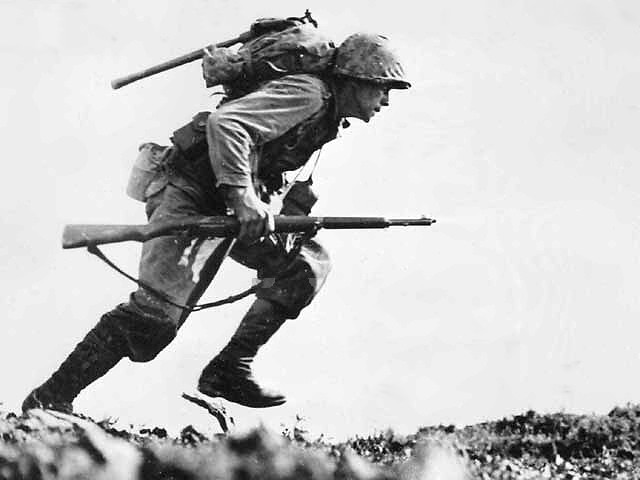

It’s a day I honor all veterans, but especially those who stood beside me in battle.


Happy Veterans Day 2013.
Available in print and as an ebook from Amazon.com and Tactical16.com. Available electronically from iTunes/iBooks and Barnesandnoble.com.
Filed under: Writing | 8 Comments
Tags: veteran authors, veterans day

The follow-up to Proof of Our Resolve is back on track for publication. Due to unforeseen circumstances, the original September launch date didn’t work. New time frame is late January.
Plot summary: Jerry Nunez and his soldiers fight back against a limited cartel incursion across the Texas border. Please read my Line in the Valley blog posts for a sneak preview.
Thanks, and I hope you guys don’t get impatient and ditch me!
Chris
p.s. There’s a pretty cool story behind the cover photo.
Available in print and as an ebook from Amazon.com and Tactical16.com. Available electronically from iTunes/iBooks and Barnesandnoble.com.
Filed under: Line in the Valley | 12 Comments
Tags: cartel violence, Line in the Valley, veteran writers

Just wanted to let everyone know I’ll be making a brief appearance and signing books at the Humor for Heroes comedy show at Floore’s Country Store in Helotes, Texas on November 9th. HfH is a non-profit that assists veterans and active duty service members. It was founded by my sister after I came home from Afghanistan. If you feel like seeing some good comics (including my brother Edward) and supporting a good cause, please come on out. Bobby Henline, a Wounded Warrior turned comedian, will also be appearing. Please come on out guys, hope to see you there.
Available in print and as an ebook from Amazon.com and Tactical16.com. Available electronically from iTunes/iBooks and Barnesandnoble.com.
Filed under: Writing | 1 Comment
Tags: Humor for heroes, veteran writers
This has nothing to do with my post. But isn’t it a cool picture?
I’m trying something new, guys. I’ve been asked to write a true story about a wartime romance in Afghanistan. I have a secondhand connection to the story. Writing anything even close to romance is new to me, and I really don’t know the “right” way to do it.
So I’m making a humble request: please read this and tell me if it’s interesting, mediocre, or absolute crap. In a rather unusual twist, I actually have an attorney waiting on this story; he’s worked in the publishing industry before and if he likes this story he’ll act as my agent. So there’s a lot riding on my ability to get this right.
Please take a look guys, and be brutally honest about it. If it sucks, I need to know now. Thanks and I’m looking forward to hearing your thoughts.
Chris
————————————————————————–
CHAPTER 1
A scared young woman stood in the dark, taking in the sight. Wounded civilian contractors being bandaged by frantic friends. A smoking plywood hut, the smell of blown explosives, sirens broadcasting “Incoming Incoming Incoming!” The frenzied aftermath of a rocket attack. This was not a rare event, but the young woman, Joan, had just arrived days before. This was her first deployment. She had never experienced anything like this.
Joan moved closer to the smashed hut. Blood was splattered on exposed walls. And something else. Something dull grayish, barely visible in the dim light, scattered in tiny clumps around a fallen contractor’s small, sparse room.
Brain matter. She stepped away in horror; this was a new, shocking experience for her. As a child in L.A., she had almost been hit by stray bullets from a drive-by shooting. However, gangsters’ bullets aren’t the same thing as rockets randomly falling from the sky. When Marines imagine themselves at war, they see themselves on foot heroically standing their ground against a brutal, determined enemy. This rocket attack was nothing like that fantasy. Realization set in: this year was not going to be what she had expected. But that shouldn’t have been a surprise. Not much about her service in the Marines had been what she expected.
Joan was not what most people pictured when they heard the word “Marine”. Petite, pretty, light-skinned with dark hair and eyes, feminine and toned but not “buff”, she looked more like a kindergarten teacher than a warrior. Growing up in a working-class home in California, she never considered joining the military.
Her father and grandmother raised her and her brother after Joan’s mother abandoned the family. Her grandmother was an old-fashioned disciplinarian who took them to Mexico every summer so they would respect their roots. Her father, a Mexican immigrant who spoke only Spanish, worked menial jobs while going to school and struggling to learn English. He even went so far as to read an entire English dictionary, cover to cover. Eventually he became a successful business owner.
Joan’s father didn’t want his children to struggle like he had. He made them study two hours every day and assigned extra homework. When Joan got older, her father decided she would graduate from high school, go to college and then move straight into a lucrative job. Over the years, Joan moved with her family from California to New York to Texas, and her sights were on college after high school. The Marines never crossed her mind.
She graduated and went to college. Then a Marine recruiter called. She told him she wasn’t interested, and hung up. And she truly wasn’t interested, until she saw a Marine recruiting commercial shortly afterward. Marines were jumping out of helicopters into the ocean, firing weapons, charging up a beach, doing all the cool things young men and women imagine Marines doing.
Joan got to thinking. She knew she had been sheltered. She sometimes felt like her life was being planned out without her input or consent. She also had an urge to serve her country. So she decided to make a major decision, something that would make her life her own.
She went to the recruiting officer and started the process. Days later she was sworn in. Her father didn’t talk to her for a week.
At 20 years old, she headed from college to boot camp. And she liked it. She discovered a hard-headedness she didn’t know she possessed, even going so far as to ignore a broken leg and endure a minor operation without anesthetic so she could graduate with her platoon. After initial training she went back home, got back in school, worked several civilian jobs, and even worked as a juvenile corrections officer for a time (which, to her surprise she loved). She excelled at living the half civilian, half military life of a reservist.
In early 2009 she was notified she would deploy to Afghanistan. She was excited; If you’re a Marine and don’t go to war, what’s the point?
In mid 2009 she arrived at Bagram Air Base, Afghanistan. It wasn’t what anyone imagined when they thought of being “at war”. Bagram was a huge, sprawling base, occupied by roughly 30,000 Soldiers, Marines, Sailors, Airmen, foreign troops and civilian contractors. Bullets never flew at Bagram; there were so many rules, the bullets didn’t have room. In time, those rules would exasperate her to numbness.
Troops had to wear reflective belts as soon as the sun began to set. The reflective belts had to be the same color, worn the same way. Speed limits were painfully low. Troops driving utility four-wheelers had to wear a reflective belt, eye protection and a helmet (and take a four-wheeler safety course, lest they die in a 15 mile per hour accident). Alcohol wasn’t allowed. Troops couldn’t wear civilian clothes. Anyone walking along the main road had to use the only sidewalk, which was packed with thousands of troops. Enlisted soldiers had to salute officers. And on Bagram, it seemed like there were millions of officers.
But Bagram had, so to speak, good points. Other than the occasional rocket attack, it was safe. It had a well-stocked PX, coffee shop, pizza joint, and other fast food. The fast food places made deliveries. Some troops lived in plywood huts, but others were in air-conditioned prefabricated units that resembled dorm rooms. Wireless internet was available. There were weekly Salsa and Country dancing nights. Some service members had time and privacy for on-base romances, although adultery between service members was illegal and sex between unmarried service members was highly discouraged, though tolerated.
Like many support troops at Bagram, Joan worked long shifts with no days off and few means of relieving stress. Far from being grateful at being relatively safe, she ached to get outside the wire and actually be part of the war. With few exceptions, people don’t join the military because they want to be safe and protected; most of the Soldiers, and probably all of the Marines, would have traded wireless internet and Salsa Night for one good engagement, for the experience of being under fire just once. But the vast majority of the troops at Bagram never left the wire, never heard a shot fired or saw a casualty.
Eventually, Joan saw more of the war than most Bagramites. She was officially a supply clerk; however, in addition to her supply duties, she sometimes helped at the base hospital when Marine casualties arrived. Occasionally she even assisted with enemy casualties. She was in the hospital when the casualties from the battle of Ganjigal, the fight where three Marines, a Soldier and a Navy Corpsman were killed and two Americans earned the Medal of Honor, were brought in. Helping casualties, in any way, was important and rewarding (although depressing) work. Her supply job, though deathly boring, was crucial to the war effort.
But Joan hated being stuck at Bagram. She tried to get out in the field with the Female Engagement Teams, handpicked groups of female Marines who went on missions with the infantry. No luck. She volunteered to fill in on convoys when a driver or gunner was needed. Her leadership refused to let her go. During her entire deployment she only went off post twice, and both times in a helicopter. She never set foot on Afghan soil outside the security of a Forward Operating Base.
Like all Marines, Joan loved the Corps while chafing at its constant aggravations. At times she thought Bagram and the Marine Corps would drive her nuts. And she was constantly annoyed by the Army’s and Air Force’s lack of discipline. But there was no escape; no bar to visit after work for a few beers, no loving husband waiting to pamper her when she got to the shack she called home. There was just dull, monotonous supply work, or the heart-rending sights of horribly wounded Marines, Afghan Soldiers, Taliban and civilians at the hospital. Stress piled upon stress.
Sergeants Major liked to say stupid things like, “If you need stress relief, work out! Or sign up for an online college course. Do something productive!” As they spoke the words they must have known just how ridiculous that advice was. Working out could help a bit. It certainly couldn’t erase the tension brought on by the crush of military rules, or pain of feeling helpless in the presence of brave, wounded men and women.
But all that numbness, pain, stress and helplessness would come later. The most important event of Joan’s life actually happened within the first two weeks at Bagram.
Like all newbies at Bagram, Joan quickly discovered the PX complex. It had a surprisingly comfortable deck area where off-duty troops and contractors could hang out. The Green Bean Coffee Shop was open 24 hours. Service members, foreign troops and civilians would sit at tables all night, just talking and relaxing a bit. Afghan-American interpreters sometimes had dance nights at the PX area, which was a bit odd; usually only the men danced, close together, sometimes very suggestively. Beautiful female Afghan translators either sat on the sidelines or danced at the periphery, but were ignored by the men. For the troops it was, to say the least, unusual.
Joan wasn’t interested in dancing. She just wanted to be away from her work, to escape the already-overwhelming sense that she was going to be trapped in a hell of boredom for almost a year. She didn’t want to be hit on by lonely Soldiers and Marines either, but it happened. Right away.
One of the first nights she hung out at the PX, a persistent Soldier kept trying to engage her in conversation. She plainly expressed her disinterest. He kept at it. She turned away. He wouldn’t stop. She thought about leaving.
And then she spotted, not far away, a handsome, dark haired, muscular young French Marine. He had already seen her. And was walking toward her, dark eyes focused on hers.
From that moment, Joan’s life was completely changed.
——————————————————————–
Your thoughts, guys?
Available in print and as an ebook from Amazon.com and Tactical16.com. Available electronically from iTunes/iBooks and Barnesandnoble.com.
Filed under: Afghanistan, Writing | 26 Comments
Tags: love and war, veteran writers
