About
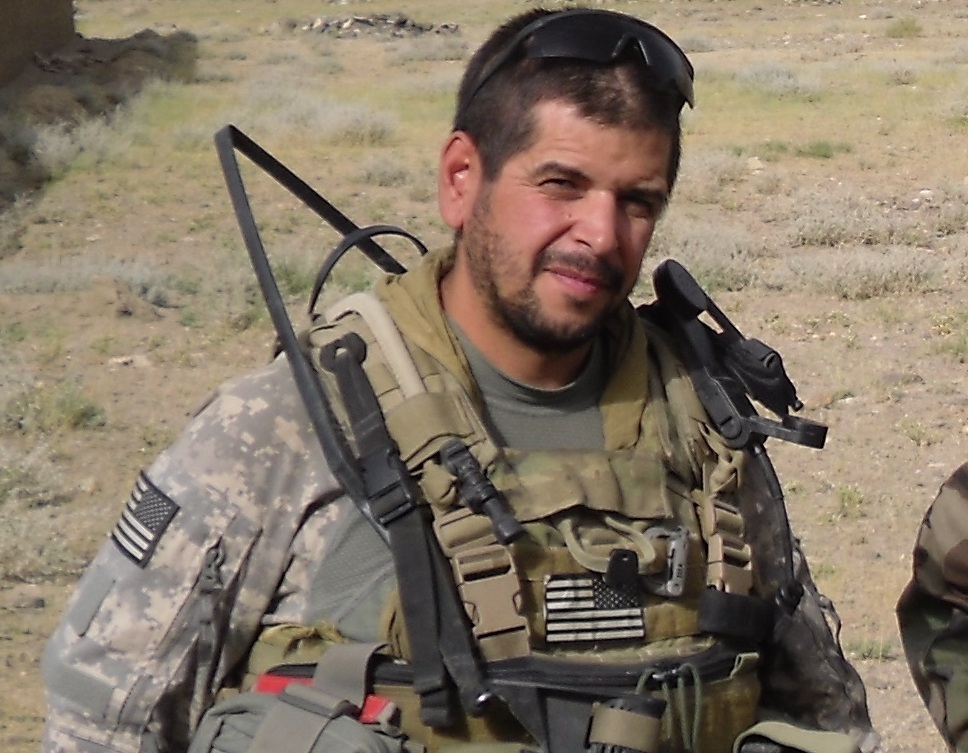
A little bit more about my background: I was a lazy and unmotivated high school student, and got horrible grades in almost every class. Most of my classmates had plans to attend prestigious universities and go on to high-paying careers; many of them did just that. My aspirations were to get out of high school and never go to another school again, join the Marines and spend the rest of my life in combat or training for it. I didn’t concern myself with minor details of life, like how to make enough money to support a family. All I wanted was to someday be with a Marine infantry platoon, laying in the mud behind a machine gun, waiting for the enemy to attack. If the Marines around me trusted that I would do my job, and if I held my ground under fire, then as far as I was concerned my life was a success. Even if I died behind that machine gun.
Three weeks after high school I was in Marine boot camp. On my 18th birthday I was too busy throwing hand grenades to celebrate. When I graduated basic, I could almost see that muddy machine gun position out there somewhere, just waiting for me to lovingly wrap my fingers around the pistol grip and pull the stock into my shoulder. My Marine Corps life would be a grand adventure. My teens, twenties and thirties would be a replay of all the cool parts of Belleau Wood, Iwo Jima and Hue City. The Corps would be my happy home and provide me with everything I needed for at least 40 years. In my golden years I would be a wise old sage, tutoring young warriors.
Of course, it didn’t happen that way. Civilians might be surprised to hear my plans didn’t work out. Veterans are probably doubled over laughing right now.
To make a long story short, here’s what happened: I was 17 when I joined and needed my parents’ consent, so they made me join the reserves. I thought I was joining to be an infantryman, but I didn’t realize until after I swore in that my job would be weapons repair (curse you for taking advantage of a gullible kid, Gunny H). I spent 6 years in the Marine Reserve as a support guy and did basically nothing. I watched Desert Storm on TV and listened to stories about Panama and Somalia from guys who had been there. In 1995 I finished my enlistment, my pride at being a Marine mixed with disappointment at what I had actually accomplished.
That same year I joined the Army National Guard. I spent years serving as a tank crewman, then went to Iraq in 2005 and never got in a tank. My entire deployment was dedicated to escorting supply convoys. There were moments of terror, long stretches of boredom and frustration, and a few close calls. I came home and eventually volunteered to go to Afghanistan with a different unit. And that’s where I finally, after 20 years in the military, found myself behind a machine gun, surrounded by fellow Marines and Soldiers, waiting for the enemy to attack. The machine gun was on a humvee and I wasn’t drenched in mud, but no matter. Later, after a particularly rough firefight, a young Marine infantryman made a profound comment about something I did during the battle: “That was good s**t.” That comment was worth more than any medal I could have been awarded. And it told me I had finally achieved my life’s goal. I had stood my ground in combat.
Of course, a few other things happened to me in the intervening years between the beginning of Marine boot camp and the end of my Army tour in Afghanistan. I spent two whole years in community college but didn’t get a degree (I make sure to bring up my vast educational experience every time I use a big word like “correlation” in conversation). I got married to a beautiful, curvy, surprisingly fertile woman who has two bachelor’s degrees and poor taste in spouses. I became a cop. I moved with my family to several different cities. I became a young father, then a slightly older father of two kids, then an older father of three. Three days after I arrived in Afghanistan I broke down in front of a group of soldiers I didn’t know when I was informed my wife had given birth to our fourth child, the only one of our children whose birth I didn’t attend. I spent 18 months working for the UN police in Kosovo. I wandered the woods of East Texas for two weeks with thousands of other soldiers, searching for fallen astronauts and wreckage from the space shuttle Columbia. At work I was in fights, pursuits, and countless high-stress incidents. I wandered around St. Petersburg, Russia, trying to control my spastic lower intestine. I got in a tug of war over a roll of concertina wire with an old Albanian man in Prishtina. I watched in awe as Apache helicopters blasted enemy positions with missiles and gunfire a few hundred meters from me in Afghanistan. Outside of Baghdad I was stunned to see the night air around my humvee suddenly turn orange as a roadside bomb blew up a truck 25 meters from us. I developed a deployment-long fear of helicopters after a Chinook I was in almost crashed on landing. Back home I arrested a murderess who I’m pretty sure committed a minor act of cannibalism in the back of my patrol car. I just missed being shot by a Taliban machine gunner while sticking my upper body out of a French armored vehicle.
In other words, I lived a life that’s given me tons of subject matter to write about.
I didn’t write a book because I expect it to make me rich. Getting rich hasn’t been my life’s goal. I decided to write a book because what I experienced in Afghanistan was something I had to express, and once I decided to write a story, that was it. I was committed. Proof of Our Resolve is part 1 of the story I felt compelled to write. It’s my attempt to convey some of what I experienced through a fictional platform. And it’s my contribution to what I hope will be a widespread effort by veteran writers to dispel some of the nonsense floating around about combat and combat vets. In future posts, I’ll delve further into specifics about that nonsense.
If you’ve managed to read this entire post, thank you for your time and interest. I hope you’ll take a gander at my book , and return to read future posts. And most of all, I hope I manage through my writing to open a window into what I’ve lived, what I’ve imagined, and what kind of thoughts are kicking around in my head.
-Chris
http://www.amazon.com/Line-Valley-Chris-Hernandez-ebook/dp/B00HW1MA2G/ref=zg_bs_157072011_42

This is a nice set-up. I like it a lot. I already know I like your writing. I’ll make time to read your first chapter tomorrow.
Sheri,
Thank you and I hope it doesn’t disappoint. 🙂
Chris
Chris – I’ve searched your site for an e-mail address but haven’t found one. Obviously I haven’t read the chapter yet – but will do so. I’ll do my best to get to it this week. Please send me an e-mail address – [email protected]. TX
Sheri,
Email address sent to you. Thanks,
Chris
Me too, please.
Great article, if we meet up we can discuss planning lunch at Pinocchio in Pristina, Dragadon.
Man, Pinocchio sounds familiar. I don’t remember which part of town Dragadon was in, although I remember several others. Did we work together over there?
Chris
Chris, I really enjoy your writing. Will you please forward an email address? – [email protected]
Email sent. Thanks for the compliment, Dan.
Chris
Chris, just found your blog today. It’s excellent, I’ve linked you at my place and will send readers your way (all three of ’em). Now I gotta get your book!
Hey Sarge, thanks for the link and don’t sweat the small number of subscribers. I’ve been blogging since last summer and just now am getting a little attention. It takes time.
If you get the book, please fell free to leave a review on Amazon or wherever you buy it. I’m always looking for honest reviews. Not a plug, but an honest assessment of the book’s strengths and weaknesses.
Thaks for reading and commenting, and I hope to hear from you again soon.
Chris
Found your blog a few minutes ago — only took reading one post to know you are a well experienced and very talented writer.
The book is now purchased (B&N) and I look forward to more.
THANK YOU for your service. If we’d finished the damned job when we were in the general area the first time you wouldn’t have had to be there, but it was politcial choice.
BobF
(USAF retirement order of 1/1/93 says 29 yrs, 4 mo, 16 days, but who’s counting…)
Thanks for your service too, Bob. And please, feel free to drop an honest review of the book when you’re done. Not a plug, but an actual, honest review. Be brutal. I can take it. 🙂
Chris
Hello Mr. Hernandez,
Just found your blog via Lawdog’s recommendation. I wanted to express my appreciation for your writing, and your toughtful approach to life and reality. Your respect for people with different point of view speaks very well of you. Good writing and wisdom are seldom found together. I’ll be adding you to my reader feed, and look forward to reading more of your stories and reflections.
Regards,
Marc B.
Calgary Alberta, Canada.
Thank you Marc, I appreciate the compliment. Feel free to come by and comment anytime.
Chris
Glad to see someone writing something real for a change. Welcome brother…
Hey Steven, thanks for the compliment. I’ll have to check out your blog. Busy as hell writing lately, hard to find time to just read…
Chris
Great writing. I especially enjoyed reading about your 2005 Iraq experience which very much mirrored my own. (I served in 2005 there as an artilleryman doing convoy protection and other urban combat operations – no howitzers).
Eric,
In my tank battalion, while we were on convoy escort duties we were called Tankers Without A Tank. But they usually just used the acronym…
Chris, Enjoyed your article and understand your rules of engagement. I will not get into it here as it is the wrong forum, but to restrict any discussion to some level of politeness not required of this President, this Congress and the truth in my dictionary, is to deny reality. Coffee and Conversation would be most pleasant, but I’m not in Texas! I did however, forward this article to several deputies and our county sheriff. It is now required reading.
Steve,
Thanks for your comments. For real, it’s required reading? Can you tell me what agency?
Chris,
Same thing happened to me back in 1966. I was a poor (read lousy) student in high school. I enlisted in the US Army at age 17 1/2. I wanted to be a combat engineer (sapper) and blow stuff up in Vietnam… kill a commie for mommy, that sort of thing. The SOB SSG that enlisted me put me in as a quarry machine operator. Of course I didn’t know that until I finished basic and got my assignment to Ft. Leonard Wood.
Quarry machine operator!!! Who would ever want to be that? I didn’t get to go to Vietnam and blow stuff up. I went to Germany where I was asked repeatedly, “Who enlists to be a quarry machine operator?” I got tired of telling people that that was not what I enlisted to be. I eventually was assigned to a combat engineer unit (when I arrived in Germany they had no idea what to do with me… who needs a quarry machine operator) but guess they thought the 24th Combat Engineer Battalion might know what to do with me. I eventually earned a 12 Bravo (combat engineer) MOS. I took the out when my three year enlistment was up. Ten years after being out I re-enlisted in the US Army Reserve as a combat engineer and spent the next 17 years, finally, blowing stuff up… but it was in Idaho… old dead bridges, old concrete grain silos, old buildings etc.
I just bought your book and can’t wait to dig into it.
Don
Don,
A guy I knew in the Marines joined in the late 70’s to be an arc welder. When he graduated basic and was told his MOS, it was just slightly different. He told the DI, “But sir, my recruiter said I was going to be an arc welder.” The DI laughed at him and said, “Boy, there is no such thing as an arc welder MOS in the Marine Corps. The only thing you’ll be welding is eggs.” The guy wound up being a cook on Okinawa for 4 years straight.
Even though it was a little delayed and wasn’t where you expected, but at least you still got to blow stuff up. I played with C4 a little bit in the Scout MOS school, just 1/4 lb charges. In Afghanistan I hung out with the Counter IED guys and watched them blow captured explosives. That was pretty cool sometimes.
Thanks for the comments, and for your service. Hopefully you enjoy the book, and please post an honest review when you’re done.
Wow, Honesty rules
In a way it could be considered a backdoor draft, since we didn’t sign up for that role, but I wouldn’t trade the experience for anything now. We would joke that when you make the king of battle do the queens job, you are the transvestite of battle.
Oh, god…not the backdoor draft thing. That’s one of my pet peeves, hearing our service called a draft. Not criticizing you, it’s just that I’ve had bad experiences with people trying to convince me that I was somehow victmized by being sent to war. I have an essay that’s supposed to be published in a good-sized city’s newspaper on March 24th about that very subject. I’ll post it here as soon as it goes up there.
Transvestites of battle, never heard that one. We had an arty batt in my brigade on the convoy mission, and in Afghanistan I worked with an embedded training team from a USMC arty batt, mentoring an ANA infantry battalion. Good times.
Kindle book downloaded. Subscribed to the blog.
Fantastic, glad to hear that Tango. Please let me know what you think of the book.
My first day on the job as a Police Cadet (civilian early hire until 21) working in Police Records Section. I had a Sergeant who was doing the inter-department mail run give good advice to keep a diary so one day I could write a novel about my experiences. Sadly, I never followed the crusty veteran’s advice. Thirty years later, I wish I could remember all of the interesting humorous, scary and gut-wrenching things I experienced. Good luck in your writing career. Thanks for your service. I had nearly joined the Marines before joining the police department. One of my greatest regrets that I never served. Stay safe.
The first honest UNMIK cop in Kosovar history! Si është kjo e mundur? Kidding, kidding. I was KFOR, back in 2003-2004. Saw a link to your site, from Tam K’s blog.
If UNMIK cops ordered me to do anything, let alone beat up or loot some old codger wearing a white cone hat, I’d mostly have laughed. The locals would always go to great lengths to keep from paying taxes to the UN. Not sure if it was true, but we all assumed the unfinished roofs everywhere were a way of scamming out of government taxes. Every time someone grenaded a UN vehicle or compound, we assumed it was some black market deal gone sideways. I did personally know that there were folks in UNMIK helping out the human slave trade in the region. It’s refreshing to hear not all of the UNMIK folks were the bad guys. They got a less than stellar rep, which I’m quite sure blotted out many of the good things they did accomplish.
Good work. Honestly, all of it. You have shown great integrity. I have no doubt mistakes have happened along the line. Excrement happens. You learn from them, and move on. From what I’ve seen from your writings, you’ve developed into a pretty good person. My hat’s off. Keep writing. I’m quite sure you’ll have a number of interesting stories yet to tell.
RD,
my compliments on your Albanian language skills, which I’m sure you didn’t get from Google Translate like I just did. It’s been a long time since I spoke Albanian regularly, I’ve forgotten a lot.
I left Kosovo well before you got there, and heard later about some UN guys being involved in human trafficking. That was depressing. At the time I was there, I was around mostly good dudes. A lot of them developed close friendships with the locals they worked around, both Albanian and Serbian. I think we did accomplish some good things, and working among people from that many countries was a once in a lifetime experience. We had Greeks and Turks working together, Indians and Pakistanis, Russians and Germans. We even got Albanians and Serbs to work together every once in a while. I’ve never been back, and if UNMIK’s reputation fell that much I’m glad I wasn’t around to see it.
Did you have situations where UNMIK police tried to order you to do something? We didn’t have any authority over KFOR, we could only ask for their assistance. I was on a couple of operations with Norwegian and British troops, but we definitely weren’t telling them what to do.
Thanks for the compliments. I like to think I’ve used my experiences and mistakes to become a better person, but who knows. I do still have a lot of stories to tell. It sounds like you do as well.
My Albanian is pretty rusty these days. I still have all the children’s books I picked up at a handful of markets outside Pristine and Gjilane.
Don’t worry so much. Problem is, 20 good acts is wiped out by one bad act. No one remembers the decent stuff, but they tend to remember the UNMIK cops helping the coyotes smuggling underage children. I’m as guilty of that as anyone, I suppose.
Re orders, not directly. Example: A local heavy got assassinated. Rumor was the last six or seven hits failed. So, someone fragged him. Grenade, in public, near a restaurant. UNMIK police “secured the scene”, against KFOR medics, until the guy bled out. Then stopped interfering immediately. We assumed that UNMIK guys got paid off, but that might just be paranoia talking. We also assumed the local Russian mafia ran a fair amount of the country. Which was somewhat accurate. We had unofficial standing orders not to mess with them. Everyone went by that unofficial policy.
UNMIK didn’t quite order us to stand aside, but essentially they did. Our more or less standing orders was to “cooperate with UNMIK”, with the understanding of CYA always and call higher if it’s anything significant. Same rules for other country’s NATO units. The POLUKR Battalion was under Task Force Falcon, so we played better with them directly. So, UNMIK couldn’t actively make us do things, but they could interfere with us doing stuff. By forcing us to not do something and call higher for instructions.
Chris: Thanks for your Statesman article Sunday. I too was a cop reservist in both theaters and the ‘Soldiers are victims” myth is just that. I’m with you.
The other article- Dryer’s, was a public confession he should have kept private; I’m afraid his leaning on Hemingway and self depicted “monster” will not end well. Perhaps he needs a VFW friend and to stay away from the UT English department.
Keep the faith and thanks, Jack DeMuynck
Jack,
I just read Dryer’s article. I know Zack, we were in a veteran writers’ group. He’s a good guy, but obviously we don’t agree on many things (pretty much on nothing, actually). I didn’t see Iraqis treated the way he says he treated them, I didn’t see Americans “torturing” little kids. We gave food, candy and water out to the locals all the time, so much so that we were warned not to do it because kids might run in front of the convoys trying to get it. In Afghanistan we went to great lengths to show respect to the locals, because without their support you lose to the insurgents. Maybe what he says he did was a problem in his unit. It wasn’t a problem in my units. We weren’t reliving the worst parts of the Vietnam War.
I notice that there’s one comment on my essay, and several on his. I wonder which point of view is being embraced by the Statesman’s readership, and which is considered unbelievable.
Thanks for your comment, and for your service. I wish more people would listen to the “we’re not victims” truth.
I just read your article in the Austin American Statesman … thank you for your service and sacrifice to our country and for sharing your insight.
I happened to come across an article you just did for Breach Bang Clear on Doctrine. And although I’m not military (career firefighter by trade, part time police dispatcher, dad, husband, and former USAF brat), but I really enjoyed your writing and can associate that article to the fight on our 2nd Amendment rights. If it’s ok with you, in writing letters to politicians I’d love to be able to reference a link to that article. Anyways, thank you for your service and feel free to drop me an email. I hope to get your book, just don’t know when I’d be able to read it right now. Be safe!
Chris- I think we might have been in Prishtina together. (Traffic and CPU 2001-2002) l’m looking forward to reading the books.
I knew lots of guys in CPU. I worked in RPU (Regional Protection Unit) for my last 6 months. One of our principals published a book about his time as a war crimes prosecutor there. Hit me up at [email protected], I bet we ran into each other over there.
Chris, would you be willing to write an article about (threat assessment) It seems with lack of knowledge or experience that people often put their life in danger. It could be on the street or it could be around wild animals, making that bad judgement could be fatal. I think the key factor to this is to let the reader know of the possibility that their thoughts on a subject that they truly know little of can get them killed. We as people make judgement based on many things but mostly rely on experience to validate an action we may think is perfectly safe but it isn’t. Much like the female officer (cadet) her concept of a fight could get her killed in the field unless she learns the truth about it’s potential. A person taking a picture of buffalo, a person visiting friends in LA and walking to the store at 3:00 am unlike their small town home, etc. It would be good if a person could get this idea of making judgments with a lack of knowledge; it also holds true to over non life threatening beliefs people gather over time and they live in a make believe world.
Patrick,
I could do that, but it would be a while before I can get to it. I have a lot of stuff piled up to write. Are you planning on using it for a specific audience?
Hi Chris, I just re-read my question to you and it’s written poorly, I’m not very good at getting ideas across on paper. One thought on this subject is to help people realize that when it comes to a subject of which they have little experience that they take time to give it some thought before taking an action or for that matter forming an opinion. Guess I’m talking about awareness of personal limitations or knowledge and not using their personal pool of experience to judge something they know nothing of or little of in terms of making a “snap” decision. You write well and are easy to read and if anyone could get the point across to folks and making poor decision that could result in (harm to them or others) it would be you. I think that a good lesson teaches more than one point as it can expand one’s thinking from a certain point. I may read something that tells me not to make a snap decision that may get me killed but I may also learn that snap decisions can also make me see something in the wrong light. For example; if I knew little about firearms and their use I might fear them and agree that banning this or that is a good idea. I would not realize that some rancher on the Mexican border may need a 30 round magazine to defend against cartel using his land to smuggle drugs or people. My little world here in Mayberry just has not given me the tools to make a good decision as to what is good for others. I guess I’m talking about a concept and like ideas they are not seen in linear but rather in a more encompassing eyes mind. I would post your article on FaceBook and perhaps at a later date ask your permission to use it in a book I would like to get written. I could write it but by the time it was edited it would not make sense, lol. The book I would like to see on the shelf is about what it truly takes to be an asset to the community if you carry concealed. Having all the aspects of using lethal force a person may encounter or as many aspects that, with help I can muster. People seem to go buy a Ruger LCP, shoot it a couple of times at the range and then carry it for protection. You and I both know they now possess little protection and the possibility of harming someone or having it used on them is greater than the protection they think they carry. In such a book it would be useful to know “your personal” limitations and the limitation of the firearm used. This is an extensive subject as you know and I think it would be good for a couple of reasons, one to keep a person from drawing if they don’t need to to save life and perhaps costing them their life or the life of others or actually taking the hundreds of hours it takes to become competent in all aspects of the subject. We both know that even trained officers often don’t practice enough and have no idea what adrenalin will do to them when their life is on the line. Maybe you want to write that book, I want no glory or rights but would like to see this available so it will save lives and peek awareness on the subject. Mental preparedness is as important as practicing the same thing a thousand times and then doing it again and again to stay in focus. Anyway if you get time and would like to write an article on “threat assessment” people would read it and I think this would be good. I’m asking because I think you write well and get the point across in terms that are understandable. Many are artist with words but straight forward writhing is paramount in my book. Thank you for taking the time to read this, Patrick
Patrick,
Understood, and I do like the idea. I could talk about how some things seem so simple to the uninformed, yet to those who truly understand, the same thing can be amazingly complex. I have a couple of examples in mind that I could use to illustrate the point. Thanks for the nudge forward, I’m pretty sure I can write a decent essay about it.
Email inbound.
You did it again, so concise and direct placing a page of thought into a paragraph, as you say, amazingly complex but to the uninformed it’s quite the opposite. Just replied to your email, thank you Chris.
Got your email and organizing my thoughts for the essay. Thanks Patrick.
I’m a ME TOO.
Asking for your email address.
Was never Military, but was a California Highway Patrol Officer for 30 years, 7 months.
Twenty seven of those years were in San Diego County, where you have MCRD< Camp Pendleton, and Miramar MCAS.
My email: [email protected]
Sent, sorry for the delay.
Being in the TX ARNG would you happen to be a “T-Patcher?” I know they reactivated the Division a number of years back but I don’t know if the 49th AD was completely deactivated as a result or if both are in existence now.
I’m just curious because my uncle was with the 36th (Co M, 3rd Bn, 142nd Inf) in WWII (Feb 1942 to Jun 1944) and was KIA shortly after he helped with the liberation of Rome. While stationed in Germany I had the good fortune to visit his grave in Florence and to make several battlefield tours of his movements from Salerno (actually Paestum) up the boot to where he finally died near a small town north of Rome called Capalbio.
As a result I’ve been extremely interested in the 36th ever since and I have most of the books in and out of print that deal with the Division’s time in Italy.
Redleg,
I am in fact a proud T-Patcher. When I joined the Guard we were still the 49th Armored, but that changed in 04, just before I was mobilized for Iraq. The 90th Infantry and the 48th Infantry, both WW2 divisions, were reborn at that time, I believe. I was proud to be in the 49th, but the 36th has a proud history all the way back to WW1. One joke I heard about the 49th in Bosnia; regular army guys used to say we were the 49th because that was the average age of our E-4s. Things have changed since then. 🙂
Funny comment about the 49th. My battery had a section of them attached to us in Bosnia. I didn’t get to interact with them much because my section was attached to the DANBN at Camp Valhalla so I was pretty much on my own for my time over there. I only made it to Tuzla Main a few times. The Danes had to put a special convoy together to get me back there one time because HQ said I had a registered package that I had to go sign for…which ended up being divorce papers. The witch had the gall to try and serve me over there!
Anyway, the guys from the 49th were all really good guys, but yes, they were all a bit older than the average. One guy was a cop (I believe from Houston). I wish I could remember his name for you.
Just in case you’d like to see it, on the BreachBangClear site there’s an essay I wrote about doctrine, with a picture of me flying the T-patch on a convoy in Iraq.
http://www.breachbangclear.com/site/component/content/article/10-blog/392-doctrine-is-more-important-than-lessons-paid-for-with-blood.Html
I know this generation of 36th ID soldiers haven’t done what WW2’s T-patchers did, but I hope your uncle and his comrades would have been proud of us.
Nice, I’m really glad to see the T-Patch out there again! I know that he spent an awful lot of time fighting in the mountains at places like Monte Sammucro, Monte Maggiore, Monte Lungo, Monte Cairo, & Monte Castellone (part of the operations to take the Cassino heights). According to the U.S. Army History of WWII the terrain in those mountains was so rough that not even pack mules could make the ascent and as a result one regiment was up on the mountain, one resting and another serving as human pack mules to carry supplies up and bring casualties back down. They also said that for every three round trips up and down a new pair of combat boots had to be issued because the granite rocks destroyed the boots after three trips up and back. Add to this the fact that the Germans had blasted prepared fighting positions out of the granite vs. the 36th being exposed to the elements and artillery fire which generated not only steel shrapnel but myriad little granite fragments which were just as deadly, and you can well imagine how horrible conditions were up there. I’m just amazed that he made as long as he did.
Sadly after almost a year in combat he was killed one week short of the division being pulled out of Italy. Since he was so young and was unmarried at the time I have made it my mission to remember him. Throughout my military service whenever I encountered something difficult I always used his memory as motivation telling my self my experiences were nothing compared to what he endured. It would be such a shame for his service to be forgotten. My kids (and now my grand kids) have all been raised with stories of his service so I know his memory is secure for a few more generations.
Anyway, I believe he would feel proud of your service today in the mountains of Afghanistan and that you are bringing honor to the “T-Patch.” Know that the entire 36th saw massive action in the mountains of Italy and you are directly continuing in their footsteps by doing the same in the mountains of Afghanistan.
Take care, be safe, and thanks for responding!
P.S. If you haven’t done so already, I encourage you to join the 36th Infantry Division Association. You can contact them here:
[email protected]
They need the new blood to get involved because sadly the old guys are passing on at an alarming rate.
I joined as an Associate Life Member but seeing as I don’t reside in TX I’m not of any help to the org beyond monetary support.
Hi Chris!
You had posted the opening chapters of “Line in the Valley” a few months back and I had said something along the lines of “I’d buy that.”. You said you loved me and thus began our budding romance… and um… Onwards.
I stopped by the blog again a week or two back and noticed the stories were up on Amazon and followed through on the purchasing of the stories. I’m glad I did.
I enjoyed “Proof of Our Resolve”. The story was frustrating and real. It’s a hard book to comment on in that it was both very good, and drove me nuts. The “Hollywood resolution” doesn’t happen. The consequences stick with you. Good job.
I’m now through the first 20% of “Line in the Valley”, and I can see how you’ve been growing as a writer. The pacing feels tighter, and I’m feeling the tension of the ambush of Nunez’s team more acutely than in “Proof…” (when they’re all leaving the FB.)
I love the blog. Your writing is both hilarious (I say as the son of an officer who heard many gallows humor stories/jokes during BBQs.) and well informed, and the books are well worth the time others might take to check them out.
I’m looking forward to more stories from you!
Scott
****POSSIBLE SPOLIER ALERT****
I just finished the novel. I’m trying to write without dropping spoilers at all for others so I’m keeping it vague.
I had a small nagging feeling that on the first day when the team are being funneled, the setup, and the loss of control that resulted, that there was going to be something to come back and haunt them. The attackers were too organized overall not to have someone try and get propaganda running. Especially dealing with US troops. Image is everything to our politicians.
All that said, it was a great read, and I really hope to read more about the story. It ended on such a potential-full cliff-hanger.
Cheers!
Scott,
That praise you dropped on me is worth the little tiny spoiler. But if you really want this writer/reader internet romance to blossom, a review on Amazon would go a long, long way. 🙂
And I plan on releasing the next book in the series later this year. It’s actually part two of the story, and takes place in Houston between Proof of Our Resolve and Line in the Valley. A couple of test readers have said it’s the best of the three.
Amazon reviews? Can do! (Now with more exclamation points!!)
I’m glad to hear about the next novel. Reading the quick allusions here and there during “Line in the Valley” about the events in Houston kept me thinking I missed a short story or a novel somewhere.
I’m looking forward to the next one. (Just in case I have not made this abundantly clear by now. 🙂 )
Scott
Chris, it’s taken me longer than it should to visit your website. I have loved reading your personal story. I knew parts of it, but not nearly the whole drama. Your honesty and perseverance is inspiring and your writing, as always, is great. It was good seeing you recently at Lilas Taha’s book-launch dinner.
Sharon,
It was good to see you too. Thanks for checking out my site, and I hope other readers find it as interesting as you did.
How’s your book coming along?
So now we all know about your strengths and abilities what are your weaknesses, many times I have read a persons life story only to find out they had unbelievable weaknesses that nobody knew about, I don’t expect you to share anything with me, unless you want to.
Gord,
I know better than to put all my strengths and weaknesses on the net. For example, I know better than to post here about my amazing ability to drink an entire gallon of milk in ten minutes or about my horrible skin sensitivity to baby oil.
But wait… oh god…I just realized… you’re a conspiracy theorist! You can extrapolate 50 conspiracy websites worth of information from seemingly (I mean, actually) innocent bits of information! So I guess you actually have figured me out.
And for everyone else’s sake, I recently wrote an essay refuting a Sandy Hook truther. Now they’re coming out of the woodwork to attack me, about anything they can find.
Chris,
I served in Kapisa out of Kutschbach and Morales-Frazier in late 2008. I’m also getting ready to go into law enforcement here at home and I’ld like some advice, if you’re wiling to share some.
-CPT J
J,
Just emailed you. Welcome to the LE brotherhood.
Hi Chrish, introduce myself, iam Ismah form Indonesia, i was read about your story,, its so inspiring for me. now, im working on my Thesis now, thats about French troops, this is a requirement to accomplish my master degree, and i need your help to give more information about this case. plis, can you help me? my email address : [email protected]
thanks much 🙂
Ismah,
I am very busy today, but I will email you this evening. I would be happy to help you.
Chris
Hello, what is your opinion on these pictures:
Mixed feelings, Danny. Those troops are obviously in violation of the rules, but I’m not a fan of mindlessly following orders either.
What do you think?
I feel the same as you do Chris as far as mixed feelings. I could not follow an order that I knew was wrong but knowing is the true balance of it and that’s where it gets muddy.
Hi Chris, just realized this was you. We are a long way from Prishtina.
Good to see you are doing well.
You too bro, swing by anytime.
You probably already know about these, but if you don’t: Facebook page: Courage Behind The Badge; web page: http://safecallnow.org/
Yo Bro,
Any info of the TIGERS who were troops in Vietnam?
Bro,
Don’t have a clue what you’re talking about.
And for anyone who’s wondering, “Larry” sent me a long, rambling comment explaining how Jews in the movie industry are responsible for all the evils in the world.
Hey Lucky Larry, nothing new on Tiger Force; they’re too busy investigating similar events from Iraq and such. I doubt many if any of those guys are still alive; there were only a few to start with. Best leave this dog dead and move on. There can be a point where men are driven too far and sometimes they revert to basic form, like I said, let her sleep, nothing to see here. Chris, how’s the new novel doing? Will it make it to print or is it too early to tell, Patrick
I enjoyed both your books. Look forward to a third.
All the best,
Dave
Chis: John A-G from Military Vehicles Magazine and author of US MRAPs in Action here ([email protected]) I just read your recent essay, “Cops, MRAPs and the Heartbreak of Police Operator Syndrome” on on The Truth About Guns, Would it be all right to share that with our readers? –John
Absolutely, thanks John. And if you hear of an old tank for sale cheap somewhere in Texas, hook an old tanker up. I WILL have a tank in my front yard someday.
Thanks Chris! That tank in the front yard will be the ultimate expression of “open carry!”—JAG
Discovered this article today. Outstanding! Agree 100% with every bit of it.
Semper Fi, Teufel Hunden!
Chris,
Outstanding article about the Blackhearts. It is a shame that so many of us had command climates as toxic as that one, but thank God the conditions we served in weren’t as unforgiving. I’ve read several of your articles, and your writing is some of the best I’ve seen regarding our current… situation (definitely better than some who actually had ghost-writers and collaborators).
Keep it up brother, and thank you for recording our thoughts so perfectly. So well, in fact, that when people ask me how I feel about some topics I can point them to your blog and say… “what he said”.
Thanks for your service, in uniform and out.
Joe
Excellent article about Ferguson I read tonight! Perfectly articulated! Thank you for having the courage to speak the truth, in public!
Thank you. You are a good writer. Keep it up.
Hey Chris, I’ve read some of your stuff and look forward to reading some more. I laughed in at the dark irony of the fact that I’m literally almost completely following in your foot steps as guy who’s 4 years in his Marine Corps Reserve career in a non Infantry MOS when he thought all Marines when to war as Infantrymen. Like wise I blame my parents for the Reserve Idea even though it was my idiot 18 year old self who made the final decision. Hoping my command will release me to do a inter service transfer to the army with a 18x contract. Even if I mess up in selection I’ll likely go to a infantry unit and finally get in the fight instead of watching my brothers come back from it. Keep up the writing man. -SF
Hi,
Not sure if this is the right place to put this but here goes.
I have been reading your blog for a couple of weeks after following a link from another blog (can’t remember which) I enjoyed your writing style so much that I read the free chapters from “Line in the valley”.
Well, I bought the Kindle version this morning at 08: and I am writing this now at 14:20 having finished the book in one sitting as it were, just could not put it down, absolutely the best book of its type that I can remember reading….
As an ex reservist in the British Army who both sadly luckily never got to serve in a combat situation even after getting called up twice but that’s another story, I recognise the banter and interaction between the characters in the book and was even reminded of events in my own service,
I both laughed and cried during the reading which was a source of amusement for those around me especially when laughing out loud !
You have a talent for this writing lark, I will be purchasing “proof of our resolve” as soon as I get home this evening and will probably save it for the weekend so that I can savour it with a nice single malt.
As for your blog, I am working my way through all of the older posts and have looked at some of the other writings you have provided to other blogs etc. all are well written and refreshingly honest, thank you and keep it up so that I will have lots more to read and enjoy, a selfish reason I know but why not 🙂
Paul,
Thank you sir. If you’re ever in Texas please let me know, first weak American beer is on me.
Might you be willing to leave a review of Line on Amazon?
Hi Chris,
Already done and who knows I may take you up on that beer sometime!
keep safe,
Paul
Dear Mr. Hernandez, I was just introduced to your blog today via a shared article and have now, starting with the earliest, read a dozen or so of your posts. Your arguments are thoughtful, logical, and presented in a clear and consice manner. Certainly it is always easier to appreciate the opinions of one who is generally of the same mind as oneself but I believe that even if I were not, your opinions would command my attention and consideration. I look forward to consuming the balance of what you have to say. Please accept my thanks and appreciation of your efforts. May you and your family be well and out of harm’s way. Sincerely yours, Ross Maxwell
Thank you sir, and if you run across something on my blog please feel free to beat me the hell up about it. 🙂
Awesome post! I can identify with a great deal of it!
Mr. Hernandez, I appreciate your writing style and rational frame of mind. I also sense a deep love of country and the traditions of the United States with an acute understanding of both our shortcomings and promise. You make me proud to be a fellow American. I will be reading up on and following your blog.
I am Col Patrick. Matthew’s former CO. Would you be willing to give me a call?
Absolutely, sir. Please email your number to [email protected].
Very much enjoy reading your blog and appreciate your thoughtfulness on many varied topics. I do hope you will continue to upload content in the future . Best wishes, Chris Bond -SGT. , NJDOC