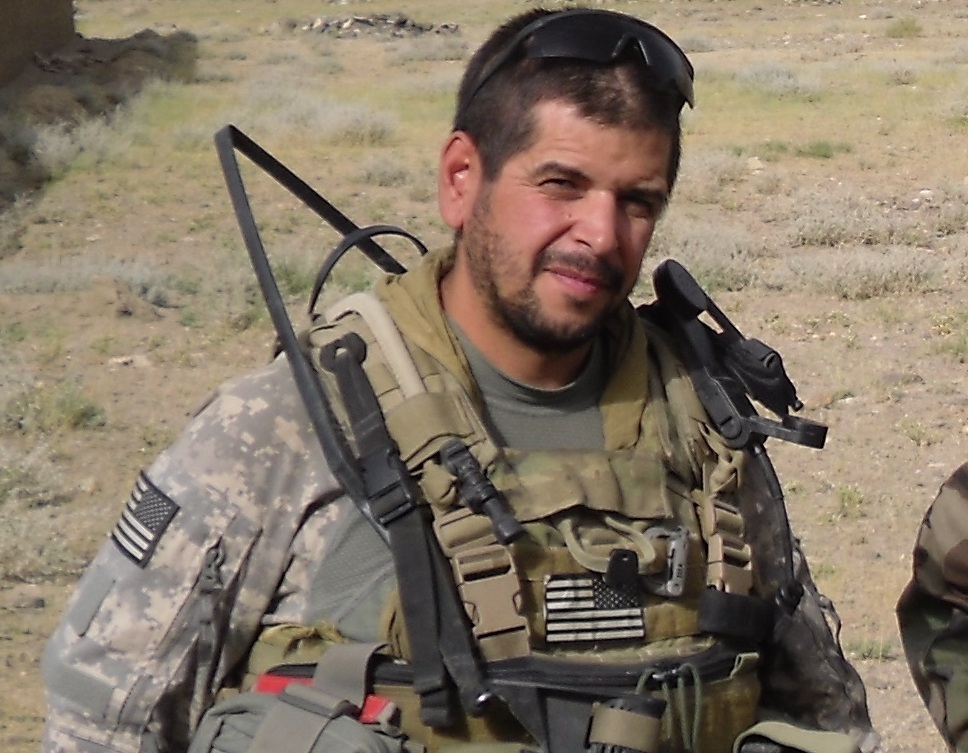
“I was pinned down by sniper fire.”

No, I’m not quoting a Soldier or Marine who served in Iraq. I’m not talking about the incident I personally experienced in Afghanistan, where a sniper barely missed me. These aren’t the words of a Vietnam veteran describing one of the most terrifying incidents of his life.

So who spoke these words? It was actually someone who has never encountered the dangers faced by our troops. It was spoken in a joking, dismissive manner, on a television show. The person who uttered this phrase was our esteemed former First Lady and Secretary of State, Mrs. Hillary Clinton.

Clinton to Jay Leno: “It’s so great to be here, I was worried I wasn’t going to make it. I was pinned down by sniper fire.” Har har, yuk yuk.

Mrs. Clinton spoke these words as a humorous way to address an absolutely unforgivable, blatant lie she told earlier. In a transparent attempt to convince voters concerned with national defense that she somehow understood what it was like to be a soldier at war, Mrs. Clinton claimed that she had been under threat of sniper fire in Bosnia.

“I remember landing under sniper fire. There was supposed to be some kind of a greeting ceremony at the airport, but instead we just ran with our heads down to get into the vehicles to get to our base.”

She made this claim more than once, and stuck to it when challenged. The comedian Sinbad had been with her on the Bosnia trip and firmly refuted her story. But she still held on, until video surfaced. Only then did she laughingly back down from the claim.

Mrs. Clinton showed, with her stupid, pathetic lie about snipers in Bosnia, that military issues mean little more than political points to her. Her claim had nothing, nothing, to do with the brutal reality of bullets being aimed by an enemy who has chosen you personally as his target. I’ve been under sniper fire. It’s not something you forget or “misremember”.

Afterward, she gave these explanations: “I say a lot of things — millions of words a day — so if I misspoke, that was just a misstatement.” “I have been in the public eye for many, many years, and this is something that I think happens to anybody.”

Well, that’s good to know. I guess that time I claimed to be a Special Forces Recon Ranger Delta SEAL who was awarded my 12th Medal of Honor for heroism at the Battle of Fallujah in Afghanistan during the Vietnam War, I simply misspoke. It was just a misstatement. That sort of thing can happen to anybody.

I like to think I’ve made an honest effort to be moderate. I refuse to join either party, although I lean right. I have no problem calling out a republican for being a moron or defending a democrat who is being unfairly targeted (for example, I thought the Monica Lewinski thing was ridiculous; the only reason that became a national issue rather than a private problem is that republicans made it one). As I’ve said before, I’ve known way too many good republicans and democrats to classify either party as all idiots, all cowards, all liars, whatever. I have plenty of liberal and conservative friends. I take them as the individuals they are.

But sometimes, like this past month, it’s hard to maintain that moderate stance. What’s making it extremely difficult now is the left’s steadfast defense of Mrs. Clinton’s actions, or rather failure to act, during the Benghazi attack. Liberal commenters on the Huffington Post, which is NOT a far-left, fringe publication, are in a wagon-circling frenzy. As far as they’re concerned Benghazi is a non-event, notable only as more proof that republicans are vicious liars out to get Hillary Clinton at all costs.

HP published “Campaign 2016 begins in Benghazi” on May 8th. This article exposes the “real” reason for the Benghazi furor: republican terror at the thought of “President Hillary Clinton”. It absolutely could not be righteous anger over the needless deaths of two brave men, who called repeatedly for help that nobody bothered to send, over six hours after the first shots were fired.

“13 Benghazis That Occurred on Bush’s Watch Without a Peep from Fox News” appeared on HP May 9th. This article lists thirteen attacks on diplomatic facilities that occurred during George W. Bush’s presidency. Author Bob Cesca briefly describes these attacks, notes the lack of Benghazi-like anger in response, and concludes the only possible reason anyone would make a big deal now is to unfairly target the democratic party. Mr. Cesca doesn’t get a basic truth: many of us aren’t angry that an attack occurred. We’re angry at the pathetic way it was handled.

As a soldier, I made a conscious decision to risk and if necessary lose my life rushing to the aid of other soldiers who needed help. So have hundreds of thousands of other troops. In my twenty-plus year career, I had to back that decision with action one time. Others have done it many times. We expect that level of dedication from each other, military leaders and elected leaders.

“I would rather die trying to save my fellow soldiers than live knowing I abandoned them.”

I understand Ambassador Chris Stevens willingly took a dangerous job in a dangerous place. I understand measured risks, and have taken many myself. I know our diplomatic personnel can’t wrap themselves in body armor and barbed wire if they expect to gain the people’s trust. I know attacks will occur in some countries no matter what we do. I understand that the situation was confusing. I understand mistakes being made. I don’t expect perfection from anyone making life and death decisions; I just expect them to make the best decisions they can, based on what they know at the time.

I’m not angry the Benghazi attack happened. I’m angry the State Department utterly failed to respond to it.

And the depressing thing about this whole disgusting affair is that I shouldn’t be surprised. Why would I expect Mrs. Clinton, who shows no understanding of warrior mentality, to make a warrior’s decision? And on an even more depressing note, why would I expect liberals in general to care that she left two of our best troops without help, for hours?

“But airplanes couldn’t have gotten there in time.” Oh yeah? Did we have a schedule telling us “this attack will end at exactly this time”? Did we have any way of knowing how long “in time” was? Did we ask any of our NATO allies to send planes from closer airbases? Did we ask the Libyans if they had aircraft that could fly over Benghazi? Did we make any attempt at all to save those men’s lives?

And if any of you liberal military geniuses who never served a day in uniform scream, “But airplanes couldn’t have dropped bombs anyway because of collateral damage”, please swim back to the shallow end of the pool. Airplanes making low-level passes and dropping flares are a deterrent. It’s called a show of force. Our planes do it all the time in Afghanistan, because it works. America is the most airstrike-happy country in the world. Muslim insurgents know this. They’re probably not going to fire a mortar in the dark and risk getting a daisy-cutter down their throats.

This tears me up. Mrs. Clinton lied about being under sniper fire and kept lying until she was trapped by video. No worries, the left tried to make her President and did make her Secretary of State. And the left still supports her now, after she utterly failed to handle the “2 a.m phone call” and told transparently stupid lies about a video causing a protest that somehow turned into an assault with machine guns, RPGs and mortars.

This is a pattern. Representative Richard Blumenthal of Connecticut tried like hell to stay out of the Vietnam War by getting five draft deferments, then managed to join the Marine Reserve. Like almost all reservists at the time, he never deployed to Vietnam. Then he made numerous speeches where he said “when we came home from Vietnam”, “when I was in Vietnam”, “we Vietnam veterans”, etc. He got caught in his lies while he was serving as a senator. So what did the left do? They reelected him.

Last year a former Soldier named Ken Aden ran for office as a democrat in Arkansas. He falsely claimed for years to have been a Green Beret. After being hounded by real Green Berets who tracked down that documents proved he was lying, he finally admitted it and backed out of the race.

One democrat’s response? “It is better to vote for the worst Democrat than the best Republican,” [Pope County Justice of the Peace Gordon Thornsberry] said. “America will be ahead. I’m giving people permission to vote for ’ol Aden.”

Well, damn. The left keeps insisting they’re serious about defense. They cherish the military. They play videos about their love for the military at national conventions. They claim to have the utmost respect for our troops. And then they blindly defend lying losers like Hillary Clinton, Richard Blumenthal and Ken Aden. They don’t call out those who make up pathetic falsehoods about military service for political gain. They give people who pretend they’d never leave a man behind a pass for abandoning warriors in battle.

When I say I’m trying to stay moderate, I mean it. Many of my relatives are democrats. Some of them served in WW2. I served with democrats in Iraq and Afghanistan. They can’t all think what happened in Benghazi doesn’t matter.

I refuse to join either party because die-hard democrats and republicans are like warring ethnic groups in the Balkans. Their party is totally innocent and always has been. The other side is pure evil and always wrong. I can’t deal with people who refuse to acknowledge what’s wrong on their side and right on the other. So, all you minions who are blindly standing behind Clinton just because she’s a democrat, get this: I don’t hate her guts because I’m republican. I’m not republican. I don’t hate her guts because she’s a democrat. There are good democrats.

I hate her guts because I’m a soldier who pledged my life to defend my country and my people. I knew I might die carrying out that pledge. But I also knew that no matter what happened, no matter where in the world I was, my country would move heaven and earth to save me. I knew that brave men and women would accept the risk, gear up and march toward the sound of my guns.

When men who were hit, bleeding and scared called on me to come to their aid, I did it. If I was hit, bleeding and scared and screaming for help, I knew someone else would be there. That’s not bravery or heroism, and it damn sure isn’t politics. It’s a promise.

On the morning of September 12th, 2012, two very brave former SEALs called in that promise. They had more than lived up to their end of it. They had every reason to believe their call would be answered.

What arrived in Benghazi? Nothing. No teams of Special Forces. No low-flying fighters. No helicopters. Nothing but mortar rounds, fired by insurgents who were absolutely unchallenged.

When I imagine Hillary Clinton with the phone in her hand listening to reports about the Benghazi attack, I can see the “This is going to make us look bad before the election” thought bubble. I don’t see her saying, “Do whatever you have to in order to keep our people safe.”

Maybe I’m being too harsh. Maybe Mrs. Clinton is still so traumatized by sniper fire that she froze when she heard about the Benghazi attack. Maybe she actually had a crystal ball or Gypsy fortune teller on her staff who looked into the future and told her, “The attack will end in exactly seven and a half hours. Don’t bother sending help.” Maybe the talking points were translated by an Eritrean Foreign Exchange intern who inadvertently removed all references to terrorism. Maybe Susan Rice just decided on her own to appear on five talk shows and say, “All this crap was caused by a video.” Maybe.

But there’s also this possibility: Hillary Clinton is a lying party hack who cared more about democrat reelection chances than the lives of former SEALs Glenn Doherty and Tyrone Woods. Whether you’re democrat, republican, independent, libertarian or whatever, that should bother you as much as it does me.


I was only going to put four chapters of this book on my blog, but due to overwhelming demand (one guy named Mikey) I decided to go ahead and put chapter 5 up. Critiques, please.

———————————————————–

Chapter 5

First platoon huddled around the hood of Lieutenant Quincy’s humvee, staring at a map. Captain Harcrow and First Sergeant Grant stood with them. Nobody spoke as they waited for Colonel Lidell, the 56th Brigade Combat Team commander, to read a note a runner had passed to him. He frowned as he read it, making Nunez wonder what bad news he had just received.

Lidell folded the note, put it in a map case hung over his shoulder and told the runner, “Go back and tell Colonel Burress he’s just going to have to make do until more troops get here. We’ll talk about it later.”

The runner gave a “Roger that, sir,” and headed through the dark toward the mall. Nunez figured Colonel Burress, whoever he was, was bitching about having his units split up just like Nunez’s battalion had been. Nunez’s company received the warning order about the Arriago mission over an hour after Bravo and Charlie companies moved out from the Edinburgh mall. Bravo was sent to reinforce checkpoints around the eight affected towns, Charlie given to a scout squadron that was sending dozens of small teams to ring the towns with observation posts. At least they weren’t getting some bullshit mission like guarding a police station or evacuee center, like other units were. Some mayors and police chiefs in unaffected towns near the border were making ridiculous demands of the Guard, even going so far as to insist soldiers be assigned as their personal bodyguards. The Guard’s commander and the Governor weren’t having any of that, but mobilized units were still being spread thin.

Arriago should have been a full battalion’s mission. Instead, each of Alpha’s three platoons would do the work of a company. Quincy’s and Nunez’s first platoon would secure the convoy, second platoon would push past them and secure the area immediately around it, third platoon would stand by outside the town as the Quick Reaction Force. If something went wrong, Captain Harcrow could find himself running out of troops real fast.

Colonel Lidell put both hands on the humvee’s hood. He looked tired and frustrated. Lidell gave a loud “Good evening, warriors,” and received a chorus of “Good evening sir,” in response. He looked around and gave nods to several men. The younger ones nervously nodded back.

Lidell’s voice didn’t reflect the fatigue Nunez knew he was feeling. They were all feeling it. Since first being mobilized two days earlier, the soldiers had only slept in brief naps of less than an hour at a time, whenever they had a chance. Nunez knew they weren’t at the stage where fatigue would cripple their ability to do their jobs, but another day without sleep and they’d be there.

“Men, you have received the most important mission I’ve ever given any soldiers under my command,” Lidell said. “And you didn’t receive it at random. I chose this battalion for the mission, your battalion commander Lieutenant Colonel Ybarra chose this company, and Captain Harcrow chose this platoon.” He smiled, then added, “Well, this was the only company left in the battalion, so it wasn’t hard to decide who to send.”

The gathered soldiers laughed, just a subdued wave of chuckles. Nunez got the feeling that it was an expression of the platoon’s appreciation for Lidell’s willingness to speak the truth.

“Now that I know a little about this platoon, I know we’ve made the right choice,” Lidell said, then pointed toward Quincy. “I know it’s the right choice because this platoon is led by a man who took two rounds charging through a door in Afghanistan after an IED attack and ambush, and was awarded a Bronze Star with a V and a Purple Heart for it. The platoon sergeant,” he said, pointing at Nunez, “picked up Quincy’s SAW, dumped a drum through the doorway and then led two soldiers inside to clear it. And you all know what Sergeant Nunez did during the terrorist attack in Houston two years ago.”

A few soldiers new to the platoon looked at Nunez. They knew the basic story, but no details. Nunez kept his eyes on Lidell. He hated any mention of the attack, and refused to discuss that day with anyone but his wife and a few trusted friends. He still had nightmares about it, still went to regular appointments at the department’s psychological services division to talk about guilt he still felt. A lot of people had been killed while he was trying to figure out what to do. His soldiers had heard about what he had done, but not from him. He never talked about it.

Colonel Lidell pointed at another soldier. “And Sergeant Allenby ignored a serious arm wound during a firefight in Iraq so he could try to stop his squad leader from bleeding out. All your squad leaders have seen combat, almost all your NCO’s have been tested in Iraq or Afghanistan, or both. So have quite a few of the specialists and corporals, and even one of the privates. And those who haven’t been tested under fire aren’t slackers, they’re ready for what you’re about to do. Other units are staging tonight to push into other towns tomorrow morning, but your mission into Arriago has priority. Remember that.”

Lidell looked around again. “Men, it’s up to you to recover an entire company of American soldiers who we think have been lost, and to rescue any survivors. I stress that we just think they’ve been lost, we don’t know for sure. I know a million rumors blew through here last night after the ambush. Forget all that bullshit and just listen to what I’m going to tell you, because I got this straight from the command post. Here’s what happened. . .”

As Lidell ran down the details of the ambush, Sergeant Carillo lit a cigarette. Nunez took in the sight of geared-up soldiers crowded around a map and smelled the butane scent of a lighter mixed with tobacco smoke. He was reminded of other briefings, on other nights before other missions in other, less important places. The gathering of tense soldiers communing with their leaders before battle had become normal in Nunez’s life. The mission and place, however, were anything but.

Lidell continued, “After the gunfire tapered off, a soldier who claimed to be from the company got on the radio and started putting out information. He said the convoy had been hit by a near ambush that killed almost everyone. He saw over twenty enemy fighters dressed in black with black military gear, armed with M4 type weapons, AK’s and one RPG that they didn’t use during the ambush. He said he heard RPK fire, but as far as the command post could tell he didn’t see one. He saw one soldier captured. According to this soldier, the fire initially came from shops on the east side of the street. They also took fire from an elevated position on the west side. He didn’t give any more information after that. He had to get off the radio and we don’t know what happened to him.”

Lidell made eye contact with several of the soldiers again. “If this person’s reporting is true, this was a well-prepared, well-executed ambush, better than anything the Iraqis or Taliban ever did. The enemy prepared a kill zone, blocked the road and took the entire company out in seconds. The soldiers at the checkpoints reported that heavy gunfire lasted less than a minute, then was followed by short bursts or single shots for a few minutes. We don’t know what the gunfire after the initial ambush was for. Men, I hope to god they weren’t executing our wounded, but I don’t know. It’s up to you to find out.

“Now, the soldier who was reporting. He said his name was Corporal D’Angelo. We got someone to the maintenance company’s armory in Cuidad Irigoyen and found out there was in fact a Corporal D’Angelo on the convoy. He’s a former regular Army infantryman who did one tour of Iraq and one of Afghanistan with the 1st Infantry Division. According to the soldiers still at that armory, this guy D’Angelo was pretty sharp. We collected all the information about him that we could, and one of the Joes in my CP wrote up detail sheets on 3×5 cards. I’m told those cards have been issued out, Captain Harcrow?”

“Yes sir,” Harcrow answered. “The key leaders have them.”

“Good. Keep in mind that we don’t know if the person who was on the radio was really D’Angelo. Worst case scenario, one of these fucking guys just looked at a dead soldier’s nametape, got on the radio, used his name and gave us false information. If you find someone claiming to be D’Angelo, be real damn careful about trusting what he tells you. We don’t have a picture of him, just the information you have on your cards.”

Lidell leaned in toward the platoon a bit. “Men, I’m going to tell you something that doesn’t go any further than this parking lot. The truth is, that maintenance company was fucked up. Their commander was a disorganized dipshit, and there are still a bunch of soldiers at their armory who weaseled their way out of that mission. One of them even said he faked an illness to get out of it, because the company commander and First Sergeant were such shitheads. That doesn’t mean we won’t make every effort to recover them. But it does mean we go in there ready for a fight, not blind and stupid like they did.”

Nunez raised his hand. “Sir, how does this convoy ambush affect the big picture? General Landers’ bullshit about only one mag per soldier and nothing larger than a 5.56 went away, but what else has changed? What about the rumors that the President finally committed regular Army units?”

Lidell grimaced and rubbed his face. “Sergeant Nunez, the short answer is that a lot has changed. First, as you probably heard, General Landers has accepted responsibility for the ambush and stepped down from his position. I know some of you think that’s good, but I don’t. General Landers has been a friend of mine for over twenty years. I was one of his platoon leaders back when he had an infantry company, a long time ago. He’s a good leader and he cares about his troops. When he gave the orders restricting ammo load and heavier weapons, he was trying to prevent us from using too much suppressive fire, causing unnecessary collateral damage and killing American citizens. The order to not use armored vehicles was partly because we don’t have many, and partly because he was under pressure from the Pentagon to avoid the perception that we’re militarizing the border. He knew how serious those orders were, and he agonized over them. And he’s agonizing over the consequences. I know you men don’t care about that, you have more important things to worry about than how General Landers is feeling. The important thing for you is that the acting commander of the Guard, General Koba, and Governor Mathieu have both authorized the use of stronger measures they believe necessary to destroy the hostile forces in the affected area. And the word they used was ‘destroy’, not ‘neutralize’, not ‘arrest’, no weak bullshit like that. The mission now is to destroy them.

“And to answer your question about the regular Army rumor, it’s not a rumor. They’re coming. Once the President was informed of the ambush he authorized the use of federal troops. As of four hours ago you’re all under federal orders. This is no longer a criminal action, gentlemen. It’s a war, or something damn close to it. Elements of the 1st Cavalry and 4th Infantry Divisions have received warning orders to head south from Fort Hood, but it’s going to take some time. And remember, most of those divisions are deployed, so they only have about a brigade total strength between the two of them. All of their organic Apache battalions are overseas. Some of their troops will be airlifted in, but then they’re dependent on us for sustained support. The regular Army units can’t just jump in their armored vehicles and drive down here, they have to load them up on heavy equipment transporters and organize a convoy over a five hundred mile route. I’d like to think they had plans in place before they got the order, but the bottom line is that they’re not going to be here for at least a day. Then they have to figure out what units are being committed where, what the orders and rules of engagement are, how to integrate with the Guard units already operating in the affected area, everything. It’s going to be a couple of days before regular Army ground units move into any of the towns. Marine Reserve infantry units from San Antonio, Houston and Austin have also been mobilized, but they’ll take a little time to get here. Our National Guard 19th Special Forces Group soldiers might be tasked to recover any troops captured during the convoy ambush. Apaches from the Guard unit north of Houston will be here in about a day. Tonight we’ll have observation from two Navy Sea Hawk rescue helicopters from Naval Air Station Kingsville. They don’t have guns or thermal sights, but the pilots have night vision and can watch the area for you.

“For now, there will be no fixed wing support. Neither the President, the Governor nor General Koba are willing to authorize air strikes inside American towns. Same thing with the use of explosives. No hand or M203 grenades, no Mark 19 grenade launchers. That could change, depending on what happens when you and other units push into the towns. For the missions about to happen, the largest weapon you’ll have is an M240 machine gun.”

Nunez looked at his watch. Forty minutes after midnight. They were supposed to hit their start point at one. The Sea Hawks Colonel Lidell was talking about wouldn’t be on station until 0130. A unit could have been pushed into Arriago sooner, but the senior leadership wasn’t rushing anything this time. Sending another company pell-mell into Arriago could compound the problem instead of fixing it.

Nunez glanced up from his watch and saw Lidell looking at him. Lidell checked his own watch and said, “Alright men, I know you don’t have much time for your last minute checks, so I’ll cut this off now. I’ll be with your company leadership on the highway behind you, but I want you guys to know I’m not going into Arriago with you. That’s not because I’m not willing to take the risks I’m asking you to take, it’s because I don’t want to be a distraction to you. I don’t want anyone worrying about protecting me when you should be worrying about your platoon, the maintenance company, and any Americans that need help inside Arriago. If things go bad, I’ll go in with the Quick Reaction Force, either as the commander or just as an extra rifle. But don’t think about me while you’re in there. Just do your job, accomplish your mission and make our country proud. I know you can do it, warriors. Do you have any questions for me?”

Nobody spoke. Lidell put his hand on Captain Harcrow’s shoulder and said, “Alright men, that’s it. Get ready to move out, and I’ll be right behind you. Good luck to you.”

Lidell and his entourage walked away. Harcrow gestured to Quincy and Nunez, and they gathered near him as the rest of the platoon went to their vehicles. Harcrow said, “Rodger, Jerry, I know you’ve checked the plan more than enough, but I’ll ask anyway. Is there anything you don’t understand about what we’re supposed to do?”

“No sir,” Quincy said. “Second platoon secures the area, we recover the casualties, third stays on the highway as the quick reaction force. Too easy, sir.”

“Alright, you’ve got it then. Guys, I don’t have to tell you that we’re not about to let ourselves get taken out the way the 336th did. I trust you both to do this right. Good luck.”

Harcrow walked away. Quincy turned to Nunez and said, “I told him we’re ready, but are all the squad leaders really clear on the plan?”

“The squad leaders are as ready as we are. We’ve briefed and back-briefed them. We’re all set to go.”

“Okay, good.” Quincy looked at his watch. “Jerry, I already know the answer to this, but any luck getting more night vision?”

Nunez gave a dejected shrug. “I begged everyone I could and looked for any that weren’t tied down and under guard. There aren’t any extras. We’ve got our two for the whole company, and we’re lucky Captain Harcrow gave both of them to us for this mission. I don’t think we’re going to get more.”

“Yeah, I know. Fuck, I wish we could. It’s amazing how overseas everyone down to the lowest private gets a set, but here at home we got nothing.” He rubbed his chin. “Well, fuck it. The driver of the lead vehicle gets one set and the dismounted element’s point man gets the other.” He looked up at the lights and said, “Uh. . . any word on whether or not the lights are still on in Arriago?”

Nunez’s eyebrows rose. That question hadn’t come up. “Well, shit,” he said. “Nobody thought about that. If the lights are on, I guess our stealthy approach might be a little harder to pull off than we planned.”

“Yeah,” Quincy said, shaking his head. “Whatever, who cares. We’ll deal with it when we get there.” He rubbed his temples and said, “Jerry, if anyone, and I mean anyone, isn’t clear on what they’re supposed to do, tell me. We’ll do a radio rehearsal on the way in.”

“Got it, Rod. I’ll pass the word.” Nunez started to walk toward the rest of the platoon.

“Jerry, hold up.”

Nunez turned back to see Quincy staring at him, eyes intense.

“Don’t let me fuck this up,” he said quietly, so nobody else would hear. “If I’m doing something wrong, tell me. I trusted you in Afghanistan and I trust you now. Watch my back.”

Nunez grabbed Quincy’s hand in a handshake. “Rodger, we all have each other’s backs. Relax a little. You’re doing everything a good infantry platoon leader should do. I trust you with my life. I mean that.”

Quincy swallowed. “Right back at you, brother. Let’s do this shit.”

Nunez hesitated. He was taken back to another early morning, with another platoon in another place, where another lieutenant had shaken his hand and said Let’s do this shit. Nunez had rolled into a Taliban-held valley in Afghanistan with that platoon leader. The disaster they expected that morning failed to materialize. But odds were a different disaster was out there, hiding on a dark street in Arriago, waiting to pounce.

Nunez gave Quincy’s hand a squeeze. “Let’s do this shit, Rodger.”

Quincy smiled, let go of Nunez’s hand and moved off toward his vehicle. Nunez walked to his humvee and climbed in. His soldiers were already there, passing a can of Copenhagen back and forth. Nunez liked the smell of chewing tobacco but couldn’t imagine sticking any of that crap into his mouth.

Engines started up and down the convoy. Nunez told his driver, Private First Class Conway, to crank their humvee. Conway flipped the start switch to standby, waited for the “wait” light to go out, then flipped the switch further right and let it go. The diesel engine rumbled to life.

Within two minutes the platoon was mounted in their vehicles with engines running. Radio and weapons checks had already been completed, drivers had inspected and re-inspected the fluid levels of their vehicles, personal gear tested to ensure it wouldn’t generate noise, radio frequencies set and communications checks completed. The platoon was ready.

Quincy got back on the radio. “Red 4 this is Red 1, check with 6 and see if everyone’s ready to move.”

Nunez answered, “1 this is 4, roger.” He hung the platoon radio handset back on its mount and grabbed the handset for the company net. “Rapido 6 this is Red 4.”

“Red 4 this is Rapido 6.”

“6, Red platoon is ready to go, request Start Point.”

“Red 4, standby one.”

A few seconds passed. Nunez turned back to see Sergeant Corley, the platoon’s medic, check his aid bag for what had to be the tenth time that night. Corley, twenty-eight years old, was tall, thin, pasty white and professional enough to hide the fear Nunez knew he felt. Three deployments to Iraq as a combat medic had taught him a lot. He had tourniquets on the outside of the bag ready to go, needles and tubing duct-taped to IV bags inside. His red helmet light was on so he could look into his bag. He closed the bag, turned his light off and gave Nunez two thumbs up. He was ready.

“Red 4 this is Rapido 6, all Rapido elements are ready to roll. Start your move.”

Nunez acknowledged and switched back to the platoon net. “Red 1 this is Red 4, Rapido is ready.”

“Roger,” Quincy said. “Red platoon this is Red 1, follow me.”

From his position in the convoy, three vehicles from the rear, Nunez saw Quincy’s humvee at the front move out. The platoon’s eight vehicles crept from their spots and followed in line as their platoon leader weaved through the parking lot and onto the highway. Nunez keyed the company radio.

“Rapido 6 this is Red 4, SP time 0058. How copy, over.”

“Red 4 this is Rapido 6, I copy your SP and I’m behind you. Godspeed.”

Dozens of soldiers from other units stood at the parking lot’s exit, watching Nunez’s platoon roll past. Nunez looked one of them in the eye. A tall and heavily muscled buck sergeant, with the demeanor and gear of an infantryman. The sergeant stared hard at Nunez and lifted his M4 over his head, a sign of one soldier’s respect for another.

Other soldiers joined him. The last thing Nunez saw as they left the parking lot was a cluster of soldiers raising M4 carbines and Squad Automatic Weapons in the air as a silent salute.


So there I was, minding my own business, on a routine night shift in a small town. Then I received a call. “Domestic violence assault, 201 Johnson street,” a duplex in the projects.

I arrived a few minutes later. Another officer, “John”, drove up at the same time. Several children were frantically running around the front yard, screaming that their mother needed help.

We went inside. Mom was in the front room, bleeding badly from a gash in her head. We called an ambulance for her while she and the children told us what happened.

Dad had been out all night drinking. He came home drunk and for some reason decided his 80 year old invalid mother, who lived with them, wasn’t being taken care of. He was going to move her to his sister’s house, right then. This was at around midnight on a weekday.

Mom, of course, got a little upset at Dad. But Dad wasn’t taking no crap from Mom that night. He hit her in the head with a glass ashtray, picked up Grandma, took her to his car and drove away.

I got on the radio to give a suspect and vehicle description. I also broadcast the sister’s address and let other units know he was heading that way. The dispatcher answered, “We just received a call for an ambulance at that address. Unknown medical problem.”

John and I jogged back to our cars and sped off to the sister’s house. It was less than two minutes away. As I pulled up I saw Dad and a teenage boy standing in the front yard. I screeched to a stop, jumped out of my car and yelled, “Stay right there!”

Dad immediately ran into the house. The other officer and I chased him inside, past invalid grandma who was laid out on a couch. Dad stopped in the living room and turned to face us. He was a pretty good-sized guy, obviously drunk, and pissed off.

John and I ordered, “Get your hands up!”

His answer was to shove his hands into his pockets and yell, “But I got these papers!”

We rushed him. John was a big, aggressive former Marine infantryman. He got to Dad first. Dad tried to run, but John held on. They crashed through the house, leaving upended furniture in their wake.

I pulled my pepper spray and waited for a clear shot. As Dad and John spun through the living room, they faced me for a moment. I sprayed. And in the grand tradition of all officers who use pepper spray, I managed to hit both Dad and my fellow officer.

They stood motionless for a moment. Then Dad dropped, totally out of the fight. I and John, who I fortunately hadn’t sprayed too badly, handcuffed him and walked him out to the car.

During the entire incident, the teenage boy from the front yard had followed us in silence. He had been silent, but had an anguished look on his face. After we put Dad in the back seat I walked to the teenage boy and asked him why an ambulance had been called to his house.

“That guy you just arrested is my uncle. He came over here with my grandma. When he brought her inside, my mom got mad. They had a real bad argument and my mom passed out, so I called an ambulance.”

“Okay,” I said. “The ambulance should be here soon then. Where’s your mom?”

“She’s over here.”

He led me to a room. I opened the door. His mother lay on a sofa, eyes and mouth half open, limbs hanging slack. She was dead.

Oh, shit. “John!” I screamed. “Get in here!”

John ran inside. He saw the dead woman, yelled “Shit!” and ran to the sofa. He grabbed the woman’s legs and said, “Let’s put her on the floor! We need to do CPR!”

I grabbed the woman’s shoulders and slid her off the sofa. Her limp head dropped between my forearms and bounced off the wood floor. We laid her down and John began chest compressions.

The teenage boy watched helplessly. The ambulance showed up a minute later, paramedics took over and rushed the woman to the hospital. I knew they wouldn’t revive her. They didn’t.

I walked to the patrol car we had put Dad into. He blew up at me as soon as I opened the door.

“Y’all didn’t have to spray that shit on me! That was wrong!”

“Yeah,” I said. “Was that your sister in there?”

“Yeah that’s my sister! So what?”

“She’s dead. You freaked her out and killed her.”

Dad’s expression softened for a moment. “Really? She’s dead? Aw man, that’s a shame.” Then he remembered what was really important. “But you didn’t have to spray that shit on me!”

Family members came to take care of teenage boy and grandma. We took Dad to jail for domestic violence assault. There were no charges filed for his sister’s death. She was only around 40, but had serious medical problems. The stress killed her, her brother didn’t intend to hurt her.

A few days later, I was notified that Dad had filed a complaint on me and the other officer. And what do you think he accused us of? You guessed it:

“Unnecessary roughness.”


Early in my career I worked my first fatality accident. Four innocent people were killed by a drunk, legally blind ex-convict who passed out going 90 miles per hour. He crossed a median, drove onto the wrong side of the highway and hit a small car head-on. The victims were all medical professionals going to a wedding.

When I arrived, the drunk’s van was smashed and smoking. The drunk was laying face-down on the shoulder in a small pool of blood, moaning and trying to roll over. The victims’ car, a nearly-unrecognizable mass of twisted steel and plastic, was sideways in the road. A dead man and three dead women were crushed inside. I saw only hair from the woman in the front passenger seat; the impact had pushed the dash almost completely over her head.

Dozens of Good Samaritans had stopped to help. Most of them ran to me screaming as I stepped out of my car. One pleaded with me to help the driver of another car the drunk had sideswiped. I ran to that car and saw the dazed driver bleeding from an arm injury.

I wasn’t sure what to do, or even where to start. The accident scene was almost overwhelming, and I had to fight the urge to freeze into inertia. I forced myself to talk on the radio. Other officers showed up, and we got the scene under control.

That wreck shook me up. I often traveled on that same stretch of highway with my family. And to that point, the violent deaths I had seen and heard of weren’t innocents. They were people who had done something stupid that dramatically increased their chances of death.

This story isn’t about that accident, though. It’s about something that happened eight days later.

I was on patrol in a small town, a couple of hours into a twelve hour shift. The evening was quiet. Nine p.m. or so, a few weeks before Christmas.

Then dispatch broadcast, “Accident, 300 Crockett. EMS is en route.”

I was on the other side of town. Crockett was a quiet residential street, so I figured the accident was probably a minor fender-bender. I acknowledged dispatch, turned around and headed that way. Another officer, a sergeant and I were on duty. Someone else would probably get there first.

A minute later the sergeant was on the radio announcing “I’ve arrived.” Ten seconds later he said, “Contact a Justice of the Peace.”

I glanced at the radio in surprise. A Justice of the Peace was required to pronounce someone dead; calling a JP meant the accident was a fatality.

I sped through town, rushed into the neighborhood and turned onto 300 Crockett. The street was full of emergency vehicles. As usually happens on accident calls, EMS had been dispatched before police. Several volunteer firefighters and an ambulance had arrived first. The ambulance, one police car and ten or so pickup trucks with emergency lights were scattered down the block. But I didn’t see any wrecked civilian vehicles.

I slowly began to weave my way through the emergency vehicles, looking for the wreck. Volunteer firefighters stood around doing nothing. That was strange. Most volunteer firefighters get way too excited, even on minor calls like grass fires. I used to joke that they didn’t need sirens on their pickups because they drove to every call with their heads out the window, screaming the entire way. But the firefighters on Crockett were just standing there, silent and slack.

I passed the ambulance. The back doors were open, paramedics stood quietly outside. A woman sat on the curb behind the ambulance, shuddering violently, shrieking and hugging a small child.

I crept down the street. On my right a civilian vehicle sat in a grassy field with its lights on. I took a close look at it. No damage, nobody around it. I kept going.

I weaved past a few more vehicles and reached the other end of the block. No wreck. I got out of my car and looked back down the block. What the hell is going on? Where’s the accident? I looked at the houses to see if a car had run into one. Nothing I could see.

Across the street from the houses was the empty field where the one civilian vehicle was parked. There was literally no other vehicle around that could have been involved. I decided, That has to be it. I strode to the car, raised my flashlight and turned it on.

When I turned on my flashlight, the beam fell on the back seat floorboard. In the circle of light lay a child’s head. I froze. For several seconds I just stood there looking at it.

I can’t be seeing what I know I’m seeing.

In blog posts and novels I’ve described situations where people watched some horrible tragedy unfold, but refused to believe it. This was one of those situations. I knew I was looking at a child’s head, but didn’t accept it. He has to be stuck between the seat and door, with just his head sticking into the back seat. Moments later, I realized my mental gymnastics weren’t working. No, that can’t be right. The head is turned the wrong way.

I leaned over and looked in the front seat. Under a thin yellow body blanket, the bloody outline of a headless little body was clearly visible. A deflated and bloody air bag hung from the dash.

The accident eight days earlier had readied me for this. I accepted what I was seeing. This is an air bag decapitation. I turned around, walked to my car to grab my clipboard and report forms, and got to work.

Eventually we found out what happened. A grandmother had been driving around looking at Christmas lights. She had been drinking a little and had taken over-the-counter cold medication. She wasn’t legally intoxicated, but the alcohol and medication had an effect. Her nephew and grandson were unsecured in the front seat.

The woman accidentally ran a stop sign. That wouldn’t have been a big deal, since no other cars were around. She later told me she thought she would just drive straight through and keep going.

Unfortunately, it was a T-intersection. She ran into a curb, which was more like a small concrete slope. The car bounced up, then came back down and hit the grass. One of those impacts caused the air bags to blow. Her two year old grandson was decapitated.

There was no way to look at that lifeless body without thinking about my own child, who was also two years old. While I managed to do my job that night, I was deeply affected by that child’s death. Another officer on the scene, who had a one year old, later told me, “When we were on that scene the only thing I could think about was my damn daughter.”

A few days later, I had a rare, police work-inspired bad dream. Don’t get me wrong, I’ve had plenty of dreams about my weapon not firing during a shootout. Every cop I’ve talked to about it has had similar dreams. Mine didn’t stop until I finally managed to shoot a suspect during one.

This dream was different, though. It wasn’t a nightmare, and wasn’t about me being unable to handle a dangerous situation. It was just bad, and unforgettable.

In this dream I was walking around carrying a dead little boy. I walked to different people with the little boy, but didn’t say anything to them. I don’t know why I was showing them the boy. Maybe I just wanted them to feel what I felt the night I worked that accident.

A truism in law enforcement is that cops hate anyone who hurts a child. We can stand around laughing on murder scenes if the victim is an adult. But the death of a child is completely different.

I know of a deputy who arrived on a trailer fire. Two women with eight kids between them had decided to go out clubbing, so they locked their kids inside and nailed the windows shut. One of the kids started a fire, and only the oldest child escaped. The deputy stood outside helplessly, listening to seven children scream in terror as they burned to death. He quit police work soon afterward.

I know of another incident where a man went to his estranged wife’s house and took their two young children outside at gunpoint. He killed one child just as officers arrived, and killed the second child in front of them. One of those officers quit and moved to another city. When one of his police friends contacted him, the former officer said he didn’t ever want to think about police work, and asked his friend never to contact him again.

So why am I telling these stories now? I just wanted to talk about something that’s been on my mind lately. I’m not trying to prove anything.

In the last few months, Americans have learned how evil humans can be. In Newtown, Connecticut last December and Boston two weeks ago, first responders and brave civilians saw things that will remain with them the rest of their lives. Seeing evil with your own eyes is different than reading about it or watching news reports. The sorrow, fury and frustration most Americans felt as they heard news of the massacre and bombing is really nothing compared to the feelings of those who were there.

I wrote this essay to ask the public for a little understanding. Not for pity, not money, just understanding. The police in Newtown and Boston, along with other first responders and private citizens, saw and experienced something every decent human hopes they’ll never have to. Those men and women will forever feel the scar left by that experience.

I just thought, in light of the tragedies we’ve experienced recently, this was a story worth telling and point worth making. And besides that, I wanted to get it off my chest.


One group of people in America is truly evil. No, I’m not referring to Muslim terrorists. Yes, the two Boston bombers were Muslims, but they don’t represent all Muslims. I’m not saying this to be politically correct, or because modern society demands proclamations against any kind of bias. I know not all Muslims are terrorists because of all the time I’ve spent with Muslims in several countries. I’ve trusted many with my life, and would do so again.

So who could I be referring to? Are black gang members the last evil people in America? Absolutely not. Sure, they’ve killed thousands more blacks than the Klan ever tried to. Sure, they’re responsible for fear, crime and murder plaguing many black neighborhoods nationwide. But that doesn’t mean they’re evil. We know they’re not evil because Sheila Jackson Lee, the most intelligent woman ever elected to congress, recently proclaimed, “Don’t blame the gang bangers. Blame the guns.” (Before you ask, yes I did throw up in my mouth a little bit when I sarcastically accused Lee of being intelligent.)

So what about Mexican cartel members and their American associates? No, they’re not evil either. They’re only satisfying the insatiable American demand for drugs. They only engage in brutal firefights on Mexican streets because the U.S. is supplying them with weapons. Yes, they torture and murder opponents, and dump their dismembered bodies in public parks. They abduct beautiful young girlfriends of law enforcement officers, then videotape themselves torturing, raping and murdering the women. But gosh darn it, it’s not their fault. If it wasn’t for us damn Americans, they wouldn’t do any of those things. If we weren’t all doing drugs and sending guns to Mexico, those poor misguided cartel guys would never commit such crimes. Nevermind that most Americans don’t use drugs, or that many of the weapons in Mexico are military-issue weapons and explosives that aren’t available on the American market. It’s still our fault, not the cartels.

So who are the last truly evil people in America? White male conservatives, of course. You guys are inherently evil. And if you don’t believe me, just ask almost any media or far-left personality who spoke publicly after the Boston bombing.

In the immediate aftermath of the Boston Marathon attack, many theories were floated about who was responsible. The usual conspiracy theorists popped up with claims about a “false flag” attack, screamed “revolution!” and excitedly fantasized about being guerilla warriors fighting the American government. A few people took notice of the target location and date. Boston, the heart of the American Revolution. April 15th, tax day and “Patriots’ Day.”

I’m no expert, but I’m more than a little familiar with terrorism. I considered the possibility that right-wing extremists had carried out the attack, and decided it was extremely unlikely. Generally speaking, right-wing wackos don’t target the American population. McVeigh killed a lot of innocent Americans, but his target was a government building. Bombings intended to kill masses of random people aren’t the usual style of the far right. There have been exceptions such as Eric Rudolph, but my gut told me this attack wasn’t right wing terrorism.

The attack did, however, bear the signature of Islamic terrorism. Multiple, simultaneous attacks are a hallmark of bombings in the Middle East. When the FBI said the bombs had been made from explosives in pressure cookers, I was almost positive the bombers were Muslim. In Afghanistan, pressure cooker IEDs were extremely common.

But as I said, I wasn’t 100% positive. I have no inside information about the investigation, and know better than to reach any conclusions based solely on media reports. I made an initial assessment, understood I might be surprised, and waited for more information. But what did some of our public, especially the extremely liberal part, decide about the bombers?

Just after news of the bombing broke, Michael Moore, a man whose genius and objectivity is rivaled only by the great Congresswoman Lee, tweeted “2+2=”. Later he tweeted, “Tax day. Patriots day”. Actor Jay Mohr decided “the 2nd amendment has to go”. On CNN, Peter Bergen (among others) gave several reasons why the bombers were likely right wing extremists. Peter O’Donnell blamed the NRA for slowing the investigation. Chris Matthews talked about domestic terrorists being from the far right.

But Salon.com outdid all of those lightweights with this: “Let’s hope the Boston bomber is a white American”. (http://www.salon.com/2013/04/16/lets_hope_the_boston_marathon_bomber_is_a_white_american/)

In this essay, author David Sirota claims that “white privilege” means we lump all Muslims together whenever a Muslim carries out a terrorist attack, but we don’t do the same when a white person commits a crime. Sirota pleads, “That means regardless of your particular party affiliation, if you care about everything from stopping war to reducing the defense budget to protecting civil liberties to passing immigration reform, you should hope the bomber was a white domestic terrorist. Why? Because only in that case will privilege work to prevent the Boston attack from potentially undermining progress on those other issues.”

Sirota’s essay mentioned nothing about the brutal murders of a child and two innocent young women. No words were wasted hoping for successful recovery of the horribly injured. There wasn’t even a reasonable call for the public to withhold judgment until the investigation produced objective results. There was only a blatant appeal to white guilt over alleged “white privilege”.

What type of worldview must an American have to hope an American was responsible for bombing innocent American civilians? I have to admit, I had a bias as well; I hoped the bomber wouldn’t be American. I hate the thought of one of my countrymen murdering other countrymen for ideological reasons. I initially thought the Oklahoma City attack was the work of Muslim terrorists; when McVeigh was identified as the bomber, I added a sense of betrayal to the horror and sorrow I already felt. To my mind, there is nothing positive about Americans murdering Americans. Sirota apparently feels differently. A white American blowing up other Americans is reason to celebrate, because it helps his causes.

Salon.com, which hadn’t taken Sirota’s essay down as of yesterday, isn’t exactly a fringe, ultra-far left web site. My impression is that Salon is a fair representation of liberal thought. I seriously doubt Salon would ever publish an essay titled “Let’s hope the Boston bomber is a black American”, or Arab American, or Hispanic American, or Asian American. David Sirota would probably drown himself in patchouli oil before insulting any minority. But publicly hoping a white American was responsible is fine. Because you white conservative guys are the last truly evil people in America. You’re fair game.

The media and far-left America are extremely concerned that we’ll blame all minorities for the actions of a few. This is reasonable. But the same people have no problem blaming all of white conservative manhood for a multitude of crimes, committed by whites or not. Maybe I’m crazy, but that strikes me as hypocritical.

I think we need to call a spade a spade here. If you’re a white conservative male, much of the liberal world, which includes most of the media, hates your freaking guts. They feel no need to show you any respect. They don’t think twice before suggesting you’re responsible for horrible crimes (such as when ABC’s Brian Ross suggested the Aurora theater shooter was a member of the Tea Party). Even when the hoped-for right wing bomber turns out to be a pair of Muslims, you white guys still get blamed (the overwhelmingly white, conservative and male NRA is delaying the bombing investigation!). James Holmes and Adam Lanza weren’t conservative, but white conservative males who believe in gun rights are responsible for the massacres they carried out. No, seriously. Some far-left people actually believe that.

Of course, David Sirota’s wishes have been partially answered. One of the bombers was in fact a white American. Dzhokhar Tsarnaev became a citizen last September 11th, and you can’t get more Caucasian than being from the Caucasus. The media and far left probably wanted to dance a victory jig when the bombers’ pictures were released, and I heard a few commentators focus on the “young white male” description. Unfortunately for Sirota, the bombers are also Muslim and Chechen. They’re white, but darn it, not the right kind of white.

This threw a monkey wrench into the media and far left’s plans. I’m sure they wanted to gloat and howl about an evil white conservative male bomber, which would by extension prove all white conservative males are evil. But since the bombers turned out to be darkish Muslims, now they have to shift gears and show that two Muslim bombers DON’T prove all Muslims are evil.

This leads me to believe the media and far left are racist as hell. But in far-left America, hating white conservative males isn’t just permitted, it’s encouraged. Maybe it’s even mandatory.

Just as I know too many good Muslims to let anyone’s prejudice change my view, I also know too many good white conservative males to let the media or far left change my view. As a matter of fact, a lot of white conservative males risked their lives running toward the blast sites to help victims. Many others risked their lives chasing down the bombers. Much of the media and far left was completely wrong about white guys carrying out the attacks, and failed to give any credit at all to white guys who, along with many others, rendered invaluable assistance at the bombing site and during the investigation.

Don’t get me wrong. I’m not claiming all white conservative guys are angels. When one does something evil, I want the media to report it, as they should with any other horrible crime. But be objective about it.

Maybe the people who hate white conservative males finally learned a lesson. Maybe, when the inevitable next tragedy happens, they won’t default to the standard “It’s the white conservative guy’s fault”. Maybe they’ll step back, take a breath and say, “Hey, if all Muslims aren’t responsible for the actions of two bombers, maybe all white guys aren’t responsible for the actions of a few wackos.”

Long ago we as a nation learned not to yell “A black guy did it!” whenever an unknown suspect committed a crime. After 9/11, we rejected the notion that all Muslims were responsible for the actions of a few. Someday the media and far left might decide that opposing racism actually means not being racist, even toward white males. Maybe they’ll stop praying, and hinting, that white conservative males are evil, murderous monsters.

It’s not likely. But we can always hope.


Corporal Marc D’Angelo crouched below the edge of the low steel wall encircling the five-ton truck’s bed, keeping as still as possible. His breath was ragged and his heart pounded so hard it hurt. Of the seven soldiers in the bed with him, two were still making noise. One was gurgling, the other doing something that sounded like a hiccup every few seconds. One more had fallen out of the truck when he was hit. The others were silent and ripped to shreds.     

The enemy had stopped shooting into the truck bed, but D’Angelo knew any movement could draw more fire. He stayed still, hoping whoever had ambushed them wouldn’t advance on the convoy and shoot into the vehicles. If the ambushers’ plan was to hit them and leave, D’Angelo could stay where he was, get on the radio and wait for help. If the ambushers went into the vehicles, he was fucked.     

D’Angelo knew what was going to happen as soon as that fucking moron Olivares talked on the radio about the burning vehicle blocking their path. A blind and deaf tribesman from the Amazon rain forest could have seen it. DeLeon should have ordered Olivares to punch it and get past the spot they should have recognized as an ambush kill zone. But Olivares had the tactical awareness of an Alzheimer’s patient and DeLeon the leadership ability of a preteen girl. Those flaming dipshits hadn’t done anything but sit still and let the company get butchered.

The entire mission had been fucked from the start. The company had less than seventy soldiers to begin with, and when DeLeon told them they had the recon into Arriago a dozen suddenly developed severe medical issues. The remaining soldiers in the company had gone nuts trying to get the company’s piece of shit vehicles and rusty old M16 rifles ready.    

D’Angelo had been in the unit eight months, and he still couldn’t believe how shitty their vehicles were. He and the other mechanics kept them running well, but they had no turrets, no gun shields, no bulletproof glass, no armored doors, nothing. A blind insurgent with a .22 rifle could put a round right through them. In Iraq that type of vehicle hadn’t been allowed off the bases. And their weapons were almost worse. Ancient, poorly maintained M16A2 rifles with no optics that rattled like tin cans full of rocks when you shook them. They were practically muskets. The Army might as well issue ramrods and powder horns with them.

The order to carry only one magazine was bullshit. So was the order to leave the Squad Automatic Weapons. D’Angelo knew he couldn’t sneak a SAW out of the armory, but he could sure as hell steal enough ammo to fill a few more magazines. A combat load was seven mags and D’Angelo had rolled into Arriago with only four, but he had four times the amount of ammo as everyone else.

When they mounted up in the trucks to move out, Top Olivares’ brown-nosing little buddy Lerma reminded everyone they couldn’t insert magazines into their rifles without permission. D’Angelo hadn’t said a word. He looked Lerma in the eye, slapped a magazine into his rifle and loaded a round into the chamber. Lerma hadn’t even tried to assert any of his supposed authority. He just sort of folded up, got into the front passenger seat and didn’t look at D’Angelo anymore.

D’Angelo knew the company leadership was going to fuck this up. Their plan for the mission would work great, as long as nothing went wrong. Olivares assumed they’d make it to the school with no problems, Lieutenant DeLeon didn’t argue. Nobody made contingency plans. Nobody went over actions on contact. Nobody rehearsed what to do in case of an ambush, or if a vehicle was disabled. There was no casualty evacuation plan. D’Angelo got yelled at by Olivares every time he brought up the possibility of a firefight.  

When they climbed into the vehicles D’Angelo asked the soldiers in his truck for a mission brief-back. He wasn’t surprised to learn that some of them didn’t even know where in Arriago they were supposed to go, or what the communication plan was. When D’Angelo asked Lerma for the company and command post call signs, Lerma gave him a blank look and stammered in Spanish that he hadn’t asked. Lerma probably hadn’t expected him to understand, but D’Angelo had grown up in Cuidad Irigoyen, married a Mexican girl he met in high school and spoke fluent Spanish.

D’Angelo wrote down the radio frequency and stayed near the cab of the truck so he could listen to the radio. He figured out their company was Wrench and the command post was Thunderbolt. He knew he had better remember their call signs, because when the shit hit the fan Lerma sure as hell wouldn’t know what to say on the radio.

All the way into town D’Angelo talked the guys in the back of the truck through possible scenarios. He set up a casualty evacuation team, made sure everyone knew where everyone else’s first aid gear was, did everything he could to prepare his vehicle for combat. He positioned himself at the front of the truck bed, at the space between the bed and cab, where he could look out the windshield and listen to the radio. He made the soldiers lock and load their rifles. His planning wasn’t perfect, but he figured he had done all he could to prepare for an ambush. It almost worked.

When the ambush started, their truck and the one in front of it hadn’t been hit. All the fire came from the shop windows up ahead, on the left side of the road. D’Angelo saw windows explode and rounds tear through vehicles in front of them. The convoy didn’t move at all when the gunfire started, there was no attempt to push through the kill zone.

His truck’s driver, an eighteen year old just-out-of-basic-training private named Kallinen, shouted to Lerma in terror, “What do we do?” Lerma didn’t say shit to Kallinen, didn’t say anything on the radio, nothing.

“God damn it Lerma, tell them to push through!” D’Angelo screamed. “Do something!”

Lerma froze. D’Angelo shouted at his men to stay low and cover 360 degrees, and made sure the rear guard was in place. In front of them, gunners made short but valiant last stands before being shot to pieces. M16 rifles jutting from windows recoiled from three round bursts as soldiers fought back. They and their one magazine of ammunition didn’t last long. The volume of fire from the convoy died, humvee doors opened and soldiers struggled out. D’Angelo watched most of them pour dead onto the street.

D’Angelo’s friend Specialist Vicente Marroquin was the gunner on the humvee in front of D’Angelo’s truck. Marroquin wasn’t fired on at first. He milled around in confusion, yelled down into his humvee and then looked back to D’Angelo for guidance. They locked eyes through the windshield, and D’Angelo screamed, “Shoot, Vicente! Shoot!”

Marroquin’s face tensed, he nodded to D’Angelo. Then he turned and opened fired into the shop windows ahead. Disciplined, aimed shots, one every two seconds.

D’Angelo watched a stream of bullets smash through the humvee’s windshield. A round punched through Marroquin’s abdomen, just under his armor plate. Marroquin screamed, clutched his stomach and wavered like he was about to fall. Then he put both hands back on his weapon and emptied the rest of the magazine. More rounds hit the humvee, Marroquin’s head snapped back and he dropped into his vehicle.

D’Angelo screamed at Kallinen, “Back up, god damn it! Back the fuck up!” When Kallinen threw the truck into reverse D’Angelo turned and yelled, “Get ready to dismount!”

That pulled Lerma out of his trance. He looked back and yelled, “Top said you’re not allowed to get out!”

D’Angelo was about to tell Lerma to shut the fuck up when the rounds hit, from a roof on the right side of the street. The canvas sides on the truck bed were rolled up, the gunner on the roof had a perfect view into the truck and a perfect downward shot. D’Angelo recognized the sound of the RPK machine gun as the soldiers behind him shrieked and returned fire. He turned to see one man trying to hold the blood inside his throat and others rising to their feet, climbing over each other to get away.

“Get the fuck down!” he screamed. “Get below the walls!”

Bullets knocked the soldiers around the bed of the truck like bowling pins. The rear guard tried to go over the tailgate and got hung up on the nylon “troop strap” stretched sideways above it. D’Angelo saw his head jerk from a round’s impact before he dropped out of sight. D’Angelo rolled to the metal wall around the bed, threw his muzzle over it and laid down a magazine on burst. The truck started to back up. Lerma’s window exploded. D’Angelo jerked his head up to see Lerma flop forward until his helmet hit the dash.

Kallinen screamed, “Oh God! Oh fuck!” and spun the wheel. D’Angelo changed magazines as bullets punched through the front right door and windshield. Kallinen shrieked like his nuts were on fire. 

D’Angelo dumped a second mag, pulled his rifle back into the truck bed to reload and slid up to the cab. Another burst of RPK fire smashed into the truck bed. D’Angelo heard rounds impact the bodies around him. The radio squawked a frenzied message, DeLeon begging Olivares for orders.

The command post cut in, a voice yelling, “Wrench this is Thunderbolt, give me a god damn situation report! What’s going on?”

The truck jerked to a stop. D’Angelo flattened his body on the floor of the truck bed, found a dead torso with his foot and used it to push himself until his head stuck into the truck’s cab. He was about to slide all the way into the cab when the RPK fire from across the street stopped, and the gunfire from the left side of the street dropped to almost nothing. The ambush had lasted all of about a minute.

He looked up. Lerma was still folded over with the top of his helmet resting against the dash. He didn’t look like he was breathing, and D’Angelo didn’t have time to check. He turned left to talk to Kallinen.

Kallinen slumped in the seat with his back resting against the driver’s door. His eyes were open, and he cradled what looked like a small pile of grey sausage in his lap. The area around his midsection was soaked with dark red blood. D’Angelo wasn’t sure if he was alive at first, until he saw Kallinen blink and his hands shake.

D’Angelo almost said, “Oh shit,” but stopped himself. He looked at the radio in the center console and saw that the handset was hooked on the dash on Kallinen’s side. It should have been on Lerma’s, but that fat loser had probably thought he couldn’t talk on it the right way.

“Kallinen,” D’Angelo said. Kallinen blinked again, and looked at D’Angelo. “Hey bro, you’re good, alright? You hear me?”

Kallinen swallowed and gave a weak nod. He had a look of pure, out of control fear on his face. D’Angelo couldn’t reach the handset and couldn’t climb into the cab without drawing fire. He’d need Kallinen’s help.

He said, “Hey Kallinen, I need you to do something for me. I need you to grab that handset and give it to me. But keep low and quiet, don’t move a lot, okay?”

Kallinen barely moved his head. His jaw shivered. He rasped, “I’m gonna die.”

D’Angelo looked down the length of the convoy. All the gunners were down, dead soldiers lay scattered along the length of the convoy. One torn and bloody driver had dropped out of his open driver’s door. The firing had slowed to a random shot every now and then. Loud voices conversed in Spanish somewhere ahead. They didn’t sound panicked, so they weren’t from his company. The voices weren’t leaving.

D’Angelo’s heart rate skyrocketed. He wasn’t going to be able to sit tight and wait for help. If the enemy had planned on a hit-and-run ambush, it didn’t make sense for them to hang around and have a calm conversation.

He took a deep breath to steady himself. He still had to get on the radio and tell the command post about the ambush.

“Kallinen, you’re not going to die. Chill out, I’ll take care of you. Now give me the god damn handset.”

Kallinen didn’t move. He looked at D’Angelo with tears running down his cheeks.

“Lean forward a little bit, reach out with your right hand and grab the handset,” D’Angelo urged. “Hurry up, man.”

Kallinen let go of the pile of intestines but barely reached his knee before his arm fell. Toward the front of the convoy a shrill scream rang out, followed by a short, sharp burst of fire. Someone laughed, and a gruff voice called out, “These idiots are American soldiers? Why the fuck were we so scared of them?”

“Kal, grab the fucking handset and give it to me. Now.”

Kallinen mumbled, “I can’t.”

“Kal, If you don’t give me the handset, I can’t call you a fucking medevac. Gimme the handset.”

Kallinen’s eyes widened. He struggled to force himself a little higher in the seat, then grimaced in pain as he reached to the dash. His arm shook like he had Parkinson’s. He made an “uuhhhnn” noise as he forced his arm the last couple of inches. D’Angelo flattened himself against the floor, hoping the movement inside the cab wouldn’t draw more fire. It didn’t.

Kallinen got his bloody fingers around the handset and just managed to lift it off the green nylon cord it was hooked onto. He collapsed back into the driver’s seat, then held his shaking right arm toward D’Angelo.

D’Angelo grabbed the handset. “Thanks, Kal. Lay back and rest, alright? We’re gonna be okay. Just stay quiet and don’t move, okay?”

Kallinen nodded, laid his hand gently back onto his intestines and closed his eyes. D’Angelo put the handset to his ear and felt the earpiece slip around from the blood on it. He keyed the mike and said, “Thunderbolt, this is Wrench.”

Thunderbolt shot back a reply. “Wrench this is Thunderbolt, what the fuck is going on? Give me a sitrep!”

“Thunderbolt this is Wrench, we got ambushed and wiped out. We need some reinforcements, like now. How fast can you get someone to us? Over.”

The response was delayed this time. “Wrench, we’re working that issue. What do you mean, you got wiped out? What happened? Over.”

“Fuck,” D’Angelo muttered. “We were hit in a near ambush. The enemy blocked the road in front of us with a burning vehicle and when we stopped they opened up from concealed positions in the stores on our left. They also had at least one automatic weapon in an elevated position on the right. All our vehicles are stopped and I think almost everyone’s dead. How copy, over.”

Seven vehicles ahead, two men in black fatigues with black masks and gear sauntered into view on the right side of the convoy. They didn’t seem the least bit concerned about any danger. They kicked a few corpses in the head, then opened the door of a humvee. One of them stuck the muzzle of his AK into the doorway and jabbed something with it. Then they both reached in, braced themselves against the vehicle and yanked the body of the state trooper onto the street. The man’s brown uniform was ripped and stained red.

One of the men reached to the trooper’s belt and took his duty radio. The men moved on to the next vehicle. Three other men in black appeared behind them, grabbing rifles from dead soldiers.

D’Angelo’s breath caught in his throat. Adrenaline spiked his veins. There was no question now, they were coming for him.

“Wrench, did you see any of the enemy? Can you give a description? Over.”

“Thunderbolt, I see five of them now. Wearing all black BDU uniforms, black masks, black chest rigs and carrying AKs and M4 type weapons. Over.”

There was another delay from Thunderbolt. Up ahead, someone yelled in Spanish, “Hey! One of these assholes is talking on the radio!”   

The five enemy D’Angelo could see rushed to yank humvee doors open and look inside. He blurted “Oh fuck!” and jerked his head down. He waited a moment, then eased his head up until he could barely see over the dash. More than a dozen men in black were visible now, on both sides of the convoy. They were pulling all the bodies out onto the street.

“Wrench, I need more information. Are you Wrench 6? Who are you? Over.”

“Thunderbolt, I’m not 6. I’m not one of the company leaders, I’m just a mechanic. Over.”

“What’s your name, Wrench?”

D’Angelo didn’t want to say his name over the radio. Instead, he gave the generic response, “Echo 4 Delta.” Echo 4 for his rank, E-4, and Delta for the first letter of his last name.

“Wrench, give me your name in the clear. Over.”

“God damn it,” D’Angelo mumbled. He heard a wheeze and turned to see Kallinen staring at him, blue eyes full of fear. He keyed the radio and said, “Corporal D’Angelo.”

“The guy talking on the radio is named D’Angelo!” a voice announced. D’Angelo thought, Shit.    

“D’Angelo, are you secure right now? Are you safe?”

D’Angelo spat back, “No I’m not fucking safe right now, Thunderbolt! I just told you I’m looking at the enemy. And they’re listening to this radio traffic.”

“What’s your location?”

Fuck you, D’Angelo thought. There’s no way in hell I’m going to put my location over the radio with the enemy listening. “I’m in the area of the ambush, Thunderbolt. That’s all I can say.”

Shop doors flew open on the left side of the street. Men in black fatigues walked out, joined by others stepping through broken windows. Over twenty men milled around the convoy, peered into vehicles and yanked dead soldiers onto the street.

D’Angelo watched one soldier’s head bounce off the concrete. The soldier cried out in pain. The men who pulled him out jerked back in surprise, then one of them grabbed the soldier’s rifle away. They dug through the soldier’s gear and pockets, pulled his helmet off and forced him to his feet. One yelled in Spanish, “Jefe! We found a live one!”    

Jefe. Boss. D’Angelo wondered, Who the fuck is in charge of these assholes? “Thunderbolt this is Wrench, they just took one of our guys prisoner. Do you copy?”     

“Thunderbolt copies! Do you know who it is? What are they doing with him?”

The prisoner’s back was to D’Angelo, he couldn’t see the man’s face. A masked man jabbed his AK into the soldier’s stomach and yelled something D’Angelo didn’t understand. The soldier raised his hands. Then another man with a short, paratrooper-style AK hanging on his chest walked around the front of the humvee. This man had an entourage of four other men in black. He said something to the soldier, who shook his head furiously. Then the soldier tore open his body armor and let it slip off his shoulders. The man with the short AK looked at the man’s chest, then turned to his entourage and shook his head. He turned back to the soldier and rubbed his hair, like he was a cherished son. The soldier recoiled in terror. The man took him by the arm and led him between the vehicles, out of D’Angelo’s sight. His entourage followed. D’Angelo knew he had just seen their jefe.    

Aw, fuck, D’Angelo thought. The boss checked his fucking nametape. They’re looking for me.     

“Thunderbolt this is Wrench, I don’t know who it was. They took his weapon and walked him away somewhere. Over.”

“Roger. Wrench, can you stay where you are and keep reporting?”

“He’s still talking on the radio,” a voice yelled. “He’s fucking watching us!”

The masked men swarmed around the vehicles, moving faster down the line toward D’Angelo’s truck. As he watched, three men popped all the doors of the humvee two vehicles ahead and pulled bodies out. He saw them tear open body armor to read name tapes.

“Thunderbolt, I don’t think so. I don’t have a lot of time. I see over twenty of them now, all armed with AK’s and M4 type weapons. Black fatigues with no markings. One of them fired an RPK during the ambush, I recognized the sound. They’re checking all the vehicles in the convoy.”

As soon as he let go of the transmit key, he saw something he hadn’t expected. A man stepped into view with a Rocket Propelled Grenade launcher slung over his shoulder. His partner walked behind him, carrying a vinyl pack designed to carry three RPG rounds.

“Thunderbolt, one of these guys is carrying an RPG. They didn’t use it during the ambush. You copy?”

“Thunderbolt copies. Listen to me, Wrench. Don’t hang around if it’s not safe. You do whatever you have to to stay alive. You copy? Do anything you think you have to. We’re behind you and we’ll get you as soon as we can.”

D’Angelo’s exhaled and closed his eyes. They were telling him goodbye. He was on his own. He keyed up and said, “Roger, Thunderbolt, see you later. Out,” and dropped the handset.

He considered his options: there were only three, and two were suicide. He could get out and run, knowing he’d be chased down and shot in the back. He could fight back and kill a few of them before being killed. Or play dead and hope they didn’t check him too closely, or read his name tape. He opened his eyes to see Kallinen still staring at him with wide eyes. He said, “Kallinen, when they come to you, don’t say anything about me. Just surrender, okay?”

Kallinen started mumbling something. As D’Angelo rolled onto his back and slid into the truck bed he recognized a few of Kallinen’s words. “. . . thou among women and blessed is the fruit of thy womb, Jesus. Holy Mary, mother of God. . . ” D’Angelo felt with his feet for a gap, then forced his lower legs under an anonymous corpse’s legs. The truck bed was slick with what felt like warm oil, but D’Angelo knew what it was.

He forced his rifle under a jumble of limbs until it pointed at the tailgate. Then he rolled halfway left, listening for the men to reach his truck. Their voices were still a little ways off. He reached to the sleeve of the dead soldier beside him, pulled as hard as he could. He hoped to God that the RPK gunner wasn’t still watching, there was no way in hell that he wouldn’t spot the movement.

Nobody fired into the truck. The voices outside came closer. Kallinen still rasped a prayer, the same prayer, from the cab. D’Angelo got the body of the soldier closer and lifted one shoulder. Jesus, the guy was heavy. He got the soldier’s shoulder just high enough that he could jiggle his way underneath, one tiny bounce at a time.

The truck’s passenger door opened. D’Angelo froze. Someone outside laughed and said, “Shit, I thought you had to be in shape to be in the American Army. Look how fat this bastard is.”    

He heard a scraping noise, then a wet thud as something heavy hit the ground. A voice giggled, “Hey asshole, watch out. You hit my foot.”    

D’Angelo let go of the dead soldier’s shoulder and as slow as he could, laid his own left arm across his face. He turned his head a little, enough so that he didn’t look like he was watching the tailgate but not so far that he couldn’t see it. He quietly flipped the safety off his rifle. Outside, someone exclaimed, “Hey look, the driver’s alive, and there’s a fucking radio in here! I bet that’s the cocksucker who was talking about us.”    

Kallinen kept repeating a Hail Mary. Orders were yelled outside, and the driver’s door opened. Kallinen shrieked. D’Angelo grimaced despite his efforts to keep every muscle still. Kallinen’s back had been resting on the driver’s door, and D’Angelo knew he had fallen backward when the door opened. The pain in his torn abdomen must have been excruciating.

D’Angelo forced the thought of Kallinen’s agony out of his mind, let his lips part, left his eyes halfway open and tried to slow his breathing so the movement of his chest would be invisible under his body armor. He hoped he had a corpse’s expression on his face.

Spanish shouts mixed with Kallinen’s screams. Someone yelled in accented English, “Whas jour fucking name, boy?”

Kallinen didn’t answer. D’Angelo’s heart tried to smash a hole in his chest. His midsection heated, and he realized he had just pissed himself. It didn’t matter, the bodies in the back had pissed themselves too. Nobody would notice.

A stern voice outside said in Spanish, “Check his name tag.”

Oh, fuck, D’Angelo thought. Kal, let them think you’re me. If you don’t, I’m done. He cursed himself for his selfishness, but it was true. He hoped they would think Kallinen was him.     

Kallinen had new body armor, the kind that had a complicated fastening system and went on over your head instead of closing in front like the old vest D’Angelo was wearing. He tried to remember if Kallinen had a name tape on his body armor. He didn’t think anyone in the company had one. As far as he could remember, name tapes were only on their uniform tops.

Kallinen screamed, “No, stop! That hurts!”

Someone yelled back, “Chut thee fuck up, pendejo! How you open thees fucking thing?”

Another voice growled, “Who was talking on the radio, boy?”

D’Angelo closed his eyes. Kallinen, please, don’t tell them about me.    

“It was. . . it. . . I was! I’m sorry!”     

D’Angelo opened his eyes again. I owe you, Kallinen. For as long as I live.     

In his peripheral vision, D’Angelo saw the muzzle of an AK poke over the wall of the truck bed. He nearly shit himself, but caught it in time. Another AK joined it. Two men had climbed onto the side of the truck and were looking into the bed. One of the men said, “One of them is still moaning. That one, over there.”

D’Angelo’s heart rate shot way up again. He checked himself. Oh God. Am I moaning? Then he heard it, the pathetic noise one of the soldiers in the back had been making since the truck bed was raked by machine gun fire. With all the other crap going on, he’d stopped hearing it. The other soldier, who’d been making the hiccup noise, was silent.     

“I can’t figure out how to open his armor, Jefe. And he’s a fucking mess, his guts are hanging out. I don’t want to get that shit all over my hands. He’s the only white guy here, and he said he was talking on the radio.”    

“Does he have a wallet?”    

Seconds of silence, then another scream from Kallinen. “No wallet, Jefe.”    

“Fuck it. It’s him. Get rid of him, he’s too fucked up to keep. We have two others anyway.”    

“You don’t want any others?”    

“No. No need for more. How were our losses?”   

“Not bad, Jefe. A couple of these Americans got lucky. Two dead, one other might die from wounds. They were just throwaways, nobody important.”    

Outside, Kallinen screamed, “No! Please, no!”

A voice replied in Spanish, “Calm yourself, son. It’s alright.”    

Two shots rang out. They sounded to D’Angelo like pistol shots. Kallinen didn’t scream again. D’Angelo felt a wave of guilt wash over him, with an even guiltier touch of relief. They had killed Kallinen, D’Angelo might be safe now.

One of the AK’s pointing into the truck fired once, two feet from D’Angelo’s head. His eyes slammed shut for a moment. He could have sworn his body jerked from the sudden shock of fear. The moaning from the wounded soldier stopped. D’Angelo swallowed and waited for another round to explode from the AK. Another round, for him.

Go away, God damn it, D’Angelo prayed. You think you just killed the guy you were looking for, get the fuck out of here.     

A voice ordered, “Take their rifles and let’s go.”     

The rifles pointing into the truck bed withdrew. D’Angelo swallowed again and prayed, Please, God, don’t let them come in here.     

Metal scraped metal, chains rattled, and the truck tailgate fell with a clang. A masked man hoisted himself with a groan and stepped into the bed. Heads appeared behind him, looking into the truck. D’Angelo had a sudden thought, that maybe he should have followed Top Olivares’ orders to wear the same gear as everyone else. D’Angelo’s gear was unique and better than everyone else’s. If one of these guys decided he wanted it, D’Angelo was a dead man.

The man inside the truck picked up an M16 and handed it back. One of the men at the tailgate pulled his mask off. Through slitted eyes, D’Angelo saw the face in the sunlight. A dark, bearded man, maybe forty years old. He took the M16 and looked it over, then said, “What a piece of shit. I don’t know why they want us to send these back, they won’t sell for much in Mexico.”  

“I don’t know either, Jefe.”    

The man in the truck grabbed another two rifles and passed them to waiting hands. The unmasked man smiled and said, “Boys, this is a good day’s work. I think God will smile on us for today.”     

“Jefe, do you think this was a good idea?” one of the entourage asked. “I understand why we killed the police, but killing American soldiers? Don’t you think that will bring more attention to the border, instead of making it easier for us to move our stuff across?”

“Miguel, I hear what you’re saying,” a paternal voice answered. “Maybe it will make it harder for our business, I don’t know. But you have to trust those who planned this operation, they thought about everything. It will work out for us. If God wills it.”    

Voices murmured agreement. The man in the back passed another rifle back. He stepped over another body onto D’Angelo’s ankle. D’Angelo stifled a groan. The man grabbed D’Angelo’s rifle by the front sight and started working to free it from under another soldier’s hip.

This was it. D’Angelo had to decide, right now, what to do. He could let the man free his rifle and then surprise him. Blast him in the face with a burst, then take out that asshole in charge and maybe a couple of others before he was shot down. Or he could keep playing dead, let the man take his rifle, and hope the man didn’t realize he was alive. Every soldier he knew would want him to shoot it out, kill as many enemy as possible and die a hero’s death. On the other hand, his wife, daughter and parents would want him to play dead, to reach for that one faint hope of survival.

D’Angelo didn’t know what to do. The faces of his wife and daughter floated across his mind. He remembered his Vietnam veteran grandfather’s advice, before his first deployment. Never let yourself be captured, no matter what. Take death over capture if it comes to that. And his wife’s words, on that same day. Don’t be a hero. Do whatever you have to so that you come home to me.  

He wished God would give him a sign, some kind of direction. He swallowed again. His hand tensed on the pistol grip of the rifle.

The man in the bed of the truck freed the front of the rifle and lifted it. D’Angelo moved his eyes, looked into the man’s face. The man was looking down at the rifle, not at him.

D’Angelo took his decision, said a silent prayer, and made his move.  


This essay was published recently in Law Enforcement Today.

http://lawenforcementtoday.com/2013/04/08/the-most-dangerous-force-%e2%80%93-ego/

Of all the destructive forces cops face, probably none is more dangerous than our own ego. When I think of the more egregious mistakes and lapses in judgment I’ve made, I can’t think of many that didn’t involve ego. Some of us, if we’re lucky, had good trainers who warned us about letting ego drive our actions. The rest of us, like me, had to learn through bad experience.

We easily recognize when a suspect or violator is letting his ego talk him into handcuffs. We’ve responded to minor disturbances at bars, problems that could be easily handled if the involved parties would just leave. Almost invariably, one of the antagonists declares, “I’m not going anywhere.” We warn them that they’ll be arrested if they refuse to leave. Their friends beg them to leave. They stand their ground, proclaim that they don’t care, that they’d rather go to jail than back down. When the cuffs come out they change their minds, but by then it’s often too late.

We marvel at those guys, sometimes laugh at them, and make snide comments about their stupidity. Then a car runs from us, or a suspect yells insults from his doorway. And we fall under the spell of ego without realizing it.

A few years back I was on a run-of-the-mill traffic stop in a wealthy area during night shift. We were in the parking lot of a drug store. My overheads were on, visible for hundreds of yards in the dark. As I was checking the driver’s record, I heard screeching tires. I looked up to see a nice, new, shiny red sports car flying down the street past the drug store at over 100 mph.

The minor traffic stop suddenly became a lot less interesting. I ran to the violator, tossed his license back, and sprinted to my patrol car. By the time I tore out of the parking lot, the sports car was blocks away. I hit the overheads seconds before the sports car blew a red light to make a turn.

I punched it. The time was about 4 a.m. and the roads were empty. I sped to the light, slid onto the side street, and searched for the car. The street ahead was clear and silent.

The intersecting roads were residential, full of multi-million dollar mansions. I did the stutter-step, speeding to each street but trying not to go so fast that I’d drive past the car if I saw it. On the third street I saw the car, rolling up a driveway several houses away. Behind it an automatic gate was swinging closed. I jammed on the brakes and, of course, slid past the street.

By the time I backed up and made the turn, the car had disappeared into a garage. I reached the automatic gate as it latched. Through the wrought-iron bars I saw the back end of the sports car, just before the garage door closed.

I ran from my car to the front door of the house. I was pissed. The mansion had a huge plate-glass window and lights were on inside. I furiously rang the doorbell and banged on the door as I looked into the house.

A middle-aged man walked across the back of the living room. I didn’t see his face. He paid no attention to the doorbell, frenzied pounding on the door or flashing red and blue strobes outside. He disappeared into another part of the house.

I stopped ringing and knocking. I was even more pissed now. This jerk, not just a regular jerk but a rich jerk, had intentionally raced past a cop on a traffic stop. He had driven over 100 mph with me behind him and blew through a red light. He ignored me at the door. He needed to go to jail for all that.

I wasn’t sure what to do. I stepped back from the door, started to walk to my car, walked back to the door, changed my mind and went to my car, turned the spotlight on, pointed it through the window, and sat there for a minute. A truth was staring me in the face, but I was so angry I didn’t want to see it.

I had nothing. Nothing. I didn’t have a plate. I couldn’t ID the man I saw inside the house, and couldn’t say he was the driver. How could I be sure he wasn’t a passenger, that the driver wasn’t still sitting in the car waiting for me to leave? And I couldn’t even be sure what the car’s make and model were. All I knew was that it was a red, new sports car, maybe a Camaro. Maybe.

I could have gotten on the radio and called for more units. I could have called a sergeant. I could have kept banging on the door, for hours if need be, until someone answered. I could have made a big deal about this guy who had disrespected me so badly. And I knew that would have accomplished nothing. I would be wasting everyone’s time.

More importantly, for one of the first times in my career, I recognized that ego was driving my actions. I wanted to see the man punished, but just for what he had done to me. The man hadn’t hurt anyone. There had been no wreck. There were literally no cars between the spot I first saw him and his house; he hadn’t run anyone off the road. And no calls had popped up about a red sports car being involved in a crime. Most likely it was just a rich guy showing off his new car.

I took a few breaths to get my anger under control, then grudgingly turned the spotlight and overhead strobes off. I slowly backed out, took a last look at the house, and wrote down the address. “123 Sycamore Street”.

I drove away, and didn’t tell anyone about the incident. It wouldn’t have mattered, and I wasn’t eager to share that experience with my coworkers anyway. I stayed angry about it for a day or so, then forced myself to let it go.

A few months later, another officer and I were patrolling a different part of town. This was in an area with a lot of clubs and bars. Right after the bars closed, we saw two cars racing each other down the street.

We picked one and took off. As soon as we got behind it and hit the overheads, the driver made a quick turn and pulled over. The other driver wisely kept going. As we got out of our car, a large vehicle full of rowdy club-goers passed, yelling insults, and flipping us off.

I yelled back at them to shut the hell up. They kept going. They didn’t make me mad, but they annoyed me. I carried that annoyance to the drag racer we had just stopped.

The drag racer was just a kid. He was completely polite and respectful, and apologized profusely for racing. He wasn’t doing anything really bad, just showing off his expensive luxury car. My partner got his license and ran him. Nothing serious, but he had a small problem with his license that meant he shouldn’t be driving. We could arrest him and tow the car, but that seemed way too severe.

My partner and I had to make a quick discussion. We decided to let the kid call a family member to get him. My partner handed me the kid’s license and went to talk to him. I took a quick look at the license, started to put it down. Then my eyes snapped back when I realized what was on it.

“123 Sycamore Street”. The same address the guy with the red sports car had driven to.

I walked to the kid. He was on the phone. As soon as he hung up and confirmed that someone was coming for him, I asked him, “You live at 123 Sycamore?”

“Yes sir.”

“Who do you live with?”

“My father.”

“No kidding. What kind of car does he drive?”

“He’s got a couple of cars sir. He has a big silver Chevy SUV, and recently bought a really nice red Camaro.”

I nodded, pursed my lips. “Uh huh. Is your father coming to get you?”

“Yes sir.”

“Good,” I said. “Good.”

I went back to our car and waited. My mind raced. Revenge was at hand.

Several minutes later a big silver Chevy SUV pulled up. A man got out, and I mentally compared him to the guy I had seen walked through the mansion. He fit the same general description.

He was very polite. My partner explained the situation with his son. He thanked us for not arresting him. I then asked the man, “Do you drive a new red Camaro?”

The man seemed puzzled at the question. He answered hesitantly, “Yes sir, I do.”

“Do you remember a couple months back, you blew past a police officer on a traffic stop at First and Center, then ran a red light and took off to your house?”

The man froze. His eyes widened, mouth dropped open a bit. And he surprised me by saying, “Yes sir, I do.”

“Yeah. That was me. You saw me behind you, didn’t you?”

He looked away for a moment. Then he looked back and answered quietly, “Yes, I saw you.”

“And now we’ve got your son,” I said. “And you want us to give him a break instead of arresting him. How about that.”

I gave him a hard stare for a moment, then turned away. Behind me, my partner told the man, “Hey, at least you were honest.” I walked back to our car, sat down and thought it out.

My ego was creeping up again. If I arrested the kid, it would be strictly as a punishment to his father. And even though the kid had done something wrong, he didn’t need to go to jail for it. I had given plenty of people a break for the same thing. Any official action I took wouldn’t be driven by morals or justice or even law. It would just be from spite, borne of ego.

I walked back to the kid and gave him his license. His father sheepishly shook our hands and thanked us. We went to our car and left. I was still pissed at the father, but I felt like I had done the right thing.

I’m human. I’ve made stupid mistakes, for stupid reasons. My badge hasn’t infused me with perfect judgment or the wisdom of a Tibetan monk. At my worst I’ve had to learn through bad experience, at my best I listened to others and didn’t repeat the same mistakes they had.

No matter how many laws and policies exist to guide our actions, at the end of the day we’re just regular people, subject to all the failings regular people have. If we’d control our egos, I don’t think we’d make half our mistakes. And we’d probably get twice the support from the public.

Controlling ego is easier said than done. It takes years for anyone, not just cops, to learn how to do it. It can’t be taught as a formula in the academy. It has to be a product of real-life highs and lows, of forcing yourself to think straight and do the right thing even when you want to lash out. None of us can claim we’ve never fallen prey to ego. Nobody can expect new officers to hit the street on day one and not have an egotistical chip on their shoulder.

But we can talk about it. And that’s a start.


Follow

Get every new post delivered to your Inbox.

Join 764 other followers